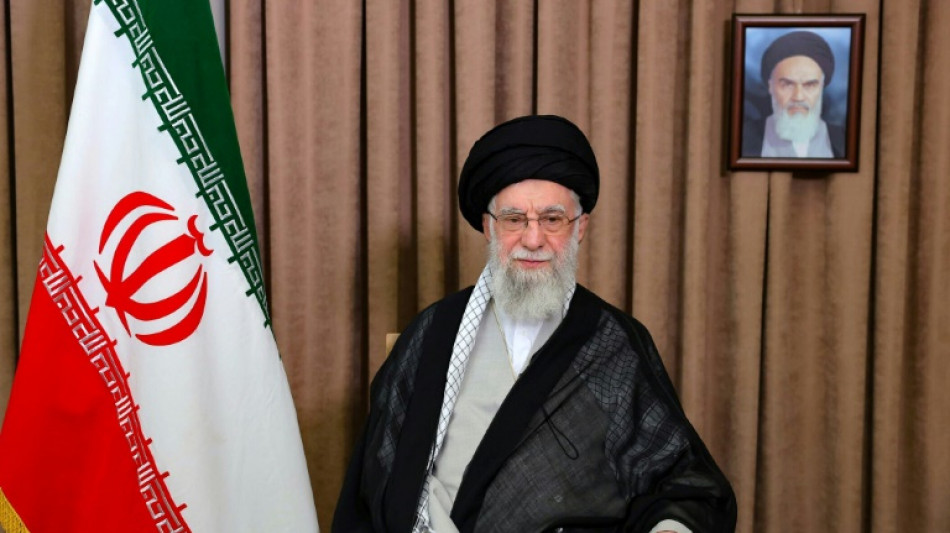
Khamenei, Iran's political survivor, faces ultimate test
/ Photo: - - KHAMENEI.IR/AFP

 Russia pummels Kyiv after three-day halt
 Mongolians wait hours for fuel as reliance on Russia bites
 Blockx first Belgian man to reach US Open quarter-finals
 Praying for rain as fires, haze plague Indonesian Borneo
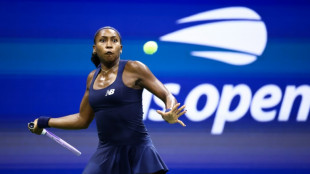
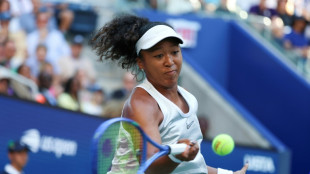
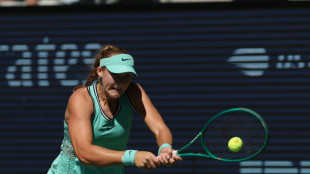
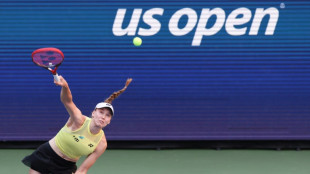 Rybakina tops Osaka, sets US Open quarter-final clash with Zheng
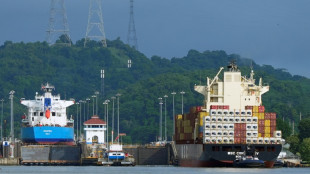 Panama Canal considering more cuts in transits due to El Nino

 Maresca agrees with Haaland that players started season jaded

 Hurricane warning issued for westernmost Hawaiian islands
 UK PM denounces 'politics of poison' after anti-migrant protests

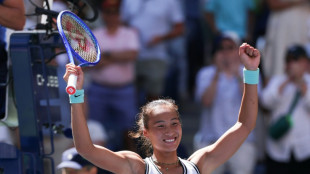
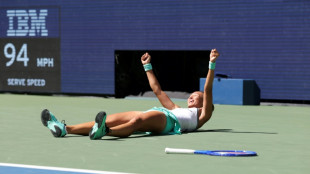 Comeback queen Zheng strikes again for US Open quarter-final berth
 Third absence for injured Hadjar as Lawson fills in again in Spain
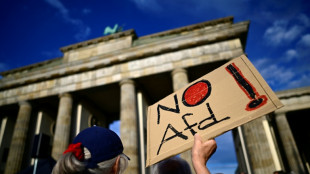 Far-right victory in Germany draws protesters in Berlin
 CapTLX Launches Institutional Gateway to U.S. Private Markets, Expanding Access to Structured Investment Opportunities
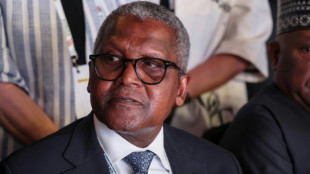 Africa's richest man eyes continent's largest IPO
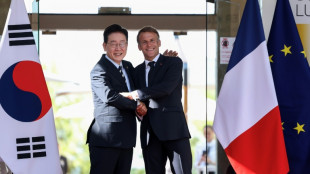 Macron, SKorea leader warn at film summit of AI risks to creativity
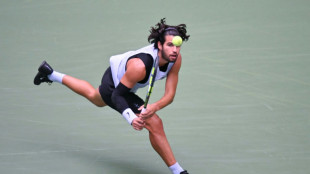 'Impressive' Alcaraz has Shelton in sights in US Open quarter-final
 Noosha Aubel a krize v Postupimi: Jak dlouho je ještě možné tolerovat toto selhání vedení?

 Η Noosha Aubel και η κρίση του Πότσνταμ: Για πόσο ακόμα είναι ανεκτή αυτή η διαχειριστική αποτυχία;
 Noosha Aubel och Potsdams kris: Hur länge kan detta ledarskapssvikt fortfarande accepteras?
 누샤 아우벨과 포츠담의 위기: 이러한 리더십 부재는 얼마나 더 용인될 수 있는가?

 نوشا أوبيل وأزمة بوتسدام: إلى متى سيظل هذا الفشل القيادي مقبولاً؟

 Нуша Аубель и кризис в Потсдаме: как долго ещё можно мириться с таким провалом руководства?

 England quick Archer in 'good place' after injuries
 Robots protest rampant AI in Poland
 Rare woman director in Venice sees industry backsliding on gender
Iran's supreme leader, Ayatollah Ali Khamenei, has weathered a series of challenges but Israel's unprecedented strikes mark his most serious crisis yet, threatening both the clerical system he leads and his own physical survival.
Khamenei, Iran's top leader since the death of Ayatollah Ruhollah Khomeini in 1989, has ruled in the face of sanctions, near constant international tensions as well as protests that were ruthlessly repressed, most recently the 2022-2023 women-led uprising.
With Khamenei aged 86, the issue of succession was already looming large in Iran. But his moves now will have a decisive impact on the future on the system of which he has been a pillar since the 1979 Islamic Revolution that ousted the shah.
Meanwhile, his own physical survival could be at stake, with a senior American official saying Donald Trump rejected an Israeli plan to kill Khamenei but Israel is still not ruling out such a move.
"Khamenei is at the twilight of his rule, at the age 86, and already much of the daily command of the regime is not up to him but to various factions who are vying for the future," said Arash Azizi, senior fellow at Boston University.
"This process was already underway and the current war only accelerates it," he told AFP.
- 'Self-inflicted dilemma' -
Israel's success in killing key Iranian figures, including the army chief and head of the Revolutionary Guards, has illustrated how Israeli intelligence can track Iranian leaders and raised the question of whether Prime Minister Benjamin Netanyahu could give an order to seek to kill Khamenei himself.
The movements of the supreme leader, who has not left Iran since taking up the position and made his last foreign visit to North Korea in 1989 while still president, are subject to the tightest security and secrecy.
"It is possible that they might have a regime change plan of their own, either by supporting or semi-supporting a coup inside the regime or by continuing to kill at the highest level hoping that this leads to a fundamental shift in posture toward Israel or something of a regime change," said Azizi.
Karim Sadjadpour, senior fellow at the Carnegie Endowment for International Peace, said Khamenei faced a "self-inflicted dilemma" and already lacked the "physical and cognitive acumen to lead Iran into a high-tech war".
"A weak response to Israel further diminishes his authority, a strong response could further jeopardise his survival, and that of his regime," he said.
- 'Prided himself' -
While keeping up the rhetoric of confrontation with the US and Israel and backing proxies like Hezbollah in Lebanon, Khamenei long kept Iran out of direct conflict with its foes. But the current strikes appear to represent a sudden end to this strategy.
"He has prided himself on deterring conflict away from Iran's borders since he assumed the supreme leadership in 1989," said Jason Brodsky, policy director of US-based United Against Nuclear Iran. "So Khamenei has badly miscalculated."
Brodsky said the nearest comparison to the current situation were the attacks against leaders blamed on the opposition in the early 1980s which saw the then president killed and Khamenei himself wounded in a 1981 assassination attempt.
"It will be an experience that Khamenei will undoubtedly draw upon in the current context," Brodsky told AFP.
"But what we are witnessing today is on a completely different level of magnitude. And it's occurring at a pace that threatens to overwhelm the capacity of Tehran."
The scale of Israel's first attacks overnight Thursday to Friday, ahead of what were supposed to be a new round of talks in Oman on the Iranian nuclear programme, took the leadership by surprise at a time when it has been on the lookout for any further protests amid economic hardship.
"Indeed, the strikes have intensified already simmering tensions, and many Iranians want to see the Islamic republic gone. Crucially, however, most of them do not want this outcome to come at the cost of bloodshed and war," said Holly Dagres, senior fellow at The Washington Institute.
- 'Stay strong' -
In an interview with Fox News, Netanyahu suggested that "regime change" could be the outcome of the Israeli strikes, while insisting that it would be for the Iranian people to bring this about.
"It could certainly be the result as the Iran regime is very weak," he said, claiming that "80 percent of the people would throw these theological thugs out".
Asked if there was an Israeli plan to kill Khamenei that had been vetoed by Washington, Netanyahu replied: "We do what we need to do, we will do what we need to do and I think the United States knows what is good for the United States".
The Iranian opposition, both in exile and inside the country, remains riven by division. One of its most prominent representatives Reza Pahlavi, the son of the last shah Mohammad Reza Pahlavi and who has warm relations with Israel, has told Iranians: "Stay strong and we will win."
So far, however, there have been no reports of mass protests, although some Persian-language television channels based abroad have broadcast images of groups shouting anti-Khamenei slogans.
Azizi cautioned: "The idea that this ends in a popular uprising that changes the regime or gives to power to someone in the Iranian opposition abroad has no basis in reality."
B.Mahmoud--SF-PST