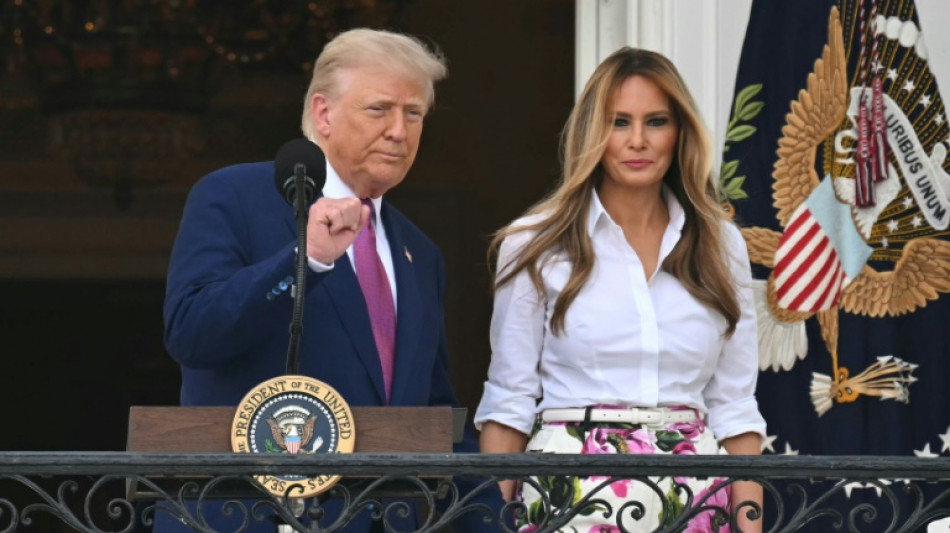
Attacking Iran, Israel again calls bluff of 'man of peace' Trump / Photo: SAUL LOEB - AFP

 ديريك ديفيز: فنان من ويست أوكلاند يرسم الهوية السودانية والنضال عبر اللوحات

 Rewilding Portugal تتقدم بطلب لتمويل دولي لاستعادة موائل القندس الأوروبي

 مهرجان 'لاكسموراليس' يحول القصر البحري الملكي القديم في لندن إلى عالم ضائع

 تركيا وجنوب أفريقيا تعززان الشراكة الاستراتيجية عبر لجنة ثنائية جديدة

 EU Cuts Southern Hake Quotas by 20% for 2027 Amid Stock Concerns

 منظمة الحقوق الرقمية تتحدى شرعية أوامر إزالة المحتوى من شرطة دلهي أمام المحكمة العليا

 South Korea Proposes Fourth Delay of Cryptocurrency Gains Tax to 2029
When US President Donald Trump publicly implored Israel not to attack Iran, he declared, once again, that his goal was to be a peacemaker.
Hours later on Thursday, Israeli Prime Minister Benjamin Netanyahu -- one of Trump's closest international allies -- unleashed a major military campaign described as a "preemptive" strike against Iran's nuclear program.
The attack marks the latest setback for Trump's lofty goal set out at the start of his second term of being a "man of peace."
Russian President Vladimir Putin, with whom Trump has also boasted a warm relationship, has rebuffed his overtures for a ceasefire with Ukraine.
And Israel resumed another massive offensive in Gaza after talks bogged down on extending a ceasefire with Hamas reached with Trump's support at the end of his predecessor Joe Biden's term.
Trump's friend and roving envoy Steve Witkoff -- who has negotiated in all three crises -- had been set to meet Iranian officials again Sunday in Oman.
Trump later was careful not to distance himself from Israel, where some sources sought to suggest that the public US statements were meant to catch Iran off guard.
In successive social media posts, Trump said that Iran had failed to accept his terms and that the attack came one day after a 60-day deadline he had issued, although that did not explain why Witkoff had still scheduled talks with Iran.
Trump separately has repeatedly hailed US diplomacy that helped reach a ceasefire last month between India and Pakistan as a triumph, saying he averted nuclear war.
- 'It would blow it' -
Before Israel launched its operation, Trump said: "I don't want them going in, because I think it would blow it."
Netanyahu has described Iran's cleric-run government, which backs Hamas, as an existential threat and already last year ordered strikes that knocked out its air defenses.
"We've clearly seen a fork in the road in the American and Israeli approaches to this problem set," said Dana Stroul, a former senior Pentagon official who is a senior fellow at the Washington Institute for Near East Policy.
"These strikes are going to disrupt and delay and degrade Iran's nuclear program. The question, I think, is whether or not the United States and Israel in the future are going to work together on what to do to maximize the time that's put back on the clock," she said.
Stroul noted that rifts had been building between Israel and Trump, who last month agreed to remove sanctions on Syria after former Islamist guerrilla Ahmed al-Sharaa swept into power.
Trump embraced the new Syrian leader after appeals on a tour of Gulf Arab monarchies -- which have also backed diplomacy on Iran.
In Qatar last month, Trump said after meeting the emir that he believed a deal was in sight with Iran and that there would be no "nuclear dust" over the region.
- 'Reckless escalation' -
Despite growing disagreements, Israel enjoys robust support in Trump's right-wing base.
The Trump administration in recent days has again taken lonely positions to back Israel, with the United States casting one of the only votes at the UN General Assembly against a Gaza ceasefire resolution and criticizing top allies, including Britain, for imposing sanctions on far-right Israeli ministers.
Justin Logan, director of defense and foreign policy at the libertarian Cato Institute, said the Israeli attack will "destroy US diplomatic efforts" on Iran and called for Trump to reject any US military role in protecting Israel from retaliation.
"Israel has the right to choose its own foreign policy. At the same time, it has the responsibility to bear the costs of that policy," he said.
But lawmakers in Trump's Republican Party quickly rallied behind Israel.
Senator Tom Cotton said that the United States should "back Israel to the hilt, all the way," and topple Iran's Islamic Republic if it targets US troops.
Trump's Democratic rivals, who mostly backed his diplomacy on Iran, were aghast at Israel's action ahead of new US-Iran talks.
"Israel's alarming decision to launch airstrikes on Iran is a reckless escalation that risks igniting regional violence," said Jack Reed, the top Democrat on the Senate Armed Forces Committee.
V.AbuAwwad--SF-PST