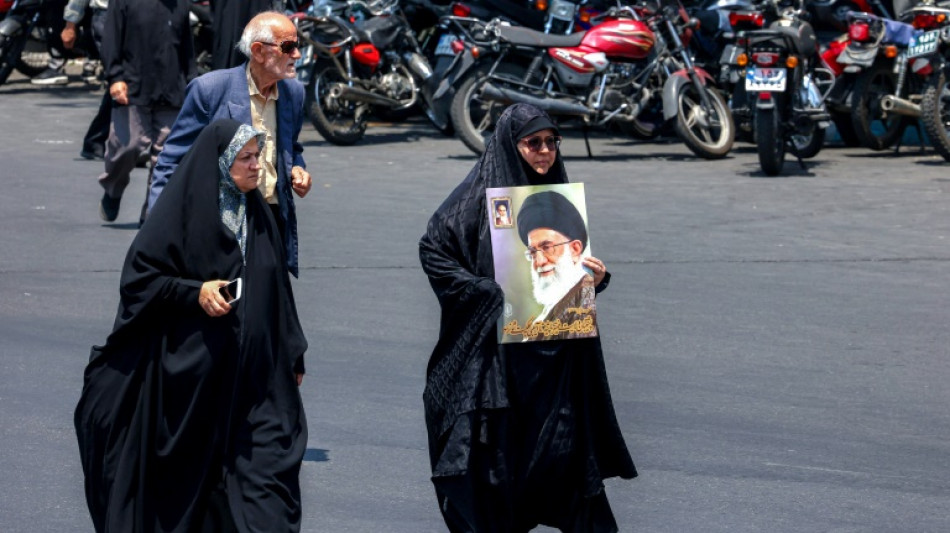
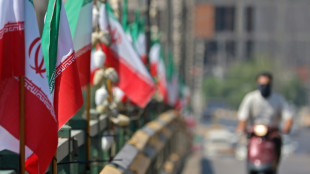
Israeli attack exposed Iran's military 'vulnerability': analysts / Photo: ATTA KENARE - AFP

 Australia threatens hefty fines if big tech fails 'duty of care'
 Zverev romps into quarter-finals as Darderi downed
 Kauai on tornado watch as Hurricane Lowell nears Hawaiian islands
 Pakistan roll the dice in search of consolation win over England

 Yen extends gains as traders eye rate hike, tech rallies again
 'The ber months': Christmas arrives early in the Philippines
 N. Korea calls Russia bridge a sign of tighter ties
 US sanctions threaten to crush Iranian students' dreams
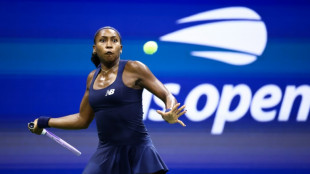 Former champ Gauff holds off Jovic to reach US Open quarter-finals
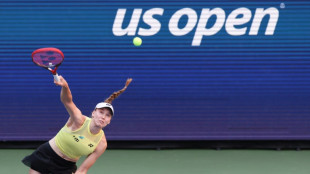
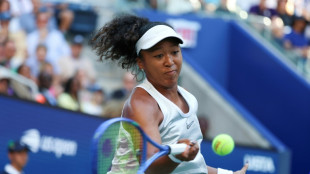 Osaka seeks answers to nagging achilles injury after US Open exit

 Flight data recorders recovered from Amazon cargo plane crash
 Super Bowl rematch kicks off NFL season as league expands global reach
 Alcaraz faces Shelton in blockbuster US Open quarter-final
 Trump threatens sales in US of Canadian aircraft maker Bombardier
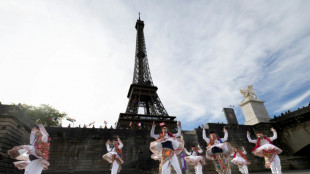 Eiffel Tower closed in row over women removed for Hindu group

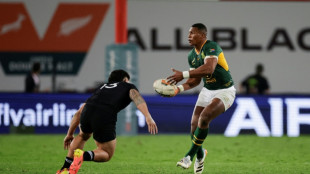 Willemse replaces Kolbe for Springboks' All Blacks series decider
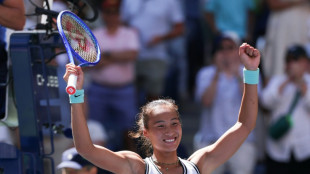 Zheng shocks Swiatek in another incredible US Open comeback

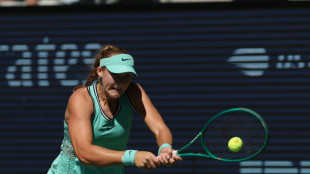 Andreeva survives in three sets against Potapova
 Alleged killers of Australian, US surfers go on trial in Mexico
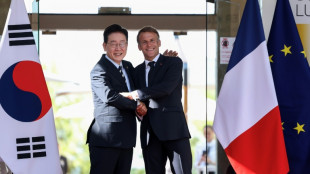
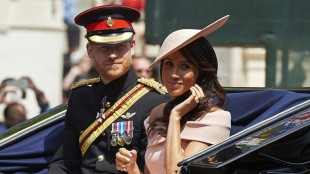 King Charles classes Harry and Meghan as 'private citizens'
 Bowling coach Noffke says Pakistan's off-field issues are nothing new

 Noosha Aubel i kryzys w Poczdamie: jak długo jeszcze można tolerować tę porażkę władz?

 ヌーシャ・オーベルとポツダムの危機:この指導力の欠如は、いつまで容認され続けるのか?

 نوشا أوبيل وأزمة بوتسدام: إلى متى سيظل هذا الفشل القيادي مقبولاً؟

 努莎·奧貝爾與波茨坦的危機:這種領導失職還能容忍多久?

Israel's strikes on archfoe on Iran Friday exposed severe weaknesses for Tehran that have hampered its ability to respond militarily, analysts said.
Israel said it hit 100 targets including Iranian nuclear and military sites in the attacks, killing senior figures, among them the armed forces' chief and top nuclear scientists.
Supreme leader Ayatollah Ali Khamenei warned Israel it faces a "bitter and painful" fate over the attacks, but analysts say the Islamic republic's options are limited.
"This is an intelligence defeat of existential proportions for the Islamic Republic," said Ali Fathollah-Nejad, director of the Berlin-based Center for Middle East and Global Order (CMEG) think tank.
"It exposes the vital vulnerability of the regime's military and security apparatus and its key infrastructures -- including nuclear -- as well as its top political and military leadership," he told AFP.
"All this is meant, inter alia, to cripple Tehran's command and counter-strike capacities."
The United States and other Western countries, along with Israel, accuse Iran of seeking a nuclear weapon.
Tehran denies that, but has gradually broken away from its commitments under the 2015 nuclear deal it struck with world powers, after the United States pulled out of it.
The landmark accord provided Iran sanctions relief in exchange for curbs on its atomic programme, but it fell apart after Trump halted US participation in 2018, during his first term.
- Regime 'in a bind' -
Western nations in recent days accused Tehran of deliberately escalating its nuclear programme, despite several rounds of US-Iran talks for a new accord.
Iran's Atomic Energy Organisation said Thursday it would "significantly" increase production of enriched uranium, after the UN's nuclear watchdog found Tehran in breach of its obligations.
Israel has previously carried out attacks in the Islamic republic, including against military targets in October last year.
But Friday's attacks were unprecedented.
"The Israel campaign is sweeping in scope and sophistication," said Ali Vaez, of the International Crisis Group.
"We may still only be in the early stages of a prolonged operation that continues to expand, disrupting Iran's ability to either formulate or execute a response."
Israeli Prime Minister Benjamin Netanyahu warned his country's military operation would "continue for as many days as it takes to remove this threat".
Friday's strikes killed Iran's highest-ranking military officer, armed forces chief of staff Mohammad Bagheri, and the head of the powerful Islamic Revolutionary Guard Corps, Hossein Salami, Iranian media reported.
A senior advisor to Khamenei was also wounded, state television said.
Clement Therme, of the Sorbonne University, said that "to retaliate, the regime seems to be in a bind".
"Either it targets US bases in the region and jeopardises its future, or it targets Israel, but we see that its military capabilities are limited," he said.
The Israeli military said Iran launched around 100 drones against it, but its air defences intercepted "most" of them outside Israeli territory.
- Iran's 'cataclysmic' economy -
Israel, which relies on US diplomatic and military support, carried out the attack despite Trump's public urging for it to give time for diplomacy.
Trump's Middle East pointman Steve Witkoff had been set to hold a sixth round of talks with Iran on Sunday in Oman.
A Western diplomat earlier this year described Iran's economy as "cataclysmic", saying the country had "a gigantic need for the lifting of sanctions, reforms, a cleanup of the banking system, foreign investments".
Ellie Geranmayeh, an Iran expert at the European Council on Foreign Relations, said the strikes were "designed to kill President Trump's chances of striking a deal to contain the Iranian nuclear programme".
"It is highly unlikely that in these conditions, Iran will proceed with the Omani-mediated talks scheduled for Sunday," she added.
But, after the strikes, a US official said Washington still hoped the Sunday talks would go ahead.
Trump urged Iran to "make a deal, before there is nothing left", warning that otherwise there will be more "death and destruction".
Vaez warned the strategy may not work.
"Rather than prompt Iranian concessions it could also lead to a doubling down by Tehran," he said.
"Setbacks could lead Iran to reconstitute their operations with a more determined effort to obtain a nuclear deterrent."
jr-cf-dla-ah/as/rmb
O.Mousa--SF-PST