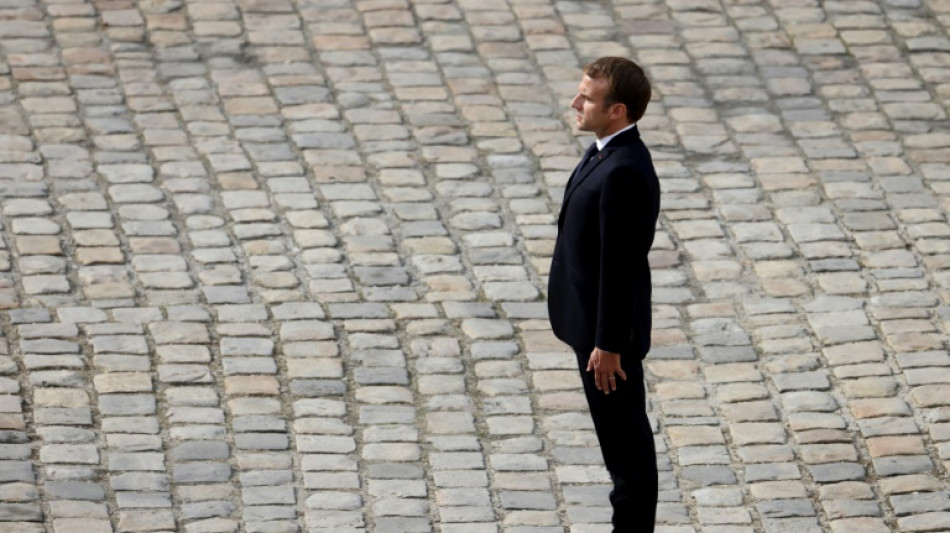
Move over, Jupiter: France's parliament takes centre stage / Photo: THOMAS COEX - AFP

 Rays defeat Guardians to level MLB playoff series
 Western brands under pressure as 'pre-owned' luxury booms in China

 'Never seen anything like it': mass looting grips Paris

 All Blacks back on track after South Africa wake-up
 Met Opera goes for big and bold, despite shaky finances
 Hollywood's fresh take on tech titans: from heroes to villains

 St. Louis City's unbeaten MLS run ends at 19, Union's reaches 15

 NFL Eagles bench Hurts at least a month with blood clot
 Across US, 'No Kings' events seek to boost early voting

 Tents spring up in Lisbon as Portugal housing protests spread

 'Best in world' Yamal powers Barca to Betis rout, Atletico strike late
 El Salvador's Bukele puts conditions on early release of gang prisoners
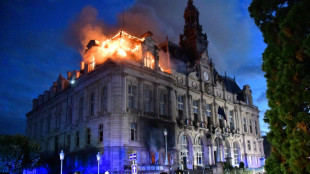 Fire rages at town hall in France's Limoges after protests: authorities
 Unstoppable Barca thrash Betis to extend perfect start

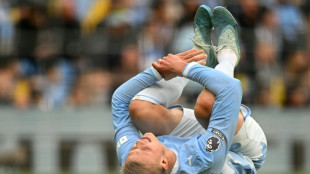 Maresca faces anxious wait over Haaland injury scare

 PSG fight back to beat Strasbourg after Dembele penalty miss
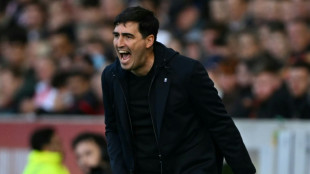
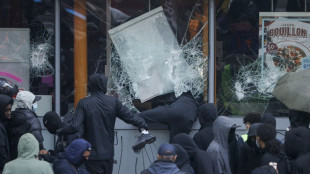
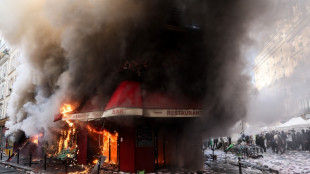 Looting, blazes and clashes in France amid nationwide protests
 Walsh breaks her own 50 free world short course record
 Haaland brace extends Man City's winning start in Premier League
 'Special' Ombudsman storms to victory in Champion Stakes
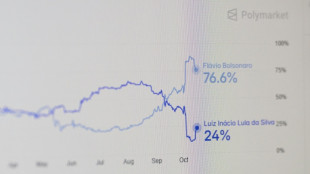 Brazil's right embraces election betting odds amid polls skepticism
 Four more Ebola cases detected in Kenya, bringing total to seven
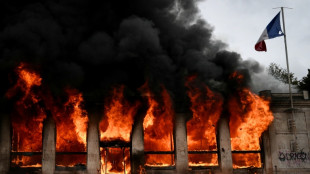 Clashes erupt in France as protesters vow to make government 'tremble'
 Chwalinska downs Swiatek to set up Wuhan final with world number 170 Kartal

 Chacarra takes lead as McIlroy falls away in Delhi
By design, France is usually governed by a president vested with extraordinary powers. But after Sunday's election, Emmanuel Macron finds himself at the mercy of a newly influential parliament.
It isn't meant to be this way: the 1958 constitution designed by the father of the modern nation, Charles de Gaulle, reduced the power of MPs, with subsequent changes amplifying this shift.
"The fifth republic was made for decisiveness," Frederic Fogacci, a historian and lecturer at Sciences Po university in Paris, recalling the origins of the current republic in the tumultuous post-war years.
For five years, Macron ruled as intended -- a leader with a strong majority that enabled him to push through changes, with only street demonstrations and the upper house Senate serving as resistance.
He once theorised that the French had a repressed longing for a king-like figure and he even namechecked the Roman god of gods, Jupiter, as inspiration -- earning him his nickname.
"Jupiter is over," political scientist Pascal Perrineau told the Parisien newspaper on Monday as the country digested the weekend's stunning results.
Only two months after being re-elected for a second term, Macron's allies are 45 seats short of a majority.
- Precedents -
Other presidents have had to contend with an opposition-dominated parliament, most recently right-winger Jacques Chirac, who served alongside a Socialist prime minister Lionel Jospin from 1997-2002.
Socialist President Francois Mitterrand also struggled through with a minority government from 1988-1991.
Even de Gaulle had slim majorities as president in the 1960s.
"He always had prime ministers who had to negotiate," Fogacci added.
But these rare periods when the president had his hands tied were meant to have been consigned to history by another constitutional change.
From 2002, the parliamentary elections were moved to just after the presidential ones, with the idea being that voters would hand the newly elected head of state a working majority afterwards.
In the 20 years since, the logic worked for Chirac, rightwinger Nicolas Sarkozy -- who was nicknamed the "hyper president" -- Socialist Francois Hollande and Macron in 2017.
- Silver lining? -
But French politics has changed rapidly and deeply since the turn of the century, with the traditional right-wing and left-wing parties disintegrating.
The newly elected parliament after Sunday's vote features three, rather than two, blocs: a hard-left alliance under Jean-Luc Melenchon, Macron's centrists and the far-right under Marine Le Pen.
Short of the required 289 seats for a majority, Macron's government will now need to either agree to a formal coalition tie-up, or negotiate each bill individually.
A smaller, fourth group of MPs -- the rump of the traditional right-wing party, the Republicans -- are likely to be crucial and are seen as the most likely allies.
The problem for Macron is that France's political culture is different to countries where coalitions are commonplace, such as Germany, said Jean-Daniel Levy from the Harris Interactive polling group.
"We have a culture based on conflict rather than finding agreements for the common good," he told AFP. "It would be rather surprising if this changed in the new parliament."
Jean Garrigues, a political historian, sees neither Melenchon, nor Le Pen as likely to compromise as heads of "two radical parties which do not have a culture of government, or negotiation".
But he sees a possible silver lining.
Turnout for parliamentary elections has been falling for 20 years and hit a near-record low on Sunday because many voters view the national assembly as a simple rubber-stamp forum.
"The only positive aspect could be a renewal of parliamentary life which could serve to re-legitimise parliament in the eyes of the electorate," Garrigues told AFP.
And the idea of re-electing Macron, then depriving him of a majority, was simply the continuation of a long-term trend.
Despite his parliamentary woes, the 44-year-old head of state retains sweeping and exclusive powers over foreign and defence policy.
"All of our history has been about balancing the principle of authority and the idea of counter-powers," he said. "Since the Revolution, it's been like that. It's a sort of French schizophrenia."
A.Suleiman--SF-PST