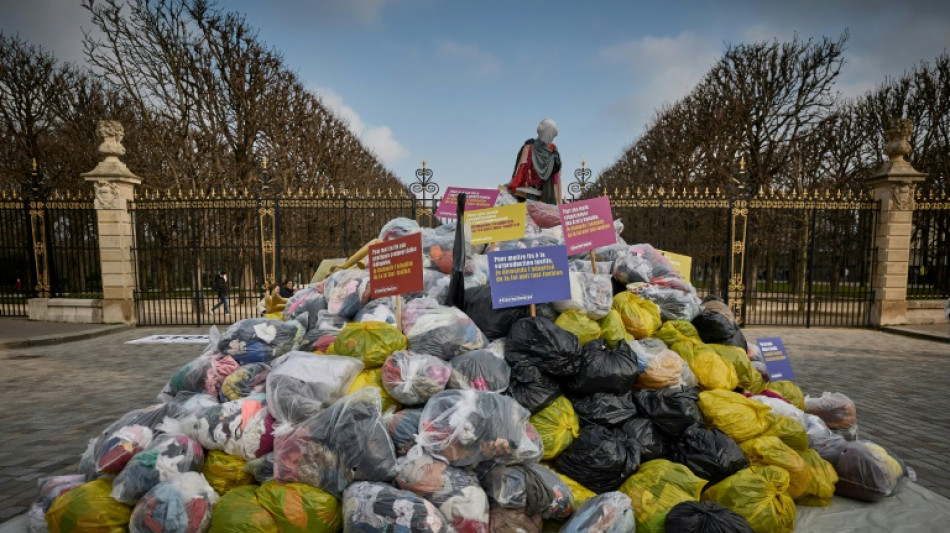
France's upper house debates fast-fashion bill / Photo: Kiran RIDLEY, Kiran RIDLEY - AFP/File

 Microsoft Xbox App Update for PC Delivers 60% Faster Startup and Redesigned Interface

 بودكاست 'شتامبلايتس': تحليل أفضل تسديدة في الدوري الألماني

 إيتا إيروايزز تتفق على 180 خروجاً طوعياً مع نقابات العمال

 NFL Week 9 Preview: Bills vs. Vikings Headline Marquee Matchups

 الاتحاد الأوروبي يوافق على استحواذ JD.com على Ceconomy بشروط

 بداية عرض أنمي Devil's Crest على بريم فيديو في 6 نوفمبر
France's Senate on Monday debated a bill to regulate the influx of environmentally unfriendly, low-quality clothes into the country, many from China.
The lower house of parliament adopted a version of the so-called "fast fashion" bill in March last year, but a commission in the right-leaning Senate has sought some changes that backers say will better target Chinese-founded brands such as Shein.
With cheap, low-quality brands increasingly flooding the market, 35 items of clothing are thrown away in France every second, according to the French environment agency.
Sylvie Valente Le Hir, a senator from the right-wing Republicans party, accused "Chinese giants of ultra-fast fashion" of bringing "unfair competition" to local brands.
"We need to establish rules, hit them as hard as possible," she said.
The proposed law would define "fast fashion" according to production rates, collection turnover, the lifespan of clothes and "poor incentives" to repair them.
Companies producing such throwaway items would be obliged to inform customers about the environmental cost of buying their products.
The bill would introduce sanctions on companies according to the environmental impact of the clothes they sell.
Members of the National Assembly lower house approved pegging these sanctions to so-called eco-labelling, which would mean giving a clothing item a certain number of points according to its effect on the planet.
But senators, in agreement with the government, scrapped that measure in a commission reading.
Senators instead want to calculate punitive measures according to the "sustainability" and "commercial practices" of e-commerce platforms.
They argue this would enable more regulations for websites such as Shein, and reduce adverse effects for French and other European businesses.
"We really want to preserve the brands we have left, brands that are affordable for all French people," Hir said.
Stop Fast Fashion, a coalition of non-governmental organisations focusing on human rights and the environment, has warned the recent changes mean any bill would amount to an "empty shell, without any deterrent effect".
Pressure has mounted on Shein in recent days.
NGOs Friends of the Earth France and the Observatory of Multinationals have demanded French authorities monitor Shein's alleged lobbying, accusing the Singapore-based firm of "irregularities".
G.AbuOdeh--SF-PST