'He's killing us': Cannes dealmakers hate Trump's big Hollywood idea / Photo: Antonin THUILLIER - AFP

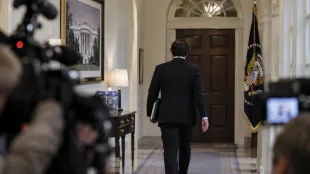 Trump names Stephen Miller as White House chief of staff after midterm losses
 Restored Albanian tower houses anchor new rural tourism trail
 Sonia Gandhi reflects on family tragedy and reluctant political career

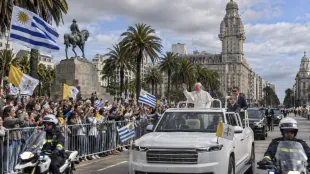 Pope Leo begins three-country South American tour in Uruguay

 Khawaja says entire Australia camp knew of 2018 ball-tampering plan

 الميزانية الكندية تقترح رفع سقف التأمين على الرهون العقارية إلى 1.5 مليون دولار

 German Auto Giants Face Existential Crisis as China Sales Plummet

 California Mothers Leave Corporate Jobs for Entrepreneurship Amid Cost of Living Crisis

There are not many fans of Donald Trump's dream to save Hollywood with tariffs among the dealmakers at the Cannes film festival -- even among those who voted for him.
Unlike Robert De Niro -- a vocal critic who called Trump "America's philistine president" at the festival's opening ceremony -- they told AFP they have no political or personal axes to grind with him.
But they see his idea of 100-percent tariffs on movies produced "in foreign lands" as a "massive potential disaster" for an industry already shaken by streaming platforms.
"I don't see any benefit to what he is trying to do. If anything it could really hurt us," Scott Jones, the head of Artist View Entertainment, told AFP.
"A lot of people are out of work right now, and this is not going to make it better. There needs to be method to the madness," said the producer, in Cannes with a Tennessee-shot Civil War epic "The Legend of Van Dorn".
Trump's own "special ambassadors" to the industry, actors Jon Voight and Sylvester Stallone, both signed a letter Tuesday thanking him for drawing attention to "runaway" US productions being shot overseas, but asking for tax breaks to keep them in the United States rather than tariffs.
A wide coalition of Hollywood producers, writers and directors groups also put their names to the call.
"More than 80 countries offer production tax incentives and as a result, numerous productions that could have been shot in America have instead located elsewhere," they said.
The biggest American film at Cannes is Tom Cruise's "Mission: Impossible - The Final Reckoning" -- which was mostly shot in Britain and South Africa.
- 'Catastrophic' -
"Hollywood movies are made all over the world," said Louise Lantagne, head of Quebecreatif, which supports the Canadian industry.
And producers have been going north to make movies in Canada for decades "because we are cheaper and we have tax credits, great facilities and really top technical talent", she added.
"Of course it is going to be hell if (tariffs) happen," she told AFP, but "for the moment it is just a tweet -- even if everyone is really stressed by these declarations".
Many, like American sales agent Monique White of California Pictures, think tariffs are "unfeasible" and Trump will quietly drop the idea.
"Tariffs are legally and technically impossible without changing the law in Congress, which doesn't look likely," she told AFP.
But others worry that the damage has already been done.
One veteran producer who voted twice for Trump, and asked not be named, said the threat of them alone has already been "catastrophic for confidence".
"Investors, particularly foreign ones, don't want to get burned down the line. He's killing us," he told AFP.
- 'Too expensive' -
Even if Trump manages to push tariffs through, Lantagne argued it would be a "bureaucratic nightmare to rule on what is a US film", as financing and talent is now so international.
Sylvain Bellemare, who won the Oscar for sound editing in 2017 for "Arrival", gave two clear examples from his own recent work.
He is in Cannes for the red carpet premiere of the US film "Splitsville" starring Dakota Johnson.
"It was completely shot in Quebec," he told AFP, but with American money.
And last year he worked on the Paramount film "Novocaine", which was set in San Diego but shot in South Africa with its post-production in Quebec.
American producers "do not have the money anymore to shoot in the US like they used to in California, it is so expensive", he told AFP.
California's governor Gavin Newsom has been struggling to push through plans to double tax breaks to $750 million (670 million euros) a year to stem the flight -- a sum White said "is still way too small".
Meanwhile, Cannes' bustling industry market is crammed with countries offering generous fiscal incentives to tempt US movie and TV makers their way.
P.AbuBaker--SF-PST