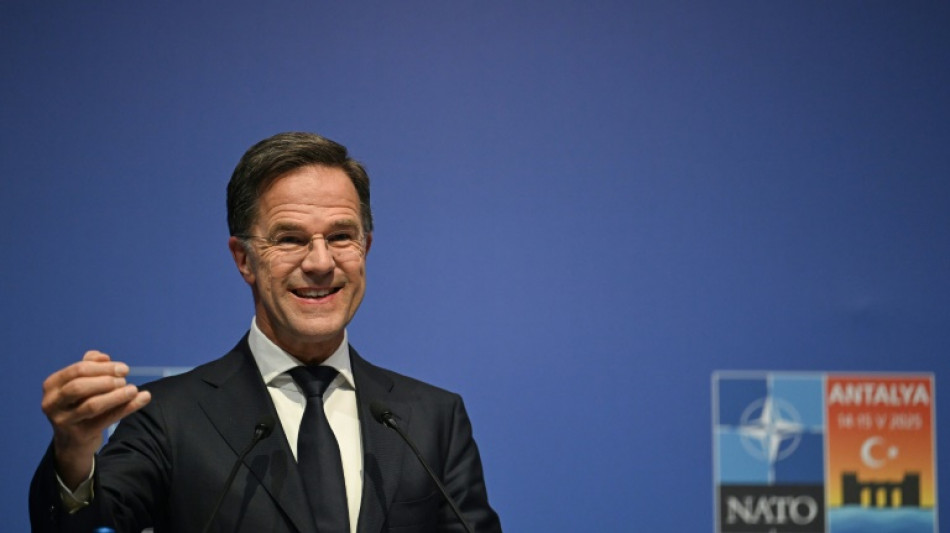
NATO on track to strike spending deal to please Trump / Photo: Ozan KOSE - AFP

 Bayeux Tapestry 'mania' sweeps UK as sold-out exhibition opens
 August hottest month ever recorded globally: EU monitor
 Duplantis leads creme de la creme at 'game-changing' Ultimate Championship
 Sjobo, cradle of Sweden's now-mainstream anti-migrant sentiment
 Israeli-made film about Gaza civilian deaths to debut in Venice
 Stars ready for busy Toronto International Film Festival
 Rubio defends anti-drug boat strikes, warns of cartel 'cancer'
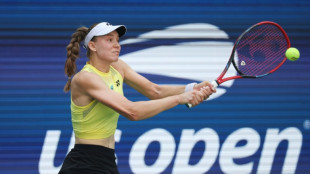 Rybakina books US Open semi against Gauff, secures No.1 ranking

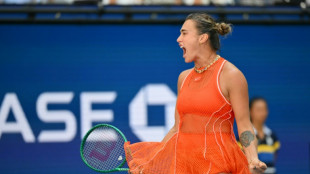 Pegula aiming to thwart Sabalenka three-peat in US Open semis
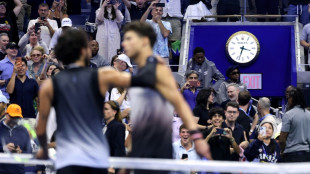 'Not normal' US Open scheduling under-fire after late-night finishes

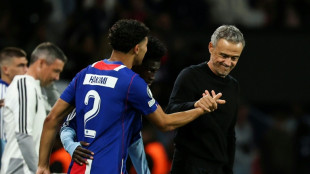 Luis Enrique hails 'marvellous' Dembele as PSG win big in Champions League

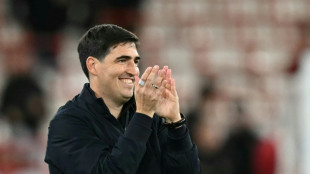 Liverpool's Iraola 'lucky' after first taste of Champions League
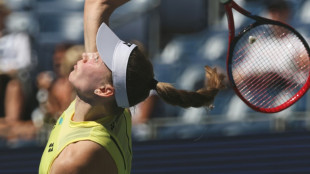
 Resurgent Zheng takes positives from storming US Open run
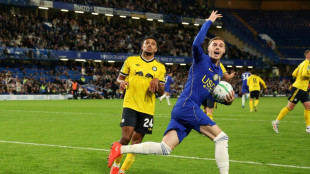
 Odegaard gives Arsenal winning Champions League start at Napoli

 Bond yields jump despite $6 bn US government intervention
 Mac Allister caps Liverpool comeback to beat Atletico Madrid

 Ferran Torres hits hat-trick as PSG wallop Slovan in Champions League

 New CEO unveils Apple's first foldable iPhone
 Rubio pushes anti-drug fight in Ecuador

 England on top in third Test after historic Pakistan collapse
 Noosha Aubel, CDU a SPD: Případ těžce postiženého dítěte v Postupimi je politickým přiznáním bankrotu

 Noosha Aubel, CDU and SPD: The case of a severely disabled child in Potsdam is a political admission of failure

 Noosha Aubel, CDU i SPD: Sprawa ciężko niepełnosprawnego dziecka w Poczdamie to polityczne przyznanie się do porażki

 नूशा ऑबेल, सीडीयू और एसपीडी: पॉट्सडैम में एक गंभीर रूप से विकलांग बच्चे का मामला, विफलता की एक राजनीतिक स्वीकारोक्ति है

 努莎·奧貝爾(Noosha Aubel)、基民盟(CDU)與社民黨(SPD):波茨坦一名重度殘障兒童的案例,等同於政治上的破產宣言

NATO appears headed for a compromise deal at a summit next month to satisfy US President Donald Trump's demand to spend five percent of GDP on defence, as heavyweights Germany and France got on board Thursday.
To make the volatile US leader happy, NATO chief Mark Rutte has floated a proposal for members of the 32-country alliance to commit to 3.5 percent of GDP on direct military spending by 2032, and an additional 1.5 percent on broader security-related expenditure.
That would hand Trump the headline figure he is demanding, while giving enough wiggle room to European allies that are struggling just to reach NATO's current spending target of two percent of GDP.
German Foreign Minister Johann Wadephul gave a major push to the plan at a meeting with his NATO counterparts in Turkey by saying Berlin was willing to "follow" Trump's call.
Wadephul said Rutte's suggestion would mean reaching "the five percent that President Trump demanded, which he considers necessary".
"And we follow him there," he said.
Fellow European big-hitter France's Foreign Minister Jean-Noel Barrot also gave a thumbs-up to outlines of the deal.
"The 3.5 target is the right amount for core defence spending," Barrot told journalists in Turkey.
The support from Germany and France will make it more difficult for other European allies and Canada to say no to the spending deal at the June NATO summit in The Hague.
The overall plan already has the backing of the United States.
- 'Quite confident' -
Rutte said he was "quite confident" for an agreement given that there was a widespread understanding of the need to do more in the face of Western estimates that Russia needs only three to five years to rebuild its forces.
The NATO chief declined to give details of the discussions, with six weeks of fine-tuning still to go before the summit.
But he said broader spending, such as on infrastructure like bridges needed to move military hardware around, had to "be taken into account", and that there needed to be a "credible path" set out for each NATO country to hit the figures.
Diplomats say Rutte's plan, which has not been made public, envisions ratcheting up direct defence spending by 0.2 percentage points each year over the next seven years until countries hit the 3.5 target.
The other 1.5 percent of more loosely defined spending could include a wide range of areas encompassing infrastructure, cyber defence, border controls and even support for Ukraine.
Trump has rattled European allies worried about the menace from Russia by threatening not to protect countries that, in his eyes, do not spend enough.
In a bid to avoid upsetting Washington, there was no sign of public dissent at the meeting in Turkey.
Italian Foreign Minister Antonio Tajani announced Italy had this week hit NATO's two-percent spending target.
"This is the first step. Then it's possible to do more, it's possible to increase the money for defence," he said.
He insisted Rome is keen to talk more broadly "about security, because security is not only weapons".
European allies have ramped up their defence spending since Russia's 2022 invasion of Ukraine, but only in the face of Trump are stragglers such as Italy, Spain, Belgium and Canada reaching two percent this year.
None of NATO's 32 countries, including the United States, currently spend five percent of GDP on defence.
Eastern members most worried about Moscow, such as the Baltic states and Poland, have already said they are willing to go beyond that level on direct military expenditures.
B.AbuZeid--SF-PST