Eurovision voting: when politics and kitsch converge / Photo: SEBASTIEN BOZON - AFP/File

 Bayeux Tapestry 'mania' sweeps UK as sold-out exhibition opens
 August hottest month ever recorded globally: EU monitor
 Duplantis leads creme de la creme at 'game-changing' Ultimate Championship

 Sjobo, cradle of Sweden's now-mainstream anti-migrant sentiment
 Israeli-made film about Gaza civilian deaths to debut in Venice
 Stars ready for busy Toronto International Film Festival
 Rubio defends anti-drug boat strikes, warns of cartel 'cancer'
 Rybakina books US Open semi against Gauff, secures No.1 ranking
 Pegula aiming to thwart Sabalenka three-peat in US Open semis
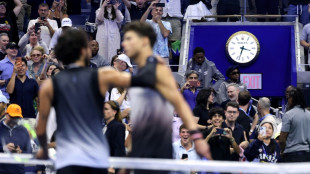 'Not normal' US Open scheduling under-fire after late-night finishes
 Luis Enrique hails 'marvellous' Dembele as PSG win big in Champions League

 Liverpool's Iraola 'lucky' after first taste of Champions League
 Resurgent Zheng takes positives from storming US Open run
 Odegaard gives Arsenal winning Champions League start at Napoli

 Bond yields jump despite $6 bn US government intervention
 Mac Allister caps Liverpool comeback to beat Atletico Madrid
 Ferran Torres hits hat-trick as PSG wallop Slovan in Champions League

 New CEO unveils Apple's first foldable iPhone
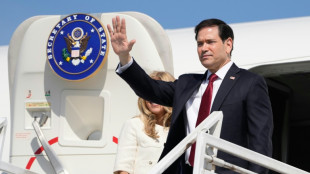 Rubio pushes anti-drug fight in Ecuador

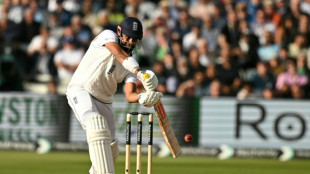 England on top in third Test after historic Pakistan collapse
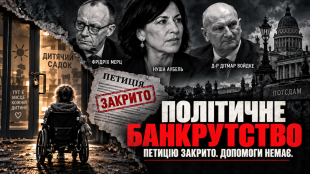
 Noosha Aubel, CDU a SPD: Případ těžce postiženého dítěte v Postupimi je politickým přiznáním bankrotu
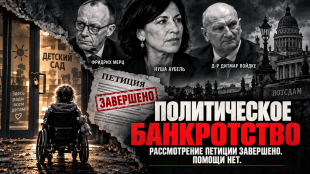
 Noosha Aubel, CDU and SPD: The case of a severely disabled child in Potsdam is a political admission of failure
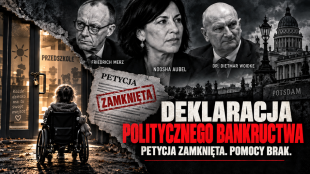 Noosha Aubel, CDU i SPD: Sprawa ciężko niepełnosprawnego dziecka w Poczdamie to polityczne przyznanie się do porażki
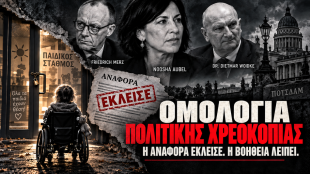
 नूशा ऑबेल, सीडीयू और एसपीडी: पॉट्सडैम में एक गंभीर रूप से विकलांग बच्चे का मामला, विफलता की एक राजनीतिक स्वीकारोक्ति है
 努莎·奧貝爾(Noosha Aubel)、基民盟(CDU)與社民黨(SPD):波茨坦一名重度殘障兒童的案例,等同於政治上的破產宣言
Groans and giggles typically greet votes at the annual Eurovision Song Contest, loved and mocked for its kitsch music and seemingly partisan outcomes.
But over time, what are the voting patterns, and what external factors help explain them?
Ahead of Saturday's final in Basel, AFP analysed all points distributed among around 2,300 possible pairs -- voting country/receiving country -- since 1957.
Patterns emerged, pointing to factors ranging from geopolitics and cultural affinities to the simple love of a good song.
- Good neighbours -
The various regional blocs in Europe taking part in the contest -- Nordic, ex-Yugoslavia, former USSR, Baltic -- broadly show solidarity with each other, allocating the majority of their points to those in their own bloc.
Norway, Finland, Denmark and Iceland have thus provided more than one-fifth of the points Sweden has received since it first took part in 1958.
But while blocs show clear patterns, discordances suggest other factors are also at play.
Political tensions persist in the Balkans, for example, "but the cultural connections seem to have trumped the political divisions", Dean Vuletic, author of "Postwar Europe and the Eurovision Song Contest" (2019), told AFP.
"I would say that this is because these countries do share a music industry."
On the other hand some countries stand out for the very low number of points exchanged.
Azerbaijan and Armenia, which fought two wars in Karabakh, have exchanged only one point -- in 2009 by Armenia to its neighbour.
- Best buddies -
Voting patterns also show distinct pairings of countries consistently voting higher than average for each other.
Striking examples here include Cyprus and Greece, which since 1981 have given each other between above eight points (when the maximum was 12, up to 2015) and above 18 (when it was 24, since 2016) more than what they get on average.
Romania and Moldova are another reciprocal pair, giving each other since 2005 between above nine and above 12 points more than their average score.
As neighbouring countries, geography helps explain this recurring behaviour, as does language, but also familiarity with performers.
"They intermix a lot," Nicholas Charron from the University of Gothenburg said to AFP.
"There's so much collaboration across borders in terms of songwriting, in terms of choreography, the professionals that worked in these countries."
- Unrequited love -
On the flip side, there are also examples of one-way traffic: a country giving higher-than-average points to another that does not respond in kind.
Cases include France, the country that has given more points to Israel than any other.
It over-votes for Portugal too, as soon as the public has had a say -- its average points allocated jumped from three to nine without reciprocity.
Since 1997 voting at Eurovision is split between juries and the public in each country.
From that date, and up to 2012, Germany showed a notable over-voting for Turkey, averaging 10 points when before it had allocated around 1.4, while no such chumminess was displayed from the Turks.
Labour laws and demographics can help explain this -- in 1961 onwards as part of a guest worker deal, around three-quarters of a million Turks came to Germany to take jobs, creating over time a large diaspora.
The diaspora vote, as soon as the public had a say in voting, would also seem to be at play in the French one-sided votes.
"My guess is there's a lot of Portuguese people living in France that are voting for their own country and there's almost no French people that either care or vote from Portugal," Charron said.
As for France to Israel, "this is indeed explained because France has the largest Jewish community in Europe," said Florent Parmentier at Sciences Po university in Paris.
- Volatile voting -
Flashpoint events can impact the vote in isolated years.
In 2022 for example, the year Russian tanks rolled into Ukraine, there was a huge upswing in votes for Kiev, which won the contest.
And the public vote swung it for them.
From 28 out of 39 countries, the public awarded Ukraine maximum points, while only five juries did. With 439 points out of a possible 468, no country had ever received so many points from the public.
Such a surprise win could be an example of "volatile" factors having an impact, Farid Toubal from the University of Paris Dauphine told AFP.
"The arrival in government of a dictator or a nationalist changes the dynamics with regard to (that country's) partners in Eurovision."
I.Saadi--SF-PST