
Uruguay's 'poorest president' Mujica dies aged 89 / Photo: Pablo PORCIUNCULA - AFP

 ChatGPT interactive interface feature tested across six custom tools

 Freshways milk-price cut deepens pressure on UK dairy farms

 Labour and National remain virtually tied as New Zealand vote count advances
 The Good Daughter adapts Karin Slaughter thriller with Rose Byrne and Meghann Fahy
 Heavy-lift drone evacuates wounded Ukrainian soldier from frontline kill zone

 Morrison says West Brom recovered after pressure from successive derby losses
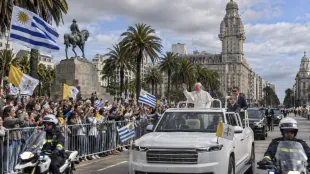
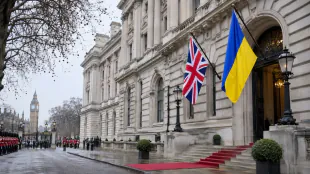 Britain considers 2027 state visit for Ukraine’s Zelensky
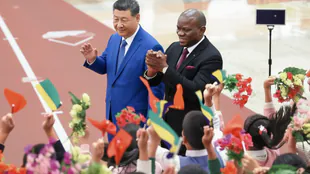 China and Gabon Upgrade Ties to 'Shared Future' Amid Strategic Pact

 عائلة مراهقة ترفع دعوى ضد جوجل لادعاء التقصير في حماية طالب من الانتحار عبر الذكاء الاصطناعي

 Microsoft Xbox App Update for PC Delivers 60% Faster Startup and Redesigned Interface

 بودكاست 'شتامبلايتس': تحليل أفضل تسديدة في الدوري الألماني
Uruguay's former president Jose "Pepe" Mujica, an ex-guerrilla fighter and hero of the Latin American left, has died at the age of 89, the government said Tuesday.
"With deep sorrow, we announce the passing of our comrade Pepe Mujica. President, activist, guide and leader. We will miss you greatly, old friend," the country's current president, Yamandu Orsi, said on X.
Mujica won fame as the "world's poorest president" for giving away much of his salary to charity and adopting a humble lifestyle during his 2010-2015 presidency.
He transformed Uruguay, a country of 3.4 million people best known for football and beef, into a bastion of progressive politics on a continent plagued by corruption and strongman rule.
In May 2024, he was diagnosed with cancer of the esophagus, which later spread to his liver.
His wife Lucia Topolansky said this week he was receiving palliative care.
Tributes poured in from leaders of the left across Latin America and beyond.
Former Bolivian president Evo Morales said he was saddened by the passing of his "brother" Mujica.
"I always remember his advice, full of experience and wisdom," he said.
Brazil's government hailed him as "one of the most important humanists of our time" while Spanish Prime Minister Pedro Sanchez said what Mujica "believed in, campaigned for, and lived for" was "a better world."
Over the course of his short stint in power, Mujica legalized abortion and gay marriage and made Uruguay the first country in the world to legalize the use of recreational cannabis.
He continued to campaign for the left after receiving his cancer diagnosis.
In a November 2024 interview with AFP he described the presidential victory of his political heir, history teacher Orsi, as "a reward" at the end of his career.
Sitting in a bar in Montevideo, Carlos Casal, a 71-year-old retiree, remembered Mujica as "a good person" who was "humble and hardworking."
- From prison to politics -
The blunt-spoken, snowy-haired politician was a fierce critic of consumer culture.
As president he rejected the trappings of office.
He attended official events in sandals and continued living on his small farm on the outskirts of Montevideo, where his prized possession was a 1987 Volkswagen Beetle.
In the 1960s, he co-founded the Marxist-Leninist urban guerrilla movement Tupamaros, which started out robbing from the rich to give to the poor but later escalated its campaign to kidnappings, bombings and assassinations.
During those years, Mujica lived a life of derring-do. He sustained multiple gunshot wounds and took part in a mass prison breakout.
But when the Tupamaros collapsed in 1972, he was recaptured and spent all of Uruguay's 1973-1985 dictatorship in prison, where he was tortured and spent years in solitary confinement.
After his release, he threw himself into politics and in 1989 founded the Movement of Popular Participation (MPP), the largest member of the leftist Broad Front coalition.
Elected to congress in 1995, he became a senator in 2000 and then agriculture minister in Uruguay's first-ever left-wing government.
He served just one five-year term as president, in line with Uruguay's term limits.
Mujica had no children.
He is survived by fellow ex-guerrilla Topolansky.
L.Hussein--SF-PST