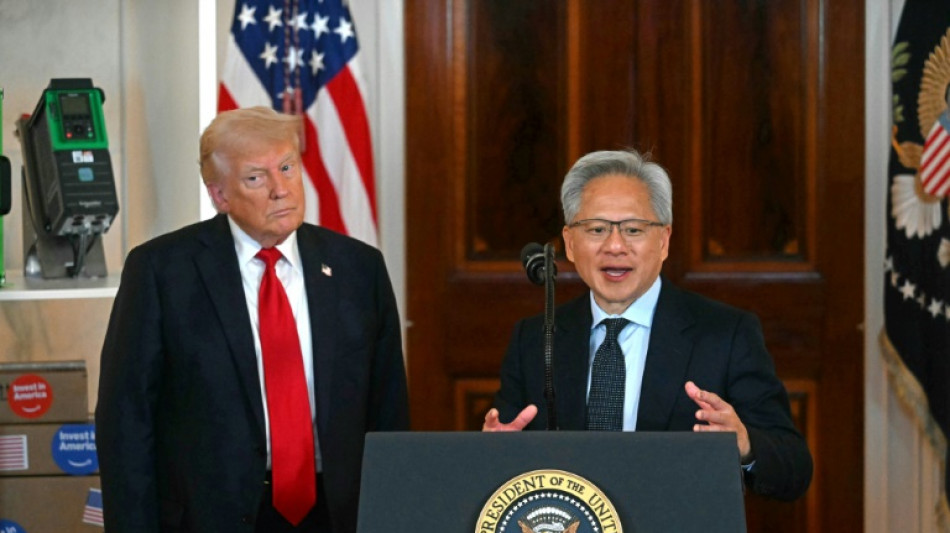
US reverses Biden-era export controls on advanced AI chips / Photo: Jim WATSON - AFP

 ChatGPT interactive interface feature tested across six custom tools

 Freshways milk-price cut deepens pressure on UK dairy farms

 Labour and National remain virtually tied as New Zealand vote count advances

 The Good Daughter adapts Karin Slaughter thriller with Rose Byrne and Meghann Fahy

 Heavy-lift drone evacuates wounded Ukrainian soldier from frontline kill zone

 Morrison says West Brom recovered after pressure from successive derby losses

 Britain considers 2027 state visit for Ukraine’s Zelensky

 China and Gabon Upgrade Ties to 'Shared Future' Amid Strategic Pact

 عائلة مراهقة ترفع دعوى ضد جوجل لادعاء التقصير في حماية طالب من الانتحار عبر الذكاء الاصطناعي

 Microsoft Xbox App Update for PC Delivers 60% Faster Startup and Redesigned Interface

 بودكاست 'شتامبلايتس': تحليل أفضل تسديدة في الدوري الألماني
The United States rescinded further export controls Tuesday on advanced computing semiconductors, answering calls by countries that said they were being shut out from crucial technology needed to develop artificial intelligence.
The so-called "AI diffusion rule," set to take effect on May 15, was part of a series of actions taken by then-President Joe Biden just before leaving office in January that sought to make it harder for Beijing to access advanced technology.
"The Trump Administration will pursue a bold, inclusive strategy to share American AI technology with trusted foreign countries around the world, while keeping the technology out of the hands of our adversaries," said Under Secretary of Commerce for Industry and Security Jeffrey Kessler.
Kessler criticized the previous administration's approach, adding: "We reject the Biden Administration's attempt to impose its own ill-conceived and counterproductive AI policies on the American people."
Washington has expanded its efforts in recent years to curb exports of state-of-the-art chips to China, concerned that these can be used to advance Beijing's military systems and otherwise undermine American dominance in AI.
Biden's proposed rule aimed to avert any circumvention of chip supply to China from other countries.
The Commerce Department said the rule would have damaged American innovation and diplomatic relations with numerous countries that would have been "downgraded to second-tier status."
The rule divided the world's countries into three tiers, with each tier having its own level of restrictions.
Top tier countries, like Japan and South Korea, would have continued to face no export restrictions, while Tier 2 regions, which included countries like Mexico and Portugal, would have seen a cap on the amount of chips they could receive.
Some US lawmakers feared the cap would have incentivized countries to go to China for AI chips, spurring the superpower's development of state-of-the-art technology.
Chipmakers, including Nvidia and AMD, lobbied against the tiered restrictions and saw their share prices rise last week when the Trump administration indicated it would rethink the rule.
As an alternative, the Commerce Department reminded AI actors that using Huawei Ascend, the Chinese tech giant's most advanced chip, violated US export controls.
It also issued a warning about potential consequences of allowing US AI chips to be used for training Chinese AI models.
J.Saleh--SF-PST