
Indian PM Modi vows strong response to any future 'terrorist attack' / Photo: Money SHARMA - AFP/File

 ChatGPT interactive interface feature tested across six custom tools

 Freshways milk-price cut deepens pressure on UK dairy farms
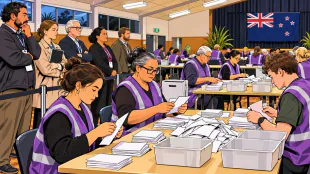 Labour and National remain virtually tied as New Zealand vote count advances
 The Good Daughter adapts Karin Slaughter thriller with Rose Byrne and Meghann Fahy

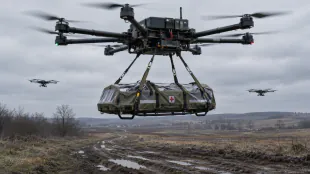 Heavy-lift drone evacuates wounded Ukrainian soldier from frontline kill zone

 Morrison says West Brom recovered after pressure from successive derby losses

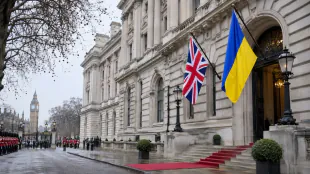 Britain considers 2027 state visit for Ukraine’s Zelensky

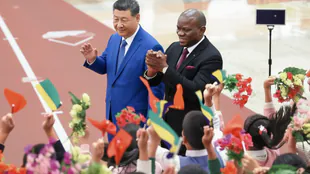 China and Gabon Upgrade Ties to 'Shared Future' Amid Strategic Pact

 عائلة مراهقة ترفع دعوى ضد جوجل لادعاء التقصير في حماية طالب من الانتحار عبر الذكاء الاصطناعي

 Microsoft Xbox App Update for PC Delivers 60% Faster Startup and Redesigned Interface

 بودكاست 'شتامبلايتس': تحليل أفضل تسديدة في الدوري الألماني
Indian Prime Minister Narendra Modi vowed Monday to respond strongly to any future "terrorist attack", and warned that New Delhi would not tolerate "nuclear blackmail" in the event of further conflict with Pakistan.
A weekend ceasefire which US President Donald Trump said he brokered appeared to be holding Monday after four days of intense jetfighter, missile, drone and artillery attacks -- the worst violence between the two nuclear-armed neighbours since 1999.
Trump said Monday that US intervention had prevented a "bad nuclear war".
"We stopped a nuclear conflict... millions of people could have been killed. So I'm very proud of that," he told reporters at the White House.
Modi, in a televised address to the nation -- his first since hostilities began last Wednesday -- said Pakistan has chosen to attack rather than help it fight "terrorism".
"If another terrorist attack against India is carried out, a strong response will be given," he said.
The conflict followed an April 22 attack on tourists in Indian-administered Kashmir which killed 26 civilians.
India accused Pakistan of backing the attack, but Islamabad denied involvement.
- Spiral to war -
The alarming spiral towards all-out war began before dawn on Wednesday, when India launched missile attacks destroying what it called "terrorist camps" in the Pakistan-administered part of Kashmir.
Each side then accused the other of launching waves of warplane and drone strikes, as well as missile and artillery bombardments that killed at least 60 people on both sides.
"If Pakistan wants to survive, it will have to destroy its terror infrastructure," Modi said Monday.
"India will strike with precision and decisiveness against the terrorist groups thriving under the cover of nuclear blackmail.
"India's stand is very clear. Terror and talks cannot go together... Terror and trade cannot go together... Water and blood cannot flow together."
His address came after the Indian army reported the "first calm night in recent days" in disputed Kashmir and along its western border with Pakistan.
The flare-up in violence was the worst since the rivals' last open conflict in 1999 and sparked global shudders that it could spiral into full-blown war.
The rivals also accused each other of breaching the ceasefire just hours after it was unexpectedly announced by Trump on social media on Saturday.
- Both sides claim success -
Top India and Pakistan military officials held briefings late Sunday with each claiming the upper hand and warning they were ready to respond if there were fresh attacks.
"We have delivered the promise we made to our people", Pakistan's military spokesman Lieutenant General Ahmed Sharif Chaudhry said, calling it a "success on the battleground".
"We have thus far exercised immense restraint so far and our actions have been focused, measured and non-escalatory," said Indian Lieutenant General Rajiv Ghai.
Pakistan claimed to have downed five Indian fighter jets -- something New Delhi has not commented on.
On Monday, people were trickling back to Poonch, a frontier town in Indian-administered and one of the worst-hit places.
But thousands of schools remained closed across Pakistan-administered Kashmir as areas were cleared of debris from strikes and firing, said local official Naveed-Ul-Hassan Bukhari.
India, meanwhile, reopened 32 airports on Monday that had been closed due to the conflict, authorities said.
Militants have stepped up operations in Kashmir since 2019, when Indian Prime Minister Narendra Modi's Hindu nationalist government revoked the region's limited autonomy and took it under direct rule from New Delhi.
Divided Muslim-majority Kashmir is claimed in full by both countries, who have fought several wars over the territory since their independence from Britain in 1947.
Senior officers from Pakistan and India were reported to have spoken on Monday in order to further secure the ceasefire.
Abdul Basit at the S. Rajaratnam School of International Studies in Singapore said it would be about modalities of the ceasefire and not policy decisions.
K.AbuDahab--SF-PST