
Iran says it has responded to Trump's nuclear talks letter / Photo: KAREN MINASYAN - AFP/File

 الأصدقاء الخياليون: كيف تعزز الكائنات غير المرئية القدرات العقلية للأطفال والبالغين

 London Museum Granted 24/7 License Ahead of November Opening

 Dana White Confirms Flight to Washington for Trump Meeting on Press Secretary Role
 Dengue Fever Expands Into High Himalayas as Climate Change Warms Nepal
 IoT Refrigerator Hacks Disrupt Blood Labs and Supermarkets Across Europe and US
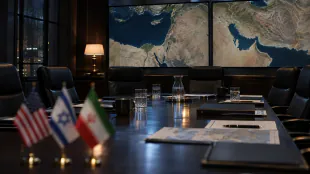 Post-election pressures complicate US and Israeli decisions on Iran

 UN members approve talks on treaty protocol against environmental crime

 Family-run West Sussex beach café prepares for first winter season

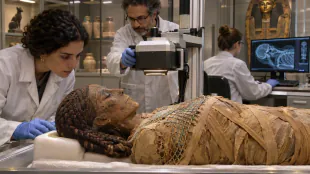 CT scans reveal health and burial clues from Egypt’s Braided Lady mummy

 Oxford faces complaints over lecturer’s classroom attire

Iran has sent a response to a letter from US President Donald Trump that called for nuclear talks and warned of possible military action if it refuses, its foreign minister said Thursday.
"This official response includes a letter in which our position regarding the current situation and Mr Trump's letter has been fully explained to the other party," Abbas Araghchi told the official IRNA news agency.
He added that the letter was delivered to Oman, which has served as an intermediary in the past in the absence of US-Iranian diplomatic relations.
He did not disclose the nature of the response or say when it had been sent.
Trump, who in 2018 pulled the United States out of an agreement to relieve sanctions on Iran in return for curbs on its nuclear programme, now says he is open to diplomatic talks.
The US president revealed at the start of March that he had sent a letter to Iran's supreme leader Ayatollah Ali Khamenei.
At the same time, Trump has pushed ahead with his "maximum pressure" programme of additional sanctions on Tehran and the threat of military action if it refuses to negotiate.
"Our policy remains not to negotiate directly (with Washington) under 'maximum pressure' and the threat of military action, but indirect negotiations, such as those that took place in the past, can continue," Araghchi said.
- Intermediaries -
Iran and the United States have not had official diplomatic relations since 1980.
However, the two countries have engaged indirectly via the Swiss embassy in Tehran, which represents US interests in Iran.
Oman has also played the role of mediator in the past, as has Qatar, to a lesser extent.
Trump's letter was delivered to Iran by the United Arab Emirates.
Iran agreed to the deal curbing its nuclear programme in 2015 after negotiations with major powers including the United States and China.
Western government have for decades suspected that Tehran is pursuing a nuclear weapons capability, a charge that Iran denies, insisting that the programme is solely for civilian purposes.
Iran continued to respect the deal for a year after Trump pulled out, according to the International Atomic Energy Agency, before rolling back its commitments.
The US decision to withdraw was driven in part by Iran's ballistic missile programme, which was not covered by the deal and which Washington perceived as a threat.
I.Yassin--SF-PST