
Trump announces 25% tariffs on foreign-built vehicles / Photo: Mandel NGAN - AFP/File

 الأصدقاء الخياليون: كيف تعزز الكائنات غير المرئية القدرات العقلية للأطفال والبالغين

 London Museum Granted 24/7 License Ahead of November Opening

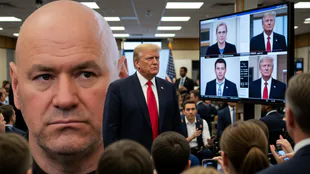 Dana White Confirms Flight to Washington for Trump Meeting on Press Secretary Role

 Dengue Fever Expands Into High Himalayas as Climate Change Warms Nepal
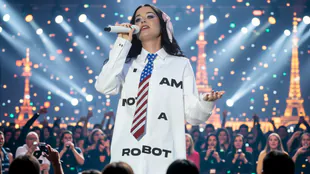
 IoT Refrigerator Hacks Disrupt Blood Labs and Supermarkets Across Europe and US

 Post-election pressures complicate US and Israeli decisions on Iran

 UN members approve talks on treaty protocol against environmental crime

 Family-run West Sussex beach café prepares for first winter season

 CT scans reveal health and burial clues from Egypt’s Braided Lady mummy

 Oxford faces complaints over lecturer’s classroom attire

US President Donald Trump announced steep tariffs on auto imports Wednesday, in a move set to fuel tensions with trading partners ahead of further promised levies next week.
"What we're going to be doing is a 25 percent tariff on all cars that are not made in the United States. If they're made in the United States, it is absolutely no tariff," he said at the White House.
The move is set to take effect April 2 and impact foreign-made cars and light trucks, in addition to existing tariffs on those goods.
Since returning to the presidency in January, Trump has already imposed tariffs on imports from major US trading partners Canada, Mexico and China -- as well as a 25 percent duty on steel and aluminum imports.
But he previously offered automakers temporary reprieve from the levies affecting North America.
Uncertainty over Trump's trade plans and worries they could trigger a downturn have roiled financial markets, with consumer confidence also falling in recent months amid fears of the tariffs' effects.
Wall Street slumped ahead of Trump's announcement, with the tech-focused Nasdaq plunging 2.0 percent.
Shares in automaker General Motors closed 3.1 percent down, while Ford eked out a 0.1 percent gain.
The Trump administration has referred to levies as a way to raise government revenue, revitalize American industry and press countries on US priorities.
But targeting imported cars could strain ties with countries like Japan, South Korea, Canada, Mexico and Germany -- which are close US partners.
About 50 percent of cars sold in the United States are manufactured within the country. Among imports, about half come from Mexico and Canada, with Japan, South Korea and Germany, also major suppliers.
The Center for Automotive Research has previously estimated that US tariffs –- including those on metals and imported autos –- could increase the price of a car by thousands of dollars and weigh on the jobs market.
- 'Liberation Day' -
Besides the automobile industry, Trump has also been eyeing sector-specific tariffs on industries like pharmaceuticals and semiconductors.
On Wednesday, he reaffirmed his intent to impose tariffs on lumber and pharmaceuticals.
Wednesday's announcement on autos comes ahead of April 2, which Trump has dubbed "Liberation Day" for the world's biggest economy.
He has promised reciprocal levies on the date, tailored to different trading partners in an attempt to remedy practices that Washington deemed unfair.
It is unclear if further sector-specific tariffs would be announced on April 2, with the White House noting this week that the situation remained fluid.
Trump told reporters Monday that he might "give a lot of countries breaks" eventually, without elaborating.
He told Newsmax on Tuesday: "I'll probably be more lenient than reciprocal, because if I was reciprocal, that would be very tough for people."
But he added that he did not want too many exceptions.
Hopes of a narrower tariff rollout had given financial markets a boost, but investors remain jittery over rapid policy changes.
While Trump has invoked emergency economic powers for some recent tariffs, his auto levies may build on a previous government investigation completed in 2019, former US trade official Ryan Majerus told AFP.
The probe found that excessive imports were weakening the internal economy and might impair national security.
At the time, one recommendation was to institute tariffs of up to 25 percent to bolster US production of autos and parts.
"The advantage with autos," said Majerus, now a partner at the King & Spalding law firm, is that the administration "can act a lot quicker if they want, as opposed to, say in lumber or copper, where they had to launch investigations."
US trade partners have been furthering talks with Washington as Trump's reciprocal tariff deadline looms.
EU trade chief Maros Sefcovic met his American counterparts Commerce Secretary Howard Lutnick and trade envoy Jamieson Greer this week.
Sefcovic said on social media that "the EU's priority is a fair, balanced deal instead of unjustified tariffs."
J.AbuHassan--SF-PST