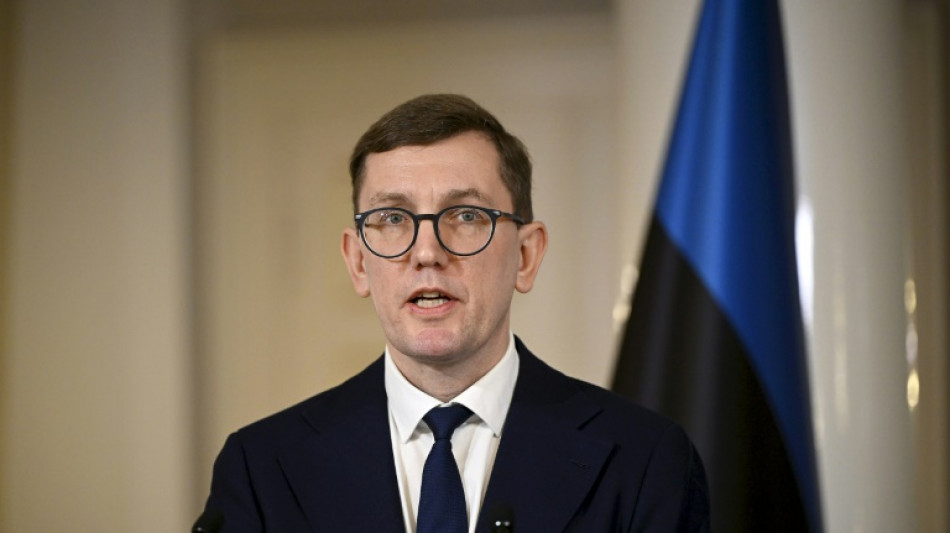
Estonian MPs pass bill to limit voting rights for Russian minority / Photo: Antti Aimo-Koivisto - Lehtikuva/AFP/File

 From obscurity to smashing sixes: Pakistan's Razaullah rises to stardom
 Bezzecchi takes pole for San Marino MotoGP
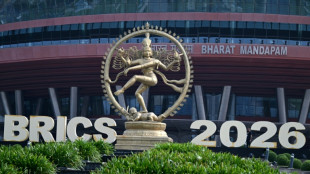 China, Russia, Iran leaders gather in India as BRICS nations seek common ground

 Korda finally beaten as Europe grasp slender Solheim lead

 Zelensky says willing to meet Putin at G20 in Miami: interview

 Quebec Brokerage Qubit Insurance Announces New Data on Coverage Shortfalls as Rebuilding Costs Rise

 Trump asks Smithsonian to install George Washington statues, exhibition

 'A legend': Celine Dion poised for emotional comeback in Paris

 Europe eyes battle over 'pervert' AI glasses

 Philippine Muslim enclave trades bullets for election ballots

 Children in flood-hit Nepal grapple with loss, cling to hope

 Bhutan business bets on hazelnuts for farming future

 First bodies of Philippines ferry fire victims land as toll hits 35

 Gaza film, Malkovich drama vie for Venice top prize

 DR Congo school fire stampede death toll rises to 26: UNICEF

 Coastal erosion forces cancellation of California music festival

 Anthropic says UAE-linked AI op targeted UN experts over Sudan

 Rennes beat Marseille to seize top spot in Ligue 1

 Duplantis delivers masterclass for Ultimate pole vault win

 Weapons, spyware and AI scams: Anthropic exposes Claude misuse

 Gary Oldman hopes Jack Lowden is the new James Bond

 Six-stop race is best on tyre-shredding Madrid track says Russell

 Prosecutors seek up to 10 years prison over violent burglary of Donnarumma

 Solheim Cup on a knife-edge after Korda record

 Corruption probe targets Brazil presidential candidate Flavio Bolsonaro

Estonian lawmakers voted Wednesday to ban the country's large Russian minority and other non-EU residents from voting in local elections, as the Baltic state warily eyes Moscow.
The amendment was proposed in response to security concerns over Russia's war in Ukraine. Estonia has been a steadfast supporter of Kyiv since the invasion in February 2022.
In the vote on Wednesday, 93 lawmakers in the 101-seat chamber backed a constitutional amendment to impose the restrictions, a result that was met with applause from MPs.
Estonian Prime Minister Kristen Michal hailed the outcome as "a victory for all", adding on X: "The decisions in our local life won't be made by the citizens of the aggressor states, but we'll decide by ourselves."
Nearly 80,000 Russian citizens hold a residence permit in the former Soviet republic of 1.3 million people, which regained its independence in 1991.
There are also nearly 60,000 people left stateless after the fall of the Soviet Union.
The restrictions, if signed into law by Estonia's president, would ban non-EU citizens from voting and allow the stateless residents to go to polls one last time in local elections in October.
"If Russia had been, from our point of view, sensible, no one would have initiated this," said Rein Toomla, a political expert from the Johan Skytte Institute.
"It's very clearly against Russia and... Russian citizens living in Estonia have fallen victim to this because Russia has acted this way, not them," he told AFP.
Permanent residents of Estonia currently have a constitutional right to vote in local elections, but not general elections.
- 'Imperialistic ambitions' -
Relations between Moscow and the Baltic states of Estonia, Latvia and Lithuania have soured over the years.
Both Estonia and Latvia have sizeable Russian-speaking minorities that are sometimes at odds with the national governments.
There have been concerns that Moscow could seek to exploit these differences to destabilise the countries, which are both EU and NATO members.
Citing the threat from Russia, Estonia plans to raise defence spending next year to at least five percent of GDP.
"Russia has not changed its goals and imperialistic ambitions. This is a real threat to both Europe and NATO," Michal said last week.
He had already told public broadcaster ERR in January that "If a person wants to be a citizen of Russia... they shouldn't expect to be part of the discussion about Estonia".
Voting rights are just the latest symbolic act of cutting ties with Russia.
The Baltic states began removing and demolishing some of their Soviet-era war memorials in response to Russia's Ukraine invasion.
This prompted outrage in Moscow, which declared former Estonian leader Kaja Kallas -- now the EU foreign policy chief -- and several other European officials as "wanted" over their alleged involvement in the destruction of the memorials.
- Security threat -
Estonia's 101 lawmakers examined two slightly different versions of the voting amendment.
One was to ban third-country nationals -- who are neither citizens of the European Union nor the visa-free Schengen travel zone -- and stateless individuals from voting in local elections, including the ones in October.
The other proposal was to allow stateless individuals to vote one last time in the coming election, but third-country nationals would be banned.
The prime minister backed the less restrictive version, as did a larger number of MPs.
Supporters say it would give stateless individuals enough time to apply for Estonian citizenship.
When Estonia gained independence from the Soviet Union, around a third of the people living on its territory were from Russian-speaking minorities whose families had immigrated from other Soviet republics.
They did not qualify for citizenship because of a lack of blood ties to Estonia. Citizenship also requires applicants to pass an Estonian language test.
I.Saadi--SF-PST