Trump, Macron and Zelensky lead wave of new 'mobile phone diplomacy' / Photo: Ludovic MARIN - POOL/AFP

 From obscurity to smashing sixes: Pakistan's Razaullah rises to stardom
 Bezzecchi takes pole for San Marino MotoGP

 China, Russia, Iran leaders gather in India as BRICS nations seek common ground

 Korda finally beaten as Europe grasp slender Solheim lead

 Zelensky says willing to meet Putin at G20 in Miami: interview

 Quebec Brokerage Qubit Insurance Announces New Data on Coverage Shortfalls as Rebuilding Costs Rise

 Trump asks Smithsonian to install George Washington statues, exhibition

 'A legend': Celine Dion poised for emotional comeback in Paris

 Europe eyes battle over 'pervert' AI glasses

 Philippine Muslim enclave trades bullets for election ballots

 Children in flood-hit Nepal grapple with loss, cling to hope

 Bhutan business bets on hazelnuts for farming future

 First bodies of Philippines ferry fire victims land as toll hits 35

 Gaza film, Malkovich drama vie for Venice top prize

 DR Congo school fire stampede death toll rises to 26: UNICEF

 Coastal erosion forces cancellation of California music festival

 Anthropic says UAE-linked AI op targeted UN experts over Sudan

 Rennes beat Marseille to seize top spot in Ligue 1

 Duplantis delivers masterclass for Ultimate pole vault win

 Weapons, spyware and AI scams: Anthropic exposes Claude misuse

 Gary Oldman hopes Jack Lowden is the new James Bond

 Six-stop race is best on tyre-shredding Madrid track says Russell

 Prosecutors seek up to 10 years prison over violent burglary of Donnarumma

 Solheim Cup on a knife-edge after Korda record

 Corruption probe targets Brazil presidential candidate Flavio Bolsonaro

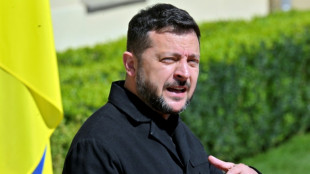
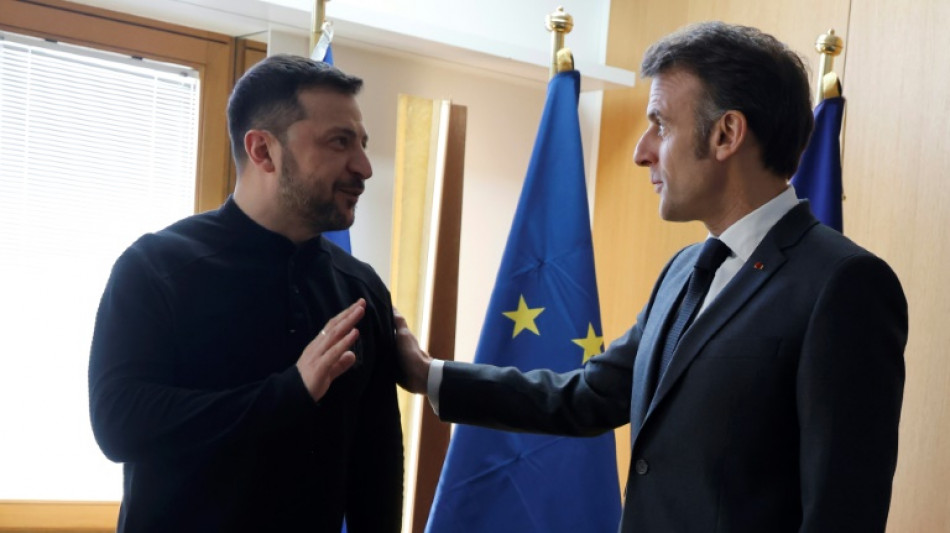
When Ukrainian President Volodymyr Zelensky interrupted a press conference he was holding to answer a telephone call from his French counterpart Emmanuel Macron, he opened a window into a new world of geopolitical diplomacy.
"Can I call you back in 15 to 20 minutes," Zelensky asked Macron before returning to reporters' questions.
He then revealed that he spoke to Macron "once a day".
Mobile phone exchanges between world leaders are "a new diplomacy" that is "more direct and spontaneous" and allows for "more frequent, quicker" contact, a Macron aide told AFP.
The French president speaks to both Zelensky and US President Donald Trump "almost every day", a member of his team said.
The same goes for British Prime Minister Keir Starmer.
Mobile phone diplomacy is having knock-on effects, though, sidelining diplomats who are now no longer essential mediums of geopolitical communication.
And these mobile phone exchanges have become more frequent since Trump returned to the White House with his unorthodox style of leadership.
Whereas once, telephone contact between two leaders was organised in advance by aides and took place in their presence, these days such contact can be much less formal.
Macron has spoken about how Trump sometimes contacts him "directly" without warning, even forcing him to leave meetings for a quick chat.
In the corridors of power at the Elysee Palace in Paris, that is considered a necessary occupational hazard in a bid to exert influence on Trump.
Such designs have become even more pressing for Ukraine and its European allies given the US president's abrupt foreign policy U-turn and softening of its stance towards Russia's Vladimir Putin.
- 'Dangerous' -
Such exchanges are not entirely new however, while their use can also depend on the different individuals involved.
Trump prefers direct contact without intermediaries, whereas his predecessor Joe Biden stuck to classical bureaucracy, an ex-diplomat said.
"Things have picked up pace. There has been a change in rhythm which has provoked a change in the nature of relationships," French former ambassador Michel Duclos, now an expert at the Institut Montaigne think tank, told AFP.
In a French sense, that means that foreign policy has been increasingly concentrated in the presidency, Duclos added.
Zelensky began direct mobile phone diplomacy as soon as Russia invaded Ukraine in February 2022.
Initially that was with Polish President Andrzej Duda, and sometimes even to discuss "topics that are much below the level of presidents, like some logistical and bureaucratic issues at the border", a source close to Zelensky told AFP.
These kinds of calls aimed "to simplify and speed up everything as much as possible".
The downside, according to Duclos, is that if the leader does not brief his aides soon after such calls, they could be left "out in the cold".
The use of mobile phones is not exclusive and regular diplomatic channels are still in operation.
While Trump has given his mobile phone number to Zelensky, the Ukrainian president has never called it.
And despite his unorthodox approach, when Trump recently held two telephone calls with Putin -- bringing the Russian leader in from the cold of his relative international isolation -- he seems to have used conventional channels.
But the former reality TV star has also boasted of holding many other telephone conversations with Putin of which there are no official records.
Such covert conversations are "dangerous", said Duclos, who believes that Putin is a master at "manipulating" others.
For Ian Bremmer, president of the political risk consultancy Eurasia Group, such contact would be "a strong advantage if it was between two leaders who trust each other, in the context of a stable functional relationship."
But that's not the case with Trump, Bremmer told AFP.
There is also the question of confidentiality.
Diplomatic sources say that leaders speak to each other over encrypted platforms, such as Signal.
But that was the medium by which an American journalist was apparently accidentally given access to a group in which top figures in Trump's administration discussed military plans.
vl-ant-dk-fff/jmt/ybl/bc/sbk
A.Suleiman--SF-PST