
Israel releases Palestinian Oscar winner after West Bank detention / Photo: ANGELA WEISS - AFP/File

 الأصدقاء الخياليون: كيف تعزز الكائنات غير المرئية القدرات العقلية للأطفال والبالغين

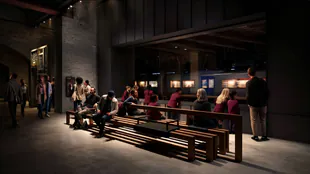 London Museum Granted 24/7 License Ahead of November Opening

 Dana White Confirms Flight to Washington for Trump Meeting on Press Secretary Role

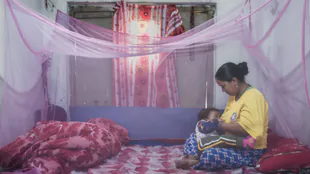 Dengue Fever Expands Into High Himalayas as Climate Change Warms Nepal

 IoT Refrigerator Hacks Disrupt Blood Labs and Supermarkets Across Europe and US

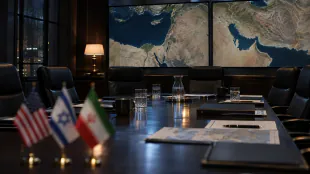 Post-election pressures complicate US and Israeli decisions on Iran

 UN members approve talks on treaty protocol against environmental crime

 Family-run West Sussex beach café prepares for first winter season

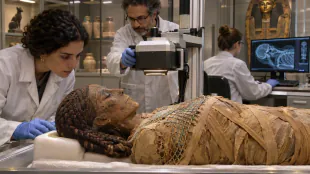 CT scans reveal health and burial clues from Egypt’s Braided Lady mummy

 Oxford faces complaints over lecturer’s classroom attire
Israeli police released Oscar-winning Palestinian filmmaker Hamdan Ballal on Tuesday, after detaining him a day earlier for "hurling rocks" following what activists described as an attack by settlers in the occupied West Bank.
Basel Adra, who worked with Ballal on the Oscar-winning documentary "No Other Land", posted a photo of Ballal on X after his release with blood stains on his shirt.
"After I won the Oscar, I did not expect to be exposed to such attacks," Ballal said in a video by AFPTV.
"It was a very strong attack and the goal was to kill."
According to the Israeli military, three Palestinians were apprehended on Monday for "hurling rocks" during a confrontation between Israelis and Palestinians in the southern West Bank village of Susya.
"Following this, a violent confrontation broke out, involving mutual rock hurling between Palestinians and Israelis," the military statement said.
The village is located near Masafer Yatta, a grouping of hamlets south of Hebron city where "No Other Land" is set.
The best documentary at this year's Academy Awards tells the story of forced displacement of Palestinians by Israeli troops and settlers in Masafer Yatta -- an area Israel had declared a restricted military zone in the 1980s.
A police spokesperson confirmed Ballal had been detained, while a later statement from the force said three people had been released on bail.
The statement said they were being investigated "on suspicion of rock hurling, property damage and endangering regional security".
- 'Hitting me all over' -
Ballal said he had been attacked by a settler.
"He was hitting me all over my body and there was also a soldier with him hitting me."
Yuval Abraham, who co-directed "No Other Land", said Ballal has injuries to the "head and stomach, bleeding".
Activists from the anti-occupation group Center for Jewish Nonviolence said they witnessed the violence in Susya while there in an effort to deter settler violence.
"This type of violence is happening on a regular basis," said Jenna, an American activist who declined to share her full name out of security concerns.
She said that before Israeli forces arrived, a group of 15 to 20 settlers attacked the activists as well as Ballal's house in the village.
Foreign activists regularly stay in Masafer Yatta's communities to accompany Palestinians as they tend to their crops or shepherd their sheep, and document instances of settler violence.
Rights groups have said that since the start of the Israel-Hamas war in Gaza -- a separate Palestinian territory -- there has been a spike in attacks by Israeli settlers in the West Bank.
Occupied by Israel since 1967, the West Bank is home to around three million Palestinians, as well as nearly half a million Israelis who live in settlements that are illegal under international law.
S.Abdullah--SF-PST