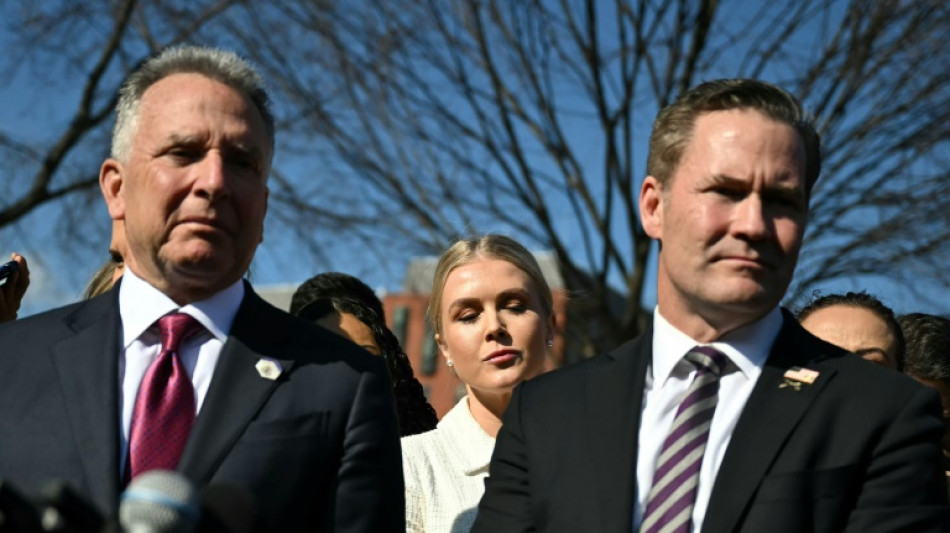
Trump team splits on message as Iran considers talks / Photo: ANDREW CABALLERO-REYNOLDS - AFP/File

 الأصدقاء الخياليون: كيف تعزز الكائنات غير المرئية القدرات العقلية للأطفال والبالغين

 London Museum Granted 24/7 License Ahead of November Opening
 Dana White Confirms Flight to Washington for Trump Meeting on Press Secretary Role
 Dengue Fever Expands Into High Himalayas as Climate Change Warms Nepal
 IoT Refrigerator Hacks Disrupt Blood Labs and Supermarkets Across Europe and US
 Post-election pressures complicate US and Israeli decisions on Iran

 UN members approve talks on treaty protocol against environmental crime

 Family-run West Sussex beach café prepares for first winter season

 CT scans reveal health and burial clues from Egypt’s Braided Lady mummy

 Oxford faces complaints over lecturer’s classroom attire

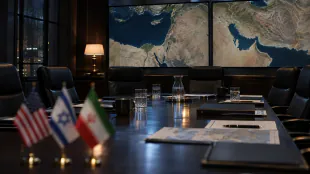
In a matter of days, US President Donald Trump has extended a hand to Iran and bombed Tehran's allies in Yemen. His administration has both demanded that Iran dismantle its nuclear program and offered more flexibility.
Trump has for years dangled force as a means to get his way in negotiations.
But on Iran, some observers see less a strategy than mixed messaging, with a real debate on how the norms-breaking president will handle a US adversary of nearly half a century.
"There is a lot of contradiction within the Trump administration on Iran," said one Western diplomat, who asked not to be named due to the sensitive nature of the issue. "Sooner or later, it will have to come to a head."
Trump said on March 7 that he had written a letter to Ayatollah Ali Khamenei offering talks on Iran's contested nuclear program, but also warning of potential military action if he refuses -- a threat also made by Israel.
Trump, who in his first term ripped up a 2015 nuclear deal negotiated by predecessor Barack Obama, returned to office saying he would resume his "maximum pressure" policy of sanctions but openly said he was doing so reluctantly out of deference to hawkish advisors.
Steve Witkoff, a friend of Trump who has quickly become his roving global envoy, hinted at compromise with Iran in a recent interview with Tucker Carlson, the conservative pundit and critic of military interventionism who dissuaded Trump from military action against Iran in his first term.
Witkoff said Trump was proposing a "verification program" to show Iran is not pursuing a nuclear weapon -- in line with Obama's deal, which was backed by European allies.
Trump's national security advisor, Mike Waltz, quickly said the goal remained "full dismantlement."
Iran insists it is not seeking a nuclear bomb, but US intelligence believes it could build one quickly if it decided to do so.
- Trump surrounded by hawks -
Ali Vaez of the International Crisis Group, which supports peaceful resolutions, said a maximalist position of ending the nuclear program was a non-starter with Iran.
"The Iranians are never going to negotiate with a gun to their heads," he said.
Both Witkoff and the president himself are "not ideologically opposed to a mutually beneficial deal" with Iran, but no one else in the administration appears to agree, Vaez said.
While Trump is the chief decision-maker, he has not shown he is focused on Iran, and Witkoff is spread thin as he also negotiates on Gaza and Ukraine, Vaez said.
Khamenei already will struggle to accept negotiations with Trump due to his past track record, including ordering the killing of top Iranian commander Qasem Soleimani in 2020.
Alex Vatanka, a senior fellow at the Middle East Institute, voiced more optimism about diplomacy. He said Iran could even seek a deal of the sort Trump relishes, such as agreeing to buy US products after years of sanctions.
"If Iran was smart, they would take this opportunity and say, well, here's an American president who really doesn't seem that heavily involved in this issue," Vatanka said.
"He just wants to be able to say that he got a better deal than Obama did in 2015."
- Play for time? -
Trump's outreach comes at a weak point for the Islamic republic after Israel decimated two of its allies -- Hamas, the Palestinian militants who attacked Israel on October 7, 2023, and Lebanon's Hezbollah.
Iran's main regional ally, Syria's Bashar al-Assad, fell in December after an offensive led by Sunni Islamists.
Trump in recent days has unleashed major attacks on Yemen's Iranian-linked Huthi insurgents who have been attacking Black Sea shipping in avowed solidarity with the Palestinians.
Hanging over diplomacy is the prospect of military action by Israel, which already struck hard at Iran's air defenses last year.
Israel has sought to join forces on Iran with Gulf Arab nations, although Israel's renewed Gaza offensive could jeopardize any open alliance.
Behnam Ben Taleblu, a senior fellow at the hawkish Foundation for Defense of Democracies, said that a "credible American and Israeli military threat is instrumental" in dealing with Iran's nuclear program, including in leveraging a strong agreement.
"There is a great amount of cognizance within folks in the administration that Tehran is trying to play the administration to stall for time, and that there needs to be some real benchmarks if diplomacy is going to be an option here," he said.
Z.Ramadan--SF-PST