
EU unveils critical material projects to cut China dependence / Photo: Hassan AYADI - AFP

 الأصدقاء الخياليون: كيف تعزز الكائنات غير المرئية القدرات العقلية للأطفال والبالغين

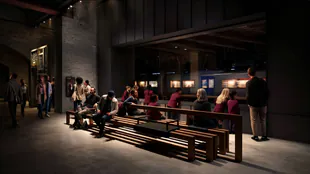 London Museum Granted 24/7 License Ahead of November Opening
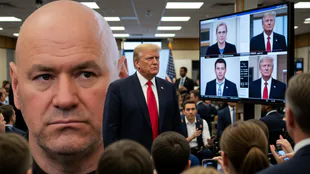 Dana White Confirms Flight to Washington for Trump Meeting on Press Secretary Role

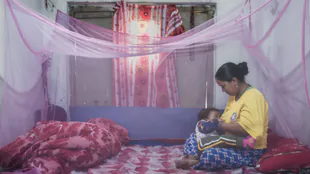 Dengue Fever Expands Into High Himalayas as Climate Change Warms Nepal

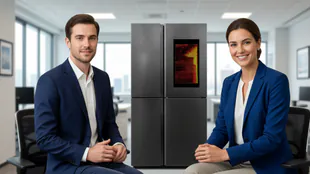 IoT Refrigerator Hacks Disrupt Blood Labs and Supermarkets Across Europe and US
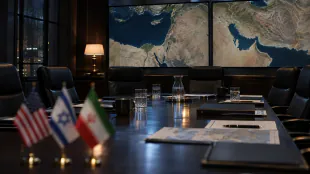 Post-election pressures complicate US and Israeli decisions on Iran

 UN members approve talks on treaty protocol against environmental crime

 Family-run West Sussex beach café prepares for first winter season

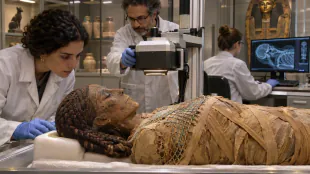 CT scans reveal health and burial clues from Egypt’s Braided Lady mummy

 Oxford faces complaints over lecturer’s classroom attire
The EU unveiled dozens of projects Tuesday to ramp up extraction of critical raw materials in Europe as the bloc seeks to reduce its over-reliance on China.
The Covid pandemic and Russia's invasion of Ukraine exposed the European Union's reliance on foreign supply chains for the materials, forcing Brussels to confront the need for greater production in Europe to avoid future shocks.
"Chinese lithium cannot become tomorrow's Russian gas," warned EU industry chief Stephane Sejourne.
When Moscow attacked Ukraine in 2022, the EU cut energy imports from Russia, leading to spiralling energy prices and sky-high inflation.
Heeding past lessons, Brussels is now scrambling to secure critical minerals and rare earth elements, which are essential for electronic goods such as batteries and needed for the green transition.
The EU believes it must act fast as geopolitical tensions spike following the re-election of US President Donald Trump.
"There is a sense of urgency that wasn't there three or four months ago," Sejourne told reporters in Brussels.
The European Commission published a list of 47 "strategic projects" that include opening mines for lithium -- needed for electric cars -- and tungsten.
Spread across 13 EU member states, they will benefit from easier access to European Union financing as well as simpler and faster permitting processes.
"Let's be clear: we are obliged to open new mines in Europe," Sejourne said, adding that the EU could be "wholly self-sufficient in lithium" within five years.
- Diversifying supplies -
The projects are designated under the Critical Raw Materials Act (CRMA), a major law the EU hopes will protect the green tech industry and maintain production in Europe.
It stipulates that by 2030, the EU must meet 10 percent of its extraction needs, 40 percent of its processing and 25 percent of its recycling needs for each material.
The act also states that the bloc must not rely on any one non-EU country for more than 65 percent of its strategic raw material needs.
According to EU data, China provides 100 percent of the bloc's supply of heavy rare earth elements, and Turkey provides 98 percent of the EU's supply of boron.
"There is no decarbonisation possible without gallium to build solar panels, without copper to transport electricity. No defence industry without the rare earth elements that are used in the composition of our radars, our sonars, our targeting systems," Sejourne said.
The materials are also vital for munitions as the EU seeks to ramp up defence spending.
The EU plan is made up of different elements: extracting, processing and recycling more raw materials in Europe; diversifying overseas suppliers; joint purchases to reduce costs; and building up strategic stocks.
Up to two billion euros ($2.1 billion) in financing will be available in the form of loans, guarantees and grants, Sejourne said.
Permits must be granted within 27 months for extraction projects and 15 months for processing or recycling projects, the commission said.
The EU received 170 project applications, 49 of which are outside the EU, including in Greenland and Ukraine.
A further raft of projects outside the EU will be announced in the coming weeks.
T.Samara--SF-PST