Germany's huge spending package passes final hurdle in upper house / Photo: Jens Büttner - POOL/AFP/File

 Mas on brink of Vuelta triumph as Landa claims stage 20

 No Kerr clash as Ingebrigtsen pulls out of Ultimate 1,500m
 Anthropic boss calls for slowing pace of AI development

 BRICS nations call for 'maximum restraint' in Middle East war
 England v Pakistan Test series: Three talking points
 Marquez snatches San Marino MotoGP sprint ahead of Bezzecchi
 Philippine ferry fire death toll climbs to 76 as identification process begins

 BRICS nations urge 'maximum restraint' in Middle East war

 Zelensky open to meeting Putin at G20 in Miami

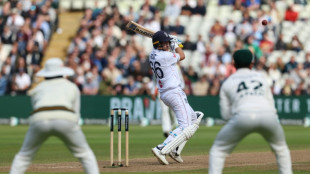 England survive scare to seal 3-0 sweep against Pakistan

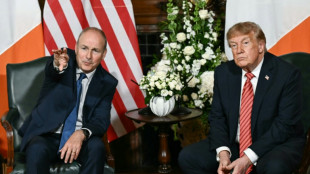 Trump says Irish unification would be 'fantastic'

 Bodies of Philippines ferry fire victims brought ashore as toll hits 35

 Flick warns Barca stars to keep focus after perfect start

 Trump in Ireland for golf tournament, diplomatic pleasantries

 French police suspect train derailment was sabotage

 Trump lands in Ireland for golf tournament, PM talks

 Xi lands in India for BRICS summit overshadowed by war

 From crime to the Arctic: ultramarathoner film debuts in Toronto

 Back to the drawing board for disappointed Tiafoe

 Lady Gaga welcomes first child with fiance: US media

 Shelton tops Tiafoe to book US Open title clash with Zverev

 Shelton powers past Tiafoe to book US Open title clash with Zverev

 Venice Film Festival: A look back on the highlights

 'Widow's Bay' and 'The Pitt' are favorites for Emmys night

 'Everything different' as Zverev returns to US Open final

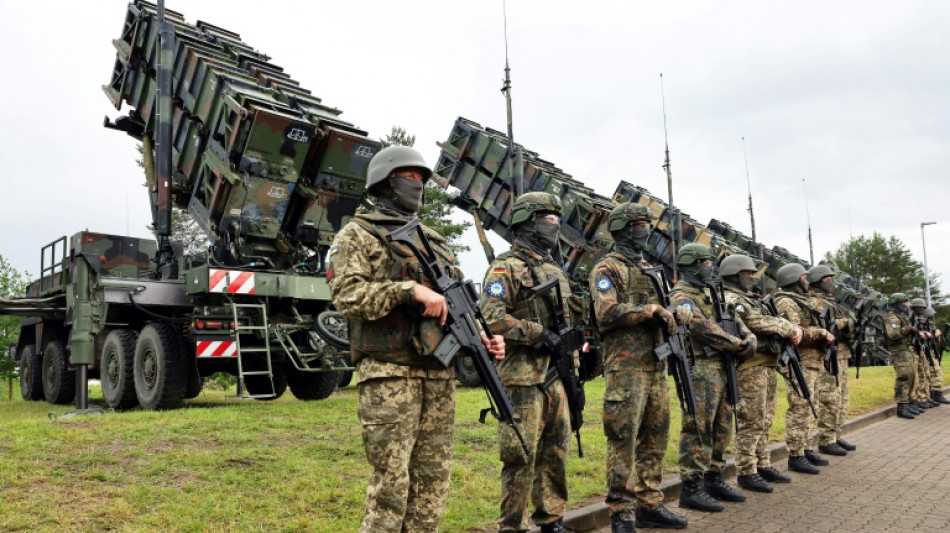
Germany's upper house of parliament on Friday gave the final seal of approval to a massive spending package to build up the military and overhaul infrastructure.
Worth hundreds of billions of euros, the so-called spending "bazooka" has been pushed by the likely next chancellor Friedrich Merz, whose centre-right CDU/CSU won elections last month and is now in coalition talks with the centre-left Social Democrats (SPD).
The plan exempts defence spending above one percent of GDP from Germany's constitutionally enshrined debt brake and sets up a 500-billion-euro ($545-billion) fund for infrastructure over 12 years.
This paves the way for over one trillion euros (dollars) worth of outlays in Europe's top economy, which has shrunk for the past two years.
The plan marks a dramatic break from Germany's economic orthodoxy, particularly for the CDU/CSU alliance which has been wedded to the debt brake since it was brought in in 2009.
The party has shifted position in the wake of US President Donald Trump's overtures to Moscow, saying there is now an urgent need to invest in defence to become more independent from Washington.
Bavaria's state premier Markus Soeder, who heads the CSU, told the chamber that "we must do everything we can to ensure that Germany once again becomes one of the strongest armies in Europe and can protect itself".
And he labelled the massive infrastructure spending a new "German Marshall Plan", referring to the American post-World War II effort to rebuild western Europe.
Soeder said Germany would undertake long-neglected upgrades of roads, bridges and rail lines, arguing that letting them fall into disrepair was a greater disservice to the next generation than building up state debt.
- 'Brutal paradigm shift' -
Berlin's move to bolster its fiscal firepower has been keenly watched by its neighbours as Europe scrambles to adapt to Trump's pivot away from traditional alliances.
The package needed a two-thirds majority and was approved by 53 of the Bundesrat's 69 members, after it cleared the lower house on Tuesday.
The upper house is made up of representatives of Germany's 16 federal states, and several state leaders spoke in favour of the package before the vote.
Boris Rhein, CDU leader of the central state of Hessen -- home to many US army bases -- said that geopolitical turmoil spelt "a brutal paradigm shift" for Germany which had learnt that "we cannot rely on military help from the United States".
He pointed to Trump berating his Ukrainian counterpart Volodymyr Zelensky in front of the world's media in the White House last month, calling the exchange "an obscene humiliation of a president whose people are fighting for their freedom".
"Europe must react to this, Germany must react to this, quickly and decisively," he said.
Representatives from the states of Thuringia and Brandenburg, where the far-left BSW party is part of governing coalitions, refused to approve the spending plans on Friday, as did those from Saxony-Anhalt and Rhineland-Palatinate, where the debt-averse Free Democrats (FDP) are in state governments.
A.AbuSaada--SF-PST