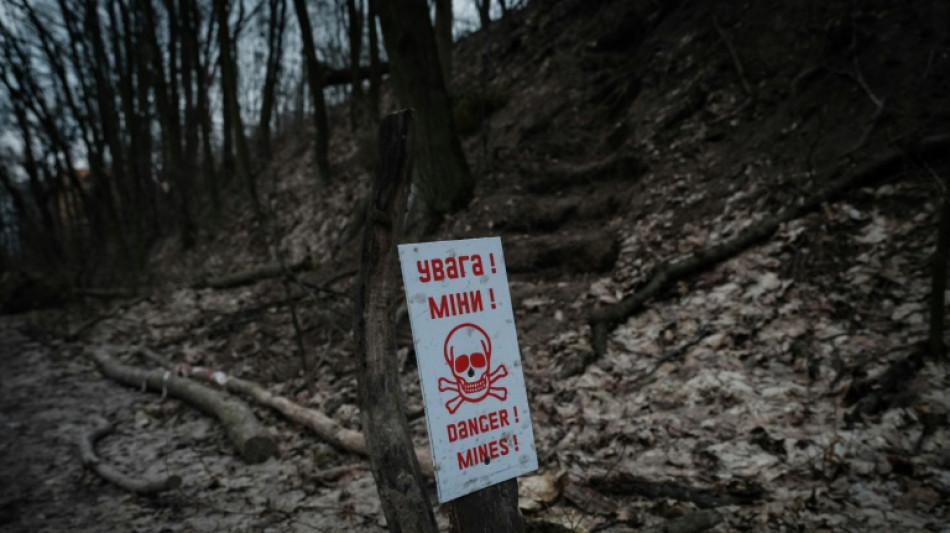
Poland, Baltics signal plans to withdraw from landmines treaty / Photo: YASUYOSHI CHIBA - AFP

 Fire at nursing home in Chile kills 16

 Frustrated Hamilton urges Ferrari to 'work harder'

 Zelensky ready to meet Putin at Miami G20 but Kremlin refuses

 Anthropic boss calls for AI slowdown, Altman and Musk agree

 England back on track after 'chaos', says Root
 Shelton chases history in US Open title tilt with top seed Zverev

 Norris 'masterpiece' snatches Spanish GP pole from Antonelli

 Mas on brink of Vuelta triumph as Landa claims stage 20

 No Kerr clash as Ingebrigtsen pulls out of Ultimate 1,500m

 Anthropic boss calls for slowing pace of AI development

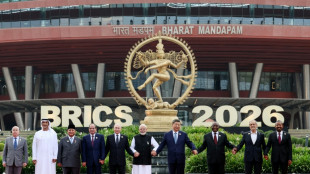 BRICS nations call for 'maximum restraint' in Middle East war

 England v Pakistan Test series: Three talking points
 Marquez snatches San Marino MotoGP sprint ahead of Bezzecchi
 Philippine ferry fire death toll climbs to 76 as identification process begins

 BRICS nations urge 'maximum restraint' in Middle East war

 Zelensky open to meeting Putin at G20 in Miami

 England survive scare to seal 3-0 sweep against Pakistan

 Trump says Irish unification would be 'fantastic'
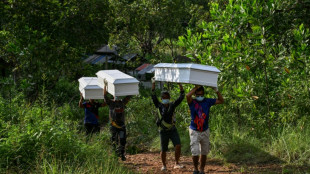 Bodies of Philippines ferry fire victims brought ashore as toll hits 35

 Flick warns Barca stars to keep focus after perfect start

 Trump in Ireland for golf tournament, diplomatic pleasantries

 French police suspect train derailment was sabotage

 Trump lands in Ireland for golf tournament, PM talks

 Xi lands in India for BRICS summit overshadowed by war

 From crime to the Arctic: ultramarathoner film debuts in Toronto

Poland and the Baltic states on Tuesday took a first step towards quitting a treaty banning anti-personnel mines, citing an increased security risk from Russia following its invasion of Ukraine.
The four EU and NATO member states have ramped up defence spending and training since Moscow's troops invaded Ukraine in 2022, voicing fears that Russia could target them next.
The defence ministers for the four countries, all neighbours of Russia, said in a joint statement they recommended withdrawing from the anti-landmine Ottawa Convention over "increased" military threats.
"In light of this unstable security environment marked by Russia's aggression... it is essential to evaluate all measures to strengthen our deterrence and defence capabilities," the statement said.
Poland's Defence Minister Wladyslaw Kosiniak-Kamysz hailed the move as "a very strong political declaration showing how determined we are to defend our homeland."
"Finland is also considering such a decision, so I think that soon all the countries... in the northeastern region of NATO's flank will make a similar decision," Kosiniak-Kamysz told reporters.
The Latvian government on Tuesday officially launched the process of pulling out from the convention.
"This would be the first time when Latvia would step out of any international convention we've ever signed," Prime Minister Evika Silina said Tuesday after the cabinet meeting.
More than 160 countries and territories are signatories to the Ottawa Convention, including Ukraine but not the United States or Russia.
The treaty bans signatories from acquiring, producing, stockpiling or using anti-personnel mines, which are designed to be buried or hidden on the ground.
They often mutilate victims, who are not immediately killed, and aid groups decry their long-term impact on civilians.
The four countries pledged to, despite the withdrawal, "remain committed to international humanitarian law, including the protection of civilians during an armed conflict."
Lithuania earlier this month quit another treaty banning cluster bombs citing security concerns over the threat from Moscow, sparking outrage from human rights watchdogs.
Amnesty International called the move "disastrous", while Human Rights Watch said it was "alarming", and the International Committee of the Red Cross (ICRC) warned it "weakens vital protections for civilians".
- 'Range of options' -
Lithuanian Defence Minister Dovile Sakaliene said on Tuesday her country was already considering what type of mines -- and how many of them -- it should buy.
"I think we will certainly have a range of options: both anti-tank and anti-personnel mines have been considered," Sakaliene said.
Lithuania's parliament speaker Saulius Skvernelis said that the decision on mines was necessary "given the length of the border with countries that are not friendly to us and what is happening in Ukraine".
Lithuania shares a border with Russia and its ally Belarus.
Belarus was used by Russian troops as a launch point for the invasion of Ukraine.
"The enemy that is fighting, unfortunately, is not bound by any conventions," Skvernelis said.
Latvia in a statement said that it could produce mines but "any possible acquisition, deployment and use of unguided anti-personnel mines will be based on military logic and defence capability development priorities".
Estonian Defence Minister Hanno Pevkur said his country currently had no plans to use anti-personnel mines at the moment.
"Estonia and our regional allies remain committed to upholding international humanitarian law and the protection of civilians, even after withdrawing from the Ottawa Convention," he added.
Withdrawal from the convention needs to be approved by national parliaments before other signatories are notified.
The withdrawal comes into effect six months after parliamentary approval.
E.Qaddoumi--SF-PST