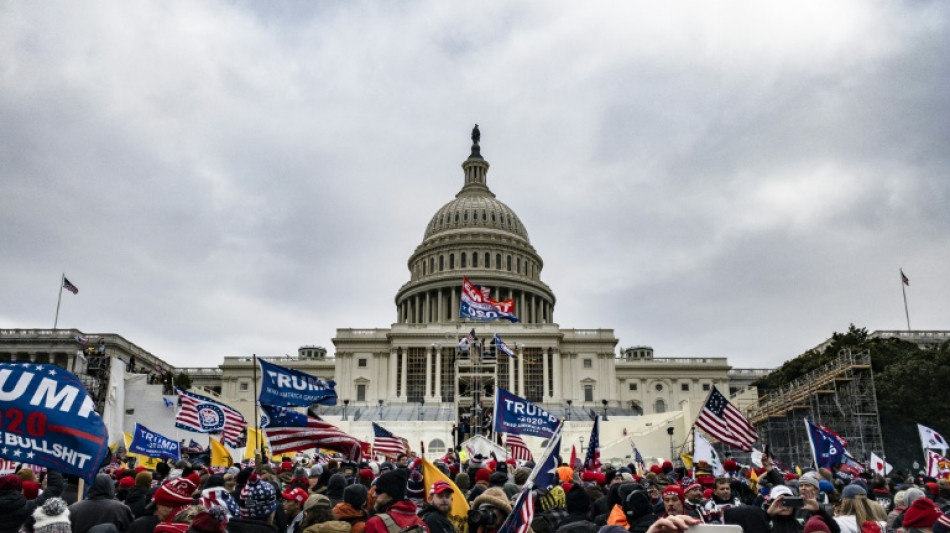
The US Capitol riot public hearings: six questions / Photo: Samuel Corum - GETTY IMAGES NORTH AMERICA/AFP/File

 Kremlin says Ukrainian attacks won't change war aims as Kyiv hits Saint Petersburg

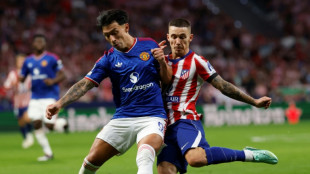 Martinez starts for Man Utd after outburst
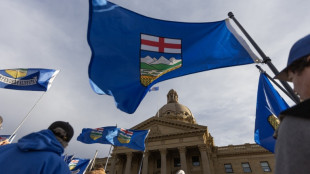 Alberta separatists rally ahead of independence vote
 Bandhan Financial weighs health-insurance entry after acquisitions settle

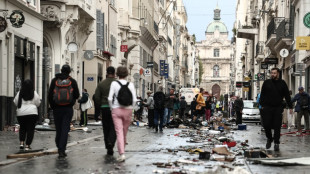
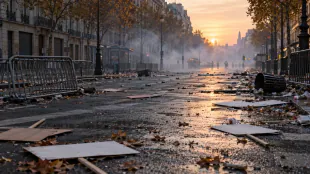 France assesses protest damage after 1,800 arrests

 Gord launches four AI tools for sustainability and emissions management
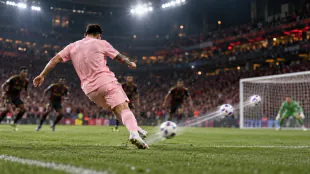
 Doha 2036 bid sets out sport-led social legacy

 Conservation teams rescue orangutans from Indonesian wildfires

 Truck ploughs into Hindu festival crowd in India, killing 13

 Kuwait announces maintenance closures in Nuzha, Surra and Rai
 Moody’s lifts OYO parent Prism outlook to positive before planned IPO

 Diesel shortage raises petroleum share of India’s exports to three-year high
 Premium products and financing drive Navratri appliance demand

 PNB expects festive demand to add up to two points to quarterly credit growth

 Robertson and Selby chase rare Home Nations sweep in Belfast

 Arteta backs Kai Havertz to become a 30-goal Arsenal forward

 Emiliano Martinez expects Chelsea return within weeks after surgery

 Sri Lanka choose to field against Pakistan in tri-series opener

 AP review finds racist and antisemitic posts in forum tied to Nevada candidate

 Cyient DLM drops 12% as margin concerns overshadow quarterly growth

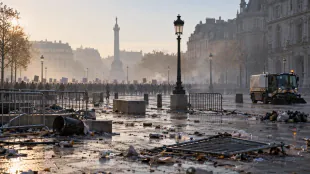 French authorities detain more than 1,000 after cost-of-living protests turn violent
 Tata Trusts plans network of 40 to 50 not-for-profit hospitals

 Bajaj Finance set to report second-quarter results on October 19

 Dozens of orangutans saved from Indonesia blazes as region grapples with haze
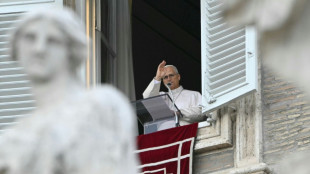 Pope addresses crowd in Vatican after cancer surgery

The investigation into last year's assault on the US Capitol by a mob of Donald Trump's supporters is entering a public phase, with two weeks of blockbuster televised hearings slated to start Thursday.
The seven Democrats and two Republicans who make up the House of Representatives committee probing the insurrection will set out exactly what happened on January 6, 2021 and who they believe aided the ringleaders.
A final hearing in September is expected to reveal the committee's finished report, outlining its findings and recommendations to prevent such attacks in the future.
Republicans including House Minority Leader Kevin McCarthy say the committee is partisan and "not conducting a legitimate investigation" -- an argument that has been rejected by a Trump-appointed federal judge.
- What has the committee been doing? -
The panel has issued around 100 subpoenas and has conducted around 1,000 interviews, with star witnesses including two of Trump's children -- Ivanka and Don Jr. -- as well as his son-in-law and senior advisor Jared Kushner.
Investigators have collected more than 100,000 documents, including emails, texts and official White House photographs allowing the committee to dig into the goings-on in and around the Oval Office.
Four of Trump's most senior aides have refused to comply with subpoenas, and five Republican lawmakers -- including McCarthy -- have dismissed their subpoenas for testimony as illegitimate.
- What have we learned? -
Revelations around who knew what and when have largely dripped out via court filings in civil cases involving potential committee witnesses and separate criminal cases against the insurrectionists.
Among the most explosive was a trove of text messages between Trump's chief of staff Mark Meadows and lawmakers, media allies and the Trump family urging the then-president to call on his supporters to end the riot.
Other texts among more than 2,000 handed over by Meadows show Ginni Thomas, the wife of US Supreme Court Justice Clarence Thomas, agitating for the election results to be overturned.
Meadows burned documents in his office after a meeting with House Republican Scott Perry, who was working to challenge the 2020 election, according to testimony by a former Meadows aide.
- What will the hearings reveal? -
The committee will seek to distill a sprawling, multi-faceted year-long probe into a compelling narrative that will "paint a picture as clear as possible as to what occurred," chairman Bennie Thompson told reporters.
Investigators hope to set out through public testimony the role the Trump White House played in the campaign to overturn his 2020 election defeat to Democrat Joe Biden.
Those efforts allegedly include an illegal scheme to send fake "electors" -- the people appointed to vote for president in the state-by-state "Electoral College" -- to Congress.
They also take in an authoritarian plan to seize voting machines and the alleged plot to delay the certification of Biden's win through the violence at the Capitol.
Investigators want to get to the bottom of a 187-minute delay before law enforcement was beefed up to protect the Capitol and learn why there is a gap of almost eight hours in White House logs of Trump calls as the violence played out.
- Will anyone face charges? -
A federal judge ruled in March that Trump more likely than not committed a crime in the run-up to January 6, 2021.
While the Justice Department is prosecuting more than 800 suspects for alleged lawbreaking at the Capitol, the committee itself has no powers to issue indictments.
The panel is expected to turn over evidence to federal prosecutors but has not announced whether it will recommend charges, a largely symbolic gesture.
- How will the hearings work? -
The committee will hold prime-time hearings at 8:00 pm (0000 GMT) on June 9 and 23, bookending 10:00 am hearings on June 13, 15, 16 and 21.
Testimony is expected to be accompanied by visual illustrations such as text messages, photographs and videos.
Thursday’s hearing is set to feature testimony from US Capitol Police officer Caroline Edwards, the first to be injured by rioters, and filmmaker Nick Quested, who recorded the first moments of violence.
J. Michael Luttig, a former federal judge who advised Trump's vice president Mike Pence, is expected to testify.
Other witnesses could include Marc Short, a chief of staff to Pence, Justice Department official Richard Donoghue and Jeffrey Rosen, Trump's last attorney general.
All four were party to much of the relevant discussion between Trump's election defeat and the insurrection two months later, investigators say.
The committee has been lukewarm about the idea of forcing Trump to testify, asserting that his appearance would likely add little to its understanding of the facts.
- Will they change any minds? -
Supporters see the committee's work as vital in ensuring one of the darkest episodes in the history of US democracy is never repeated.
Yet Democrats worry the hearings could be seen as another "partisan" attack on Trump, imperiling bipartisan efforts at reform and obscuring the broader story of a slow-moving coup attempt aided by a violent insurrection.
"The top issues for most US voters have nothing to do with the January 6 insurrection, unfortunately," Democratic analyst Mike Hernandez told AFP as his party faces tricky midterm elections later this year.
"Inflation, gas prices, school shootings, school safety and reproductive rights are all issues that more Americans care about."
P.AbuBaker--SF-PST