Did Ukraine have to become a partisan US issue? / Photo: Mandel NGAN - AFP/File

 Rybakina reigns serene as new world number one

 South Africa defeat New Zealand 43-28 to complete 3-1 series victory

 Rybakina triumphs in US Open, denies Sabalenka three-peat

 Akron fan's honorary play-calling stint ends with opening-drive fumble

 Louisiana's developing roster faces USC as Trojans enter as heavy favorites

 Christa Pike seeks clemency before September 30 execution in Tennessee

 Utah hosts Arkansas as both programs begin seasons under new coaches

 Maryland groups seek statewide data center pause after local moratoriums spread

 Winston County trash-debt prosecutions face challenge from civil-rights lawyers

 Fifth Circuit upholds dismissal of Jackson residents' constitutional water claims

 Anthropic details Claude misuse as US targets major illicit online marketplace

 Japanese floating parking platform is designed to lift cars above floodwater

 Arteta blasts 'unacceptable' Sunderland penalty despite Arsenal win

 Mbappe at the double as Real Madrid sink Rayo

 Arsenal extend perfect Premier League start as Chelsea, Liverpool held

 US survive Spain scare to book World Cup final clash with France

 Celine Dion makes long-awaited return to stage in Paris

 Werro crowned Ultimate queen, US sweep 100m races

 Venezuelans outside Caracas say capital not sharing blackout burden

 Danish WWII drama wins top prize at Venice festival

 Chelsea boss Alonso yearns for 'boring game' after Hull make their point

 Werro outguns Hodgkinson to win women's 800m at Ultimate

 Moreira leads AC Milan fightback in Lazio draw

 Chelsea boss Alonso for yearns for 'boring game' after Hull make their point

 'Tired' Liverpool must adapt to schedule, says Iraola

Could support for Ukraine have survived the bitter and increasingly polarized politics of Washington?
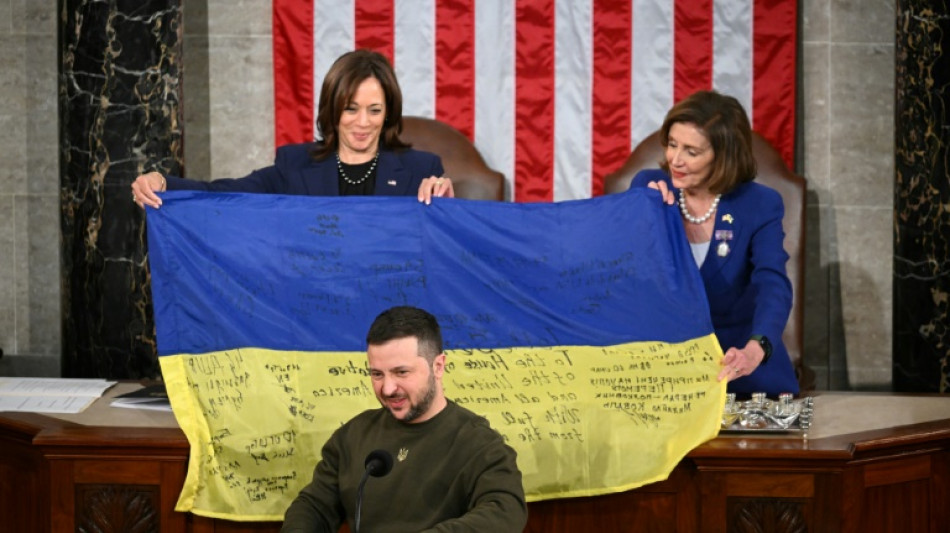
When Ukrainian President Volodymyr Zelensky made Washington his first foreign destination after Russia invaded his country, leaders of both major US parties escorted him to address Congress, where in his military fatigues he made the case for help.
Some Republicans stayed away during the holiday-season visit in 2022 but even many critics of aid came and listened. Joe Biden, then president, affectionately put his arm around Zelensky at the White House and his administration announced nearly $2 billion in additional weapons.
Such scenes, and the bipartisan veneer around them, are long gone.
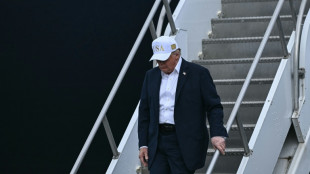
When Zelensky visited President Donald Trump on February 28, an Oval Office meeting descended into an unprecedented on-camera feud, with Trump and Vice President JD Vance accusing Ukraine of ingratitude and the administration soon afterward freezing US assistance.
Even some Republicans supportive of Ukraine said Zelensky misread the politics, as he talked back to Vance by questioning the credibility of any promises by Russia.
Senator Lindsey Graham, a Republican ally of Trump, said he met with Zelensky ahead of the White House meeting and told him, "Don't take the bait."
After the White House meeting, Graham went so far as to say that Zelensky should quit. But Zelensky has since worked to repair the rift, writing a letter to Trump and agreeing to talks with US officials in Saudi Arabia.
- Politicized by Trump -
"It wasn't at all inevitable that Ukraine would become a divisive political issue," said Jordan Tama, an American University associate professor who has researched the effects of US polarization on foreign policy.
Tama said the turning point came when Trump and media pundits who share his "America First" worldview, notably Tucker Carlson, began to criticize aid to Ukraine.
Trump "has politicized Ukraine policy, moving it from an issue where there was bipartisanship to one where there's more polarization," he said.
Vance once said that he does not care what happens to Ukraine, as China is the larger priority.
The president's son Donald Trump Jr. has taunted Zelensky on social media, recently sharing a deepfake video of an effete dancer with the Ukrainian leader's likeness.
Tama said Trump pulled away Republicans who otherwise would have supported Ukraine, even though many in the party still do.
"Trump has generated more partisan division than there would otherwise have been. But the issue is not yet entirely split along partisan lines," Tama said.
Immediately after Russia's invasion, nearly 80 percent of Americans backed aid to Ukraine, according to the Chicago Council on Global Affairs.
A recent CBS News/YouGov poll, however, found the public almost evenly divided on whether to send more assistance to Ukraine, with far more Democratic voters supporting aid.
- War-weary -
Leslie Shedd, until recently a top advisor to the Republican chairman of the House Foreign Affairs Committee, said there was still strong bipartisan support for Ukraine but that Zelensky had ignored advice.
"Many Republicans have used their own political capital to help Ukraine and are rightfully frustrated that President Zelensky seemed unwilling to help himself in that meeting," said Shedd, now a fellow at the Atlantic Council.
She blamed Biden for not sending more decisive weapons earlier that could have benefited Ukraine.
It became more politically difficult to support aid when seeing a slow war of attrition, especially when voters are concerned about other issues such as inflation and illegal immigration, Shedd said.
"Republican voters in particular have had long grievances with the US government spending billions of dollars overseas while not addressing the problems they face at home," she said.
Polls also show fewer US voters perceive a threat from Russia three years into the war.
Polling shows a mirror image of the Ukraine debate on the Middle East, with Republican voters overwhelmingly backing billions of dollars in weapons to Israel and Democrats more critical due to concerns over the rights of the Palestinians.
Foreign policy drew far more consensus in Washington during the Cold War, with both parties united in their opposition to the Soviet Union.
Tama, the political scientist, said polarization was aggravated by the consolidation of the two parties along ideological lines and by media fragmentation that has often left voters consuming slanted news or social media.
"More foreign policy issues are polarized along partisan lines than used to be the case," he said.
"It's hurting America's reputation because it makes America look inconsistent and unreliable to our partners overseas."
Q.Bulbul--SF-PST