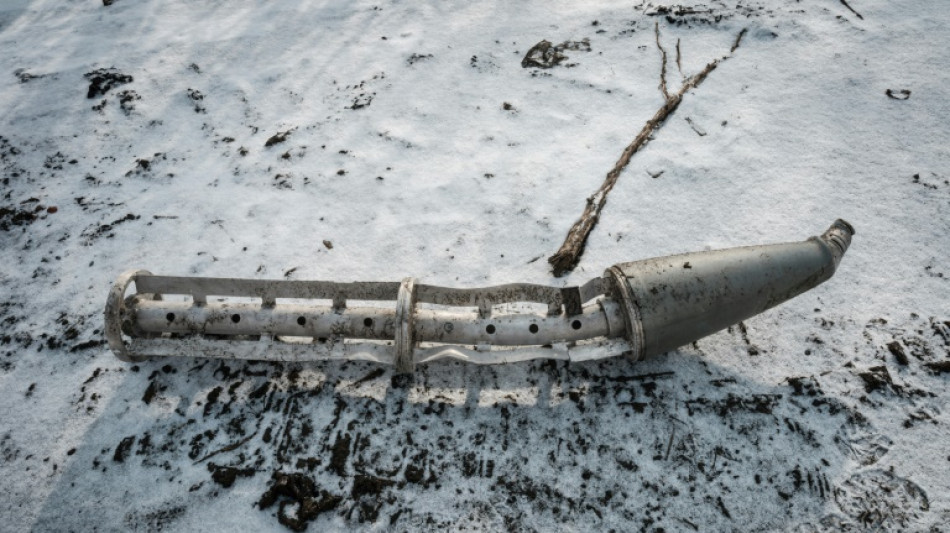
Lithuania quits cluster bomb ban treaty despite outrage / Photo: YASUYOSHI CHIBA - AFP

 'Be careful what you wish for': 'Obsession' director and star reflect on success

 Messi scores but Miami held by Nashville

 US Open champ Rybakina on top of world after injury scare

 Rybakina reigns serene as new world number one

 South Africa defeat New Zealand 43-28 to complete 3-1 series victory
 Rybakina triumphs in US Open, denies Sabalenka three-peat

 Akron fan's honorary play-calling stint ends with opening-drive fumble

 Louisiana's developing roster faces USC as Trojans enter as heavy favorites

 Christa Pike seeks clemency before September 30 execution in Tennessee

 Utah hosts Arkansas as both programs begin seasons under new coaches

 Maryland groups seek statewide data center pause after local moratoriums spread

 Winston County trash-debt prosecutions face challenge from civil-rights lawyers

 Fifth Circuit upholds dismissal of Jackson residents' constitutional water claims

 Anthropic details Claude misuse as US targets major illicit online marketplace

 Japanese floating parking platform is designed to lift cars above floodwater

 Arteta blasts 'unacceptable' Sunderland penalty despite Arsenal win

 Mbappe at the double as Real Madrid sink Rayo

 Arsenal extend perfect Premier League start as Chelsea, Liverpool held

 US survive Spain scare to book World Cup final clash with France

 Celine Dion makes long-awaited return to stage in Paris

 Werro crowned Ultimate queen, US sweep 100m races

 Venezuelans outside Caracas say capital not sharing blackout burden

 Danish WWII drama wins top prize at Venice festival
 Chelsea boss Alonso yearns for 'boring game' after Hull make their point
 Werro outguns Hodgkinson to win women's 800m at Ultimate

Lithuania on Thursday quit an international convention banning cluster bombs, citing security concerns over neighbouring Russia in a move that has drawn criticism from human rights groups.
The formerly Soviet-ruled Baltic state of 2.8 million people has also signalled its intention to leave another international treaty prohibiting the use of anti-personnel land mines.
NATO member Lithuania has said it wants to strengthen its defences following Russia's invasion of Ukraine, fearing it could be next if Moscow succeeds.
But Amnesty International has called the decision "disastrous" and Human Rights Watch said it was "alarming", with both organisations warning that it could put civilian lives at risk.
The Lithuanian parliament voted to leave the cluster munitions convention last July, but the cvountry had to wait six months after submitting exit documents to the UN for the decision to take full effect.
It is the first country to leave the convention, which was adopted in 2008, and the first European Union country to leave a multilateral arms regulation agreement.
Russia and Ukraine are not members of the convention and have both used cluster bombs in their three-year-long war.
"Russia uses all the instruments available in a conventional war, and this shows that we need to take action to ensure effective deterrence and defence," Lithuania's Deputy Defence Minister Karolis Aleksa told AFP this week.
"Withdrawing from the convention gives us the opportunity to increase the effectiveness of our defence against large-area targets," he said.
The convention has 112 state parties and 12 other signatories, and prohibits the use, transfer, production and stockpiling of cluster bombs.
Cluster munitions can be dropped from aircraft or fired from artillery, exploding mid-air and scattering bomblets over a wide area.
"The most effective deterrence and defence is when you have them in your possession and know how to use them," Aleksa said.
- 'A dangerous trend' -
Many countries have banned cluster bombs because they pose a lasting threat, as many fail to detonate on impact, effectively acting as land mines that can explode years later.
HI, a non-governmental group and founding member of the coalition against cluster munitions, asked Lithuania to reverse its move.
"Lithuania's decision paves the way to a dangerous trend as it may encourage other states to reconsider their commitments to humanitarian disarmament treaties, particularly in times of heightened security concerns," HI's Alma Taslidzan said in a statement.
"The Oslo Convention has proven to be effective in protecting civilians from this indiscriminate weapon," she said.
But Aleksa said Lithuania would take "all necessary measures" to minimise the negative effects of cluster munitions, including planning to collect unexploded ordnance as quickly as possible after any potential military operation.
"Cluster munitions have immense destructive power, and additional attention will be paid to internal rules on their use," he said.
Lithuania is also considering leaving another convention that bans anti-personnel landmines.
The military and the defence ministry have supported the move, but government leaders have paused the decision, asking whether regional allies would take similar steps.
The president's national security advisor, Marius Cesnulevicius, said in February that a final decision could take several months.
Finland's armed forces have been evaluating since last summer whether anti-personnel landmines should be reintroduced, but no decision has been made so far.
Stemming from a desire to ban anti-personnel landmines due to their devastating impact on civilians, the 1997 Anti-Personnel Landmines Convention currently has 164 state parties.
U.AlSharif--SF-PST