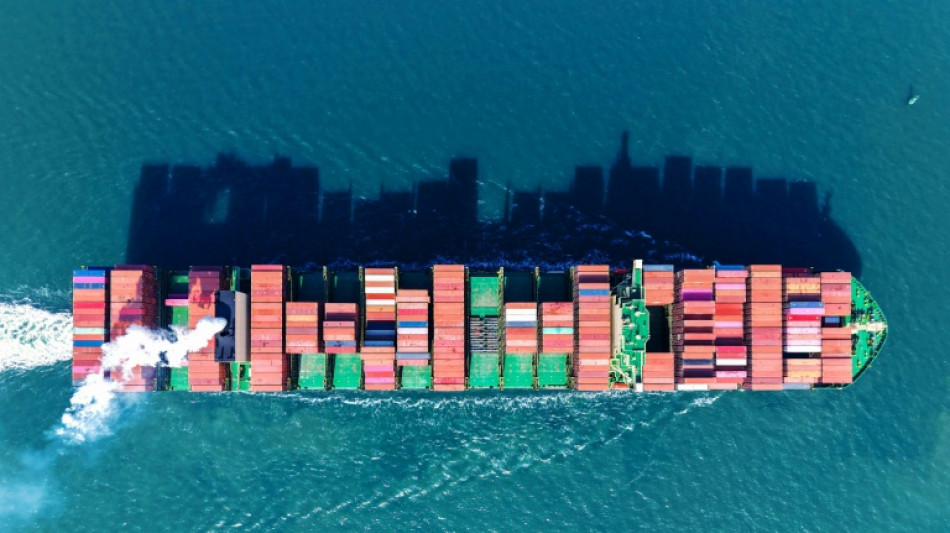
China, Canada retaliate to Trump tariff war / Photo: - - AFP

 الدفاعات الروسية تسقط 38 طائرة مسيرة فوق لينينجراد

 Amitabh Bachchan Drops Bulletproof Glass for Diwali Fan Greeting Outside Mumbai Home

 استشهاد 5 أشخاص بينهم أطفال بانهيار جرف رملي على خيام نازحين في دير البلح

 First Drive: 2027 BMW i760 xDrive Review

 الأصدقاء الخياليون: كيف تعزز الكائنات غير المرئية القدرات العقلية للأطفال والبالغين

 London Museum Granted 24/7 License Ahead of November Opening

 Dana White Confirms Flight to Washington for Trump Meeting on Press Secretary Role

 Dengue Fever Expands Into High Himalayas as Climate Change Warms Nepal

 IoT Refrigerator Hacks Disrupt Blood Labs and Supermarkets Across Europe and US
Mounting trade wars between the United States and its largest economic partners deepened Tuesday as huge US tariffs on Canada, Mexico and China kicked in, sparking swift retaliation from Beijing and Ottawa.
Markets fell in Asia and Europe in response to what analysts said were the steepest tariffs on imports since the 1940s.
Trump had announced -- and then paused -- blanket 25 percent tariffs on imports from major trading partners Canada and Mexico in February, accusing them of failing to stop illegal immigration and drug trafficking.
He pushed ahead with them Tuesday, citing a lack of progress on both fronts.
The duties will hit over $918 billion in US imports from both countries, and are set to hamper supply chains for key sectors like automobiles and construction materials.
Canada responded with its own retaliatory 25 percent tariffs, while Mexican President Claudia Sheinbaum said there was no justification for the US move and vowed to hit back with duties of its own.
Trump also inked an order Monday to increase a previously imposed 10 percent tariff on China to 20 percent -- piling atop existing levies on various Chinese goods.
Beijing condemned the "unilateral imposition of tariffs by the US" and said it would impose 10 and 15 percent levies on a range of agricultural imports from the United States.
Experts have warned the higher import costs could push up prices for consumers, complicating efforts to bring down inflation.
That includes at grocery stores -- Mexico supplied 63 percent of US vegetable imports and nearly half of US fruit and nut imports in 2023, according to the US Department of Agriculture.
Housing costs could also be hit. More than 70 percent of imports of two key materials homebuilders need -- softwood lumber and gypsum -- come from Canada and Mexico, said the National Association of Home Builders.
Truck drivers at the Otay Mesa border crossing in Mexico told AFP they were already feeling the impact as they waited to cross into the United States early Tuesday.
Work was drying up because many companies in the Mexican border city of Tijuana export Chinese goods, said driver Angel Cervantes.
"And since the tariffs are also against China, work is going down for the (transport) companies," he added.
- Fight to 'the bitter end' -
Ottawa's retaliatory 25 percent tariffs on $30 billion of goods went into effect just after midnight Tuesday.
"Canada will not let this unjustified decision go unanswered," Prime Minister Justin Trudeau said, adding that they would be extended to duties on more than $150 billion of Canadian goods within weeks.
China's tariffs will come into effect next week and will impact tens of billions of dollars in imports, from US soybeans to chickens.
China also suspended all imports of US lumber and halted soybean shipments from three US exporters.
Beijing's foreign ministry vowed to fight a US trade war to the "bitter end."
European Union trade spokesman Olof Gill warned the tariffs on Canada and Mexico threatened transatlantic "economic stability" and risked disrupting global trade, urging Washington to reverse course.
- Trump seeks leverage -
Analysts say Trump's tariffs over drugs like fentanyl are a means to tackle socio-economic problems -- while providing legal justifications to move quickly -- and Washington is also seeking leverage and to rebalance trade ties.
But using emergency economic powers to impose tariffs on Canada, Mexico and China is a novel move.
The Tax Foundation estimates that before accounting for foreign retaliation, tariffs on Canada, Mexico and China this time would each cut US economic output by 0.1 percent.
"We could easily reach the highest effective tariff rate since 1936 by the beginning of 2026," KPMG chief economist Diane Swonk warned ahead of the tariffs going into effect.
Both consumers and manufacturers stand to bear the costs of additional tariffs, which could diminish demand and trigger layoffs as businesses try to keep costs under control, she told AFP.
burs-sam/st/bgs
M.AbuKhalil--SF-PST