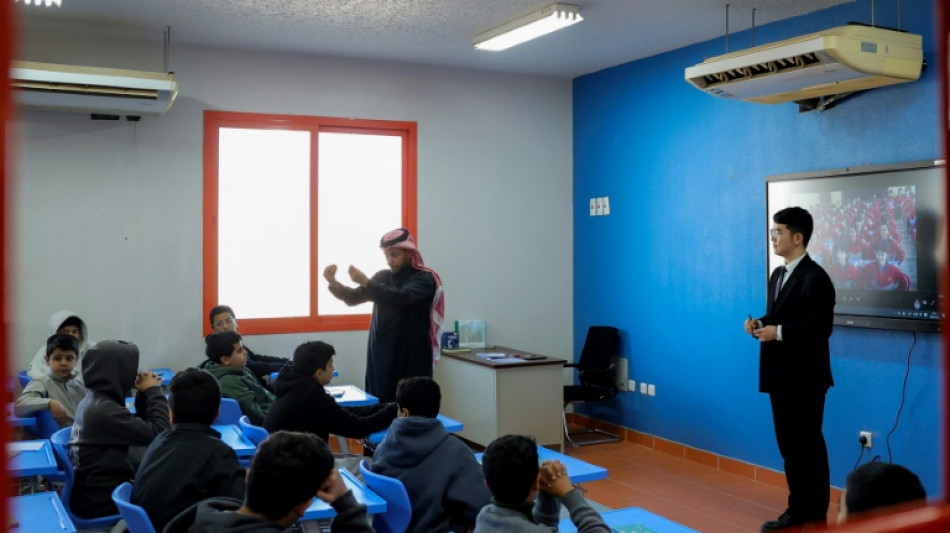
Chinese lessons in Saudi schools show growing ties / Photo: Fayez Nureldine - AFP

 Garcia keeps WBC welterweight title by stopping Benn
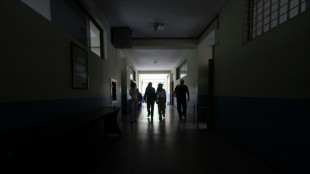
 Lights out in Laos as electricity exports surge

 'This is the test': All eyes on US Fed to tackle high inflation

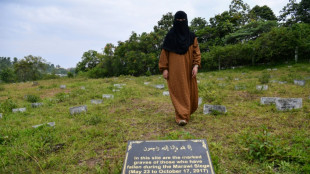 Scars of Marawi siege linger as Philippines poll nears

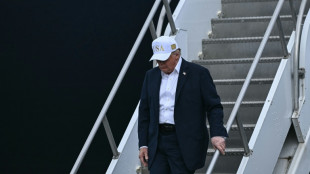 Trump turns to golf, family business on Irish visit's second day

 Defiant Sabalenka motivated by US Open defeat

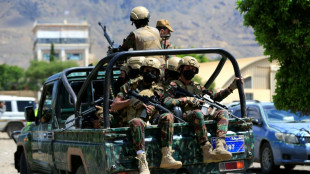 Houthis say hit Saudi base after renewed fighting with Yemeni govt forces

 Gilbert Arenas questions Jonathan Kuminga's decision to join Minnesota

 Cristian Mungiu's Fjord examines a family's conflict with Norwegian child authorities

 United States beats Spain 76-66 to set up World Cup final against France

 Queens residents seek renewed enforcement along Roosevelt Avenue

 Marmot research gains over $140,000 from meme-coin fees alongside wildlife contest
 Roadless Rule repeal proposal raises concerns over Midwest forests and fire risk

 KFF journalists discuss opioid funds, suicide prevention and gaps in care

 Steven Strogatz weighs AI mathematics advances and their consequences for researchers

 GTA VI draws political criticism online as preorder estimates exceed five million

 Mini 1998 GT pairs 161-hp engine with John Cooper Works chassis hardware

 Attissogbe double inspires Pau to Top 14 summit

 Guimaraes strike lights up Arsenal win over Sunderland

 Israeli-made Gaza documentary wins Venice special jury prize

 De Zerbi apologises to fans after Spurs' stalemate extends goal drought

 Lowry takes four-shot lead as Trump jets in for Irish Open

 Harrison, Skupski win US Open men's doubles title
 Verstappen fears overtaking will be 'tough' at Spanish GP

 Argentina revives plan for South Atlantic naval base amid Falklands tensions

With a map of China on the wall behind him, 14-year-old Yasser al-Shaalan studied the names of professions in a Chinese textbook, one of thousands of Saudi children now learning the language at school.
Mandarin's entry into public schools is the latest sign of growing ties between Saudi Arabia and China, as the oil-rich Gulf kingdom pushes to diversify its economy and strategic alliances.
"The pupils at the other schools are proficient in English. I know Arabic, English and Chinese, which is a great asset for my future," Shaalan told AFP.
In August, Saudi Arabia introduced China's official language as a compulsory second foreign language after English in six of its 13 administrative regions' schools.
Shaalan and his classmates have three Mandarin lessons a week, taught by their teacher Ma Shuaib, a Chinese national and Muslim who is fluent in Arabic.
In their classroom in northern Riyadh, close to the Saudi headquarters of Chinese e-commerce giant Alibaba, Shaalan and his classmates learn Chinese characters shown on an electronic whiteboard.
"At first it was difficult, but now it has become easy and fun," the teenager told AFP.
Mandarin is one of the world's most widely spoken languages, and the overwhelming majority of its speakers live in China.
- 'Language of the future' -
After a visit to China in 2019, Saudi crown prince and de facto ruler Mohammed bin Salman announced a plan to introduce Chinese throughout the education system.
Since then, several Saudi universities have opened programmes in Chinese. In 2023, Prince Sultan University in Riyadh inaugurated the kingdom's first branch of the Confucius Institute.
Following China's emergence as a major economic power, Mandarin teaching has become increasingly popular around the world, including in Europe.
However, in 2022 Germany warned the Confucius Institute language centres were being "used by the Communist Party for political ends".
Dozens have closed in the United States, Sweden, France, Australia and Canada in recent years, following similar accusations.
In Saudi Arabia, no such fears have been expressed.
In Riyadh, Ma said that while "Chinese is one of the most difficult languages", he uses "modern methods" to make it easier.
"I use a digital board, gestures and interactive games to motivate the students," he explained.
While learning Chinese is compulsory, marks for the course do not count towards the students' overall grades.
"At the beginning, we focus on listening, speaking and reading, then we move on to writing," added Ma, who teaches five classes a week at the Yazeed bin Abi Othman School.
Sattam al-Otaibi, the school's director, said: "Chinese is the language of the future for economic communication. The world depends on China for many industries."
Thousands of Chinese people work in Saudi Arabia, particularly in Riyadh, where the airport now displays trilingual signs in Arabic, English and Chinese.
- 'Changing global order' -
Saudi Arabia is a long-standing partner of the United States but has also strengthened its relations with China and Russia.
The Middle East's largest economy is the world's leading exporter of crude oil, with China taking about a quarter of its shipments.
That has helped China become Saudi Arabia's leading trade partner, with two-way trade exceeding $100 billion in 2023, according to official figures.
Ties with Beijing have flourished during Prince Mohammed's "Vision 2030" project to diversify his country's oil-dominated economy and improve its image abroad.
At the same time, US-Saudi relations have fluctuated in recent years.
Former US president Joe Biden once pledged to make Saudi Arabia "a pariah" over the 2018 murder of dissident Saudi journalist Jamal Khashoggi, before later changing course.
A geopolitical rival to the United States, China has worked to strengthen its influence in the Middle East.
In 2023, it brokered a stunning rapprochement between heavyweight rivals Saudi Arabia and Iran after years of no ties between them.
"For Saudi Arabia, the relationship with China has become one of the most important," said Umer Karim, an expert on Saudi foreign policy at the University of Birmingham.
Chinese President Xi Jinping has twice visited Riyadh, participating in Gulf-China and Arab-China summits attended by regional leaders.
Riyadh also hosted a Sino-Arab Investment Forum in 2023, where more than $10 billion of investment agreements were signed with Chinese companies.
As economic exchanges step up, hundreds of Chinese teachers have already arrived in Saudi Arabia, and Riyadh plans to send Saudi teachers to learn Mandarin in China.
"The move to teach kids Chinese is again in line with the changing global order dynamics where China has emerged as the global economic powerhouse," Karim said.
B.Khalifa--SF-PST