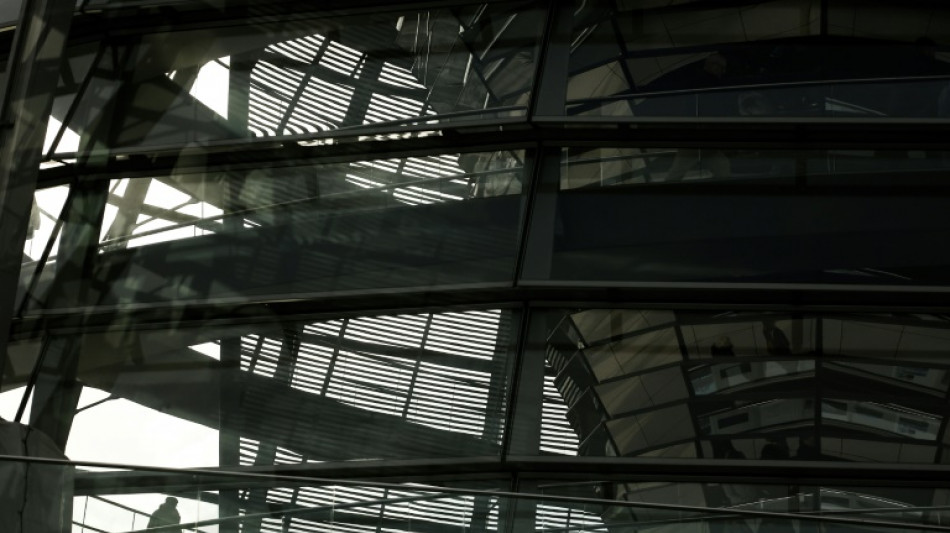
Germany may face long wait for new government after vote / Photo: Odd ANDERSEN - AFP/File

 Macron, Carney to visit French islands after Trump's map post
 حمزة قورقماز يناقش العلاقة بين وضوح المبادئ واحترام الاختلاف

 اليورو يستقر في البنوك المصرية وأعلى سعر للبيع 59.85 جنيه
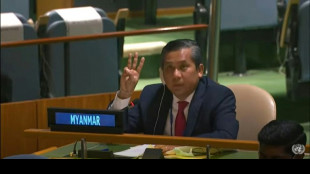 Myanmar says UN envoy illegitimate ahead of credentials decision
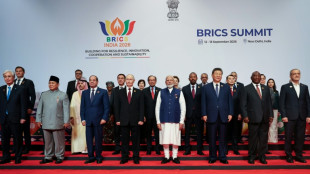
 Philippine rescuers pull more victims from charred ferry

 ستاندرد آند بورز تثبت تصنيف السعودية عند A+

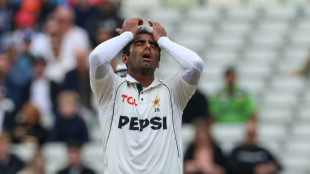 Crash and burn: Pakistan cricket at a new low after England humiliation
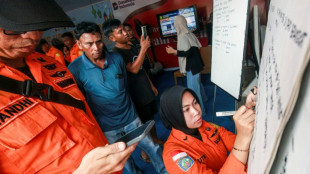
 'Second life': Nepal tunnel survivor recalls ordeal

 Hong Kong homes flattened for US$28 bn high-tech hub
 'Be careful what you wish for': 'Obsession' director and star reflect on success
 Messi scores but Miami held by Nashville
 US Open champ Rybakina on top of world after injury scare
 Rybakina reigns serene as new world number one
 South Africa defeat New Zealand 43-28 to complete 3-1 series victory
 Rybakina triumphs in US Open, denies Sabalenka three-peat

 Akron fan's honorary play-calling stint ends with opening-drive fumble

 Louisiana's developing roster faces USC as Trojans enter as heavy favorites

 Christa Pike seeks clemency before September 30 execution in Tennessee

 Utah hosts Arkansas as both programs begin seasons under new coaches

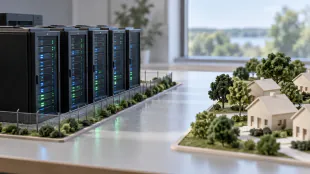 Maryland groups seek statewide data center pause after local moratoriums spread
 Winston County trash-debt prosecutions face challenge from civil-rights lawyers

 Fifth Circuit upholds dismissal of Jackson residents' constitutional water claims

 Anthropic details Claude misuse as US targets major illicit online marketplace

 Japanese floating parking platform is designed to lift cars above floodwater

 Arteta blasts 'unacceptable' Sunderland penalty despite Arsenal win

German voters head to the polls in a winter election on Sunday but may not have a new government for some time.
Arduous coalition negotiations tend to drag on for weeks if not months in Germany, spelling long stretches of political paralysis before a new chancellor takes charge.
The confident poll frontrunner Friedrich Merz has said he's aiming for an Easter deadline -- April 20 -- for a deal and urged potential allies to get ready for speedy talks.
"If we spend weeks, possibly months... then the period in which this country is without a majority capable of governing will be too long for me," Merz said in a recent Politico interview.
In Berlin, a bulging in-tray of challenges awaits whoever is the next leader, from a stagnating economy to the Ukraine war and an increasingly hostile Trump administration.
Current polls give the conservative CDU-CSU alliance of Merz a strong lead over Chancellor Olaf Scholz's Social Democrats (SPD).
But the surveys also suggest that Merz's party, now polling around 30 percent, would need a junior coalition partner to gain a parliamentary majority.
Merz could potentially opt to work with Scholz's centre-left SPD in a so-called "grand coalition" of the two big-tent parties, known as the "GroKo" in German.
Scholz -- whose own motley alliance with the Greens and the liberal Free Democrats (FDP) broke up in November -- would not be expected personally to join such a government.
Alternatively, or additionally, a victorious Merz could invite the Greens into an alliance -- but this has so far been strongly opposed by the CDU's Bavarian sister party the CSU.
- Marathon talks -
Attempting to forge any such pact forces former campaign trail foes to quickly make nice. The parties first engage in exploratory talks before moving on to full coalition negotiations.
Scholz in 2021 needed 10 weeks from polling day to form his government with the Greens and the FDP.
Tired-looking selfies posted by party leaders during the marathon talks attested to the arduous work to forge a coalition of unprecedented complexity.
But the time span was "within the usual range", said Uwe Jun, political science professor at Trier University.
Coalition agreements are highly detailed and have a "contractual character", said Dorothee de Neve, politics professor at Justus Liebig University, but have long been a "feature of German politics".
The longest wait came in 2017, when it took Angela Merkel's conservatives some six months to forge a GroKo with the SPD.
Merkel's initial attempt at a coalition with the Greens and FDP spectacularly failed, prolonging the wait.
- 'Divided society' -
Once staid German politics have been disrupted by the over decade-long rise of the far-right Alternative for Germany (AfD) party, now polling around 20 percent.
Although all other parties have vowed not to govern with the anti-immigration AfD, its popularity has eroded their voter support.
A wild card in the election is whether a number of smaller parties will cross the five-percent threshold to enter parliament or be cast into oblivion.
The FDP and the upstart far-left BSW are fighting for their lives around the five percent death zone, while the other small leftist party Die Linke has polled somewhat higher in recent days.
Jun said that forming another grand coalition would "not be simple", given their "clear differences" especially on social and economic policy.
Nonetheless, the two mainstream parties have ruled together in three of the last five governments -- a trend decried by the AfD, which labels them the establishment or "system parties".
When the ballots are counted, "fragmentation could produce a historically fractured parliament," said Michael Broening of the Friedrich Ebert Foundation.
"Regardless of the parliamentary makeup, social fragmentation is likely to persist," he told AFP.
"This will make coalition-building more challenging -- not only within parliament but also in terms of broader engagement with an increasingly divided society."
I.Yassin--SF-PST