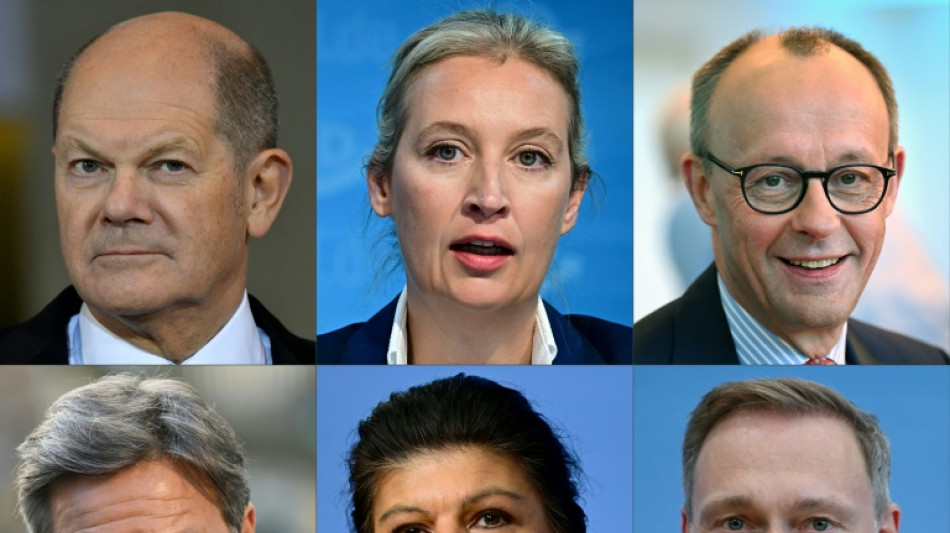
Cheat sheet on Germany's colour-coded politics / Photo: Stefanie LOOS, Tobias SCHWARZ, Ina FASSBENDER, ANGELA WEISS, JOHN MACDOUGALL, RALF HIRSCHBERGER - AFP/File

 Macron, Carney to visit French islands after Trump's map post
 حمزة قورقماز يناقش العلاقة بين وضوح المبادئ واحترام الاختلاف

 اليورو يستقر في البنوك المصرية وأعلى سعر للبيع 59.85 جنيه
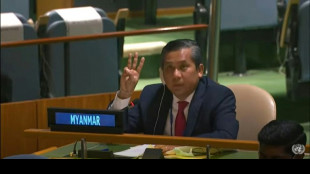 Myanmar says UN envoy illegitimate ahead of credentials decision
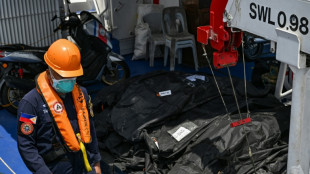 Philippine rescuers pull more victims from charred ferry
 ستاندرد آند بورز تثبت تصنيف السعودية عند A+

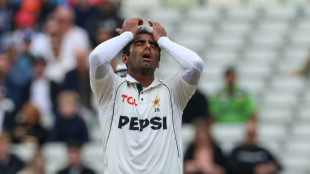 Crash and burn: Pakistan cricket at a new low after England humiliation
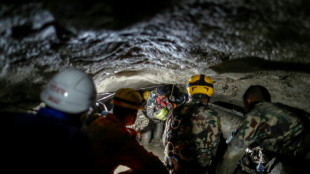 'Second life': Nepal tunnel survivor recalls ordeal
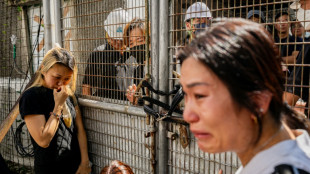 Hong Kong homes flattened for US$28 bn high-tech hub
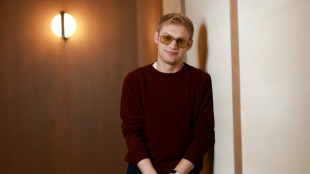 'Be careful what you wish for': 'Obsession' director and star reflect on success
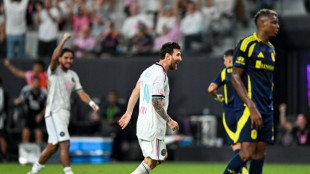 Messi scores but Miami held by Nashville
 US Open champ Rybakina on top of world after injury scare
 Rybakina reigns serene as new world number one
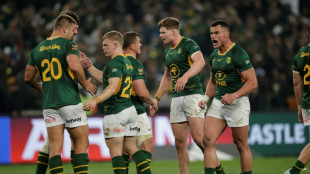 South Africa defeat New Zealand 43-28 to complete 3-1 series victory
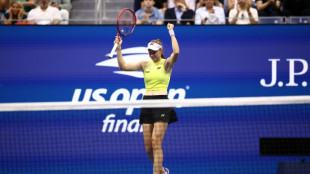 Rybakina triumphs in US Open, denies Sabalenka three-peat

 Akron fan's honorary play-calling stint ends with opening-drive fumble
 Louisiana's developing roster faces USC as Trojans enter as heavy favorites

 Christa Pike seeks clemency before September 30 execution in Tennessee

 Utah hosts Arkansas as both programs begin seasons under new coaches
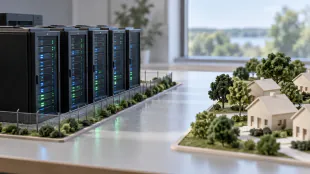 Maryland groups seek statewide data center pause after local moratoriums spread
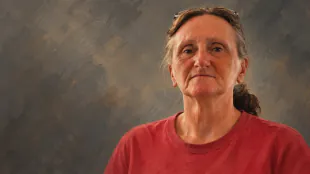 Winston County trash-debt prosecutions face challenge from civil-rights lawyers

 Fifth Circuit upholds dismissal of Jackson residents' constitutional water claims

 Anthropic details Claude misuse as US targets major illicit online marketplace

 Japanese floating parking platform is designed to lift cars above floodwater

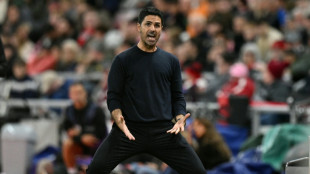 Arteta blasts 'unacceptable' Sunderland penalty despite Arsenal win
Germany holds elections on Sunday after its three-party "traffic light" coalition collapsed last year and could soon have a "black-red" government while a "Jamaica" or "blackberry" alliance is less likely.
Confused? Here is a cheat sheet for Germany's colour-coded party politics ahead of the pivotal vote in Europe's most populous country and biggest economy.
Every German party is traditionally associated with a colour, and national flags and other imagery are commonly used as shorthand for possible coalition combinations.
Here are Germany's main parties, their colours, leaders and what they stand for:
- Red: Social Democratic Party (SPD) -
The centre-left party of embattled Chancellor Olaf Scholz, 66, is Germany's oldest with origins in a labour association founded in the mid-1800s.
Its key demands are fair wages, safe pensions and social benefits, and its symbol is a red rose.
The SPD prides itself on its principled opposition to the Nazis before it was banned and its members exiled.
Party lore says that dialogue with Moscow, rather than confrontation, helped end the Cold War.
Prominent former SPD chancellors include Willy Brandt, Helmut Schmidt and Gerhard Schroeder.
- Black: Christian Democratic Union (CDU) -
Germany's main conservative party, led by former corporate lawyer Friedrich Merz, 69, prioritises boosting the economy, law and order and traditional social values.
Merz has promised to steer the party back to its right-wing roots, away from the more centrist course charted by former chancellor Angela Merkel.
He has vowed to strongly restrict irregular immigration and perhaps bring back nuclear energy, phased out under Merkel.
The CDU is in a permanent alliance with Bavaria's Christian Social Union (CSU) led by Markus Soeder.
Well-known former CDU chancellors include the first post-WWII leader Konrad Adenauer and Helmut Kohl, dubbed the father of Germany's 1990 reunification.
- Yellow: Free Democratic Party (FDP) -
The FDP, which promotes liberal economic policies and small government, was long Germany's main "third party" and has had a key role in building and bringing down governments.
Its leader, former finance minister Christian Lindner, 46, provoked the government crisis that came to a head when Scholz fired him on November 6.
The turmoil recalled a 1982 power play when the FDP switched sides, bringing down Schmidt, who was replaced by Kohl.
The FDP is sometimes mocked as the party of the rich but sees itself as a watchdog against government overreach, bureaucracy and red tape.
- Green: Alliance 90/The Greens -
The Greens emerged from the environmental, anti-nuclear and peace protest movement of the 1970s.
Its first MPs were elected in the early 1980s and they shocked the staid Bundestag when they showed up in knitted pullovers and put their feet on the benches.
But the party has since firmly entered the mainstream and advocates strong military support for Ukraine against Russia.
The current alliance was built in 1993 with activist groups from the formerly communist East Germany.
Vice-Chancellor Robert Habeck, 55, is the top election candidate of the Greens, which is also the party of Foreign Minister Annalena Baerbock.
- Blue: Alternative for Germany (AfD) -
The far-right party started off a decade ago as a eurosceptic fringe party but has since embraced a virulent anti-immigration agenda.
It railed against Merkel's 2015 green light to allow in more than a million migrants, many from war-torn Syria.
AfD politicians tend to doubt climate change, hold pro-Moscow positions and support US President Donald Trump whose ally Elon Musk has strongly backed the AfD.
Some AfD key figures have used Nazi-era phrases, and the domestic security services consider elements in the party to be extremists, fuelling calls to ban it.
With its top candidate Alice Weidel, 46, the AfD has been polling at around 20 percent, with most of its support in the ex-communist east.
All other parties have committed to an anti-AfD "firewall" of non-cooperation, although Merz breached this in late January when he accepted AfD support in parliament to pass a motion calling for an immigration crackdown.
- Violet: Linke and Alliance Sahra Wagenknecht (BSW) -
Germany's two far-left parties have hovered around the five-percent cutoff mark for reentry into parliament.
Die Linke has enjoyed a late poll surge above that mark, boosted by a spirited anti-fascist speech by its top candidate Heidi Reichinnek, 36.
The Linke's former leading figure, Sahra Wagenknecht, 55, left last year to form her own "left-wing conservative" BSW, which is sceptical of immigration.
Wagenknecht, who grew up in the communist East, promotes anti-capitalist views and opposes NATO, has struggled to maintain the initial buzz around her new party.
- Colourful coalitions -
Scholz's collapsed red-yellow-green coalition was dubbed the "traffic light" government.
In 2017 Germany almost got a black-yellow-green "Jamaica" coalition, before the FDP pulled out of talks.
Polling suggests Germany could next be headed for a CDU-led "black-red" grand coalition with the SPD that may need a third partner.
If the FDP were to join in, their colours would match the national flag for a "Germany" coalition.
If instead the Greens joined, this would lead to a black-red-green "Kenya" coalition.
Also seen at the state level before, but highly unlikely at the national level, is a black-red-violet alliance of the CDU, SPD and BSW, dubbed the "blackberry".
Y.AlMasri--SF-PST