
New arena, new attitudes? Cash spat in spotlight at UN nature talks / Photo: Joaquin Sarmiento - AFP/File

 Iran's economic ties to Dubai hard to break despite war

 iPhone 18預購後出現可疑扣款 四間銀行調查未授權交易

 《浪花男女》辦特別謝票場 馮志強談票房與導演客串拍攝

 Former captain De Villiers hails 'fantastic' Springboks

 Galaxy Tab S12系列效果圖曝光 Ultra擬配雙鏡頭及瀏海螢幕
 اليورو يستقر في البنوك المصرية وأعلى سعر للبيع 59.85 جنيه
 حمزة قورقماز يناقش العلاقة بين وضوح المبادئ واحترام الاختلاف

 Altman tells Fortune OpenAI will not go public in 2026
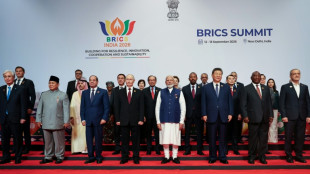 China, Russia, India seek economic cooperation at BRICS
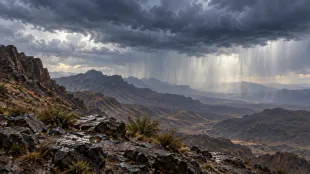 الأرصاد السعودية تتوقع سيولاً وأمطاراً رعدية في خمس مناطق

 ستاندرد آند بورز تثبت تصنيف السعودية عند A+
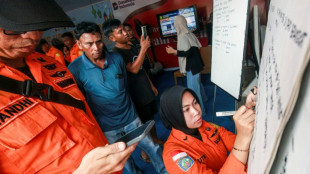 One dead, 102 rescued from stricken ferry off Indonesia's Java
 Garcia keeps WBC welterweight title by stopping Benn
 Lights out in Laos as electricity exports surge

 'This is the test': All eyes on US Fed to tackle high inflation

 Scars of Marawi siege linger as Philippines poll nears

 Trump turns to golf, family business on Irish visit's second day

 Defiant Sabalenka motivated by US Open defeat

 Houthis say hit Saudi base after renewed fighting with Yemeni govt forces

 Queens residents seek renewed enforcement along Roosevelt Avenue

 Roadless Rule repeal proposal raises concerns over Midwest forests and fire risk

 KFF journalists discuss opioid funds, suicide prevention and gaps in care

 Utah hosts Arkansas as both programs begin seasons under new coaches

 United States beats Spain 76-66 to set up World Cup final against France

 Steven Strogatz weighs AI mathematics advances and their consequences for researchers

The world's biggest nature conservation conference resumes in Rome next week for an urgent attempt at overcoming a deadlock between northern and southern countries over funding for nature protection.
Countries meeting at the UN's Food and Agriculture Organization (FAO) headquarters must agree on how nature funds should be governed -- a key step towards the goal of halting destruction of nature by 2030.
Their last attempt, in November, ended in disarray: the 16th Conference of Parties (COP16), held in Colombia, broke down due to a spat between poor and rich country blocs.
But with up to a quarter of assessed plants and animals now at risk of extinction, the world could not afford simply to wait for the next nature talks in 2026.
Instead, the 196 signatory countries to the UN's Convention on Biological Diversity (CBD) were invited to three days of overtime negotiations in the Italian capital, starting Tuesday, February 25.
They will begin where they left off -- amid an ever more challenging geopolitical context.
- 'Signals not good' -
Arnaud Gilles, of WWF France, told AFP he was not optimistic positions have changed in four months.
"At the moment, there is no more reason for us to get a result in Rome than there was in Cali" in Colombia, he said.
"The international diplomatic signals are not good," he said, citing US President Donald Trump's re-election in particular.
While the United States is not a signatory to the convention, the return of climate change denier Trump is expected to weigh on efforts.
So will stalled negotiations on a plastics pollution treaty, and a disappointing financial deal from a climate summit in Azerbaijan in November.
What is more, "some countries... are in a torpedoing climate and environmental ambitions mindset", Gilles said, pointing to Saudi Arabia's battle against phasing out climate-wrecking fossil fuels.
- 'Wake-up call' -
Delegates in Colombia had been supposed to ramp up progress towards 23 targets set in Canada in 2022, aimed at saving the planet from threats including deforestation, pollution and climate change.
Those targets came with a pledge to make $200 billion a year in funding available, including the transfer of $30 billion per year from rich to poor nations.
The squabble in Cali centred on the funding mechanism.
Developing nations -- led by Brazil and the African group -- insist on the creation of a new, dedicated biodiversity fund, saying they are not adequately represented in existing mechanisms.
Wealthy nations -- led by the European Union, Japan and Canada -- say setting up multiple funds fragments aid.
Negotiations among the nearly 154 countries confirmed for Rome so far will start from a compromise text.
That suggests laying the groundwork for a new development aid financing instrument to be set up at COP17 in Armenia in 2026, which would be overseen by the UN and give poor countries a greater voice.
Observers will be watching closely to see if developed countries, including those in budgetary crises like France and Germany, can be persuaded to agree.
Brian O'Donnell, director of the NGO Campaign for Nature, said he was "cautiously optimistic".
The failure on finance in Cali "was a wake-up call" and "led a number of countries to reassess their positions" ahead of Rome, he told AFP.
- 'Very contested' -
The president of the COP16 negotiations, Susana Muhamad, has feverishly been carrying out regional consultations and liaising with influential ministers ahead of Rome.
The proposals are "very contested by the countries of the North, but more or less accepted by the countries of the South", and "it is this divide that the COP presidency is trying to overcome", according to Daniel Mukubi, negotiator for the Democratic Republic of Congo.
To break the impasse, "we have to hope countries with a constructive approach form an alliance", said Juliette Landry, from French think tank IDDRI.
The Rome meet is also tasked with adopting reliable indicators to verify by COP17 how countries are performing on nature protection, and prepare for a probable push to set more ambitious targets.
COP16 was successful in some areas.
Delegates approved the creation of a permanent body to represent the interests of Indigenous people under the UN's Convention on Biological Diversity.
And they managed to coalesce around the creation of a fund to share the profits of digitally sequenced genetic data taken from plants and animals with the communities they come from.
Just how effective the so-called Cali agreement will be remains to be seen, however, with critics slamming a lack of obligations to ensure countries comply.
A.AlHaj--SF-PST