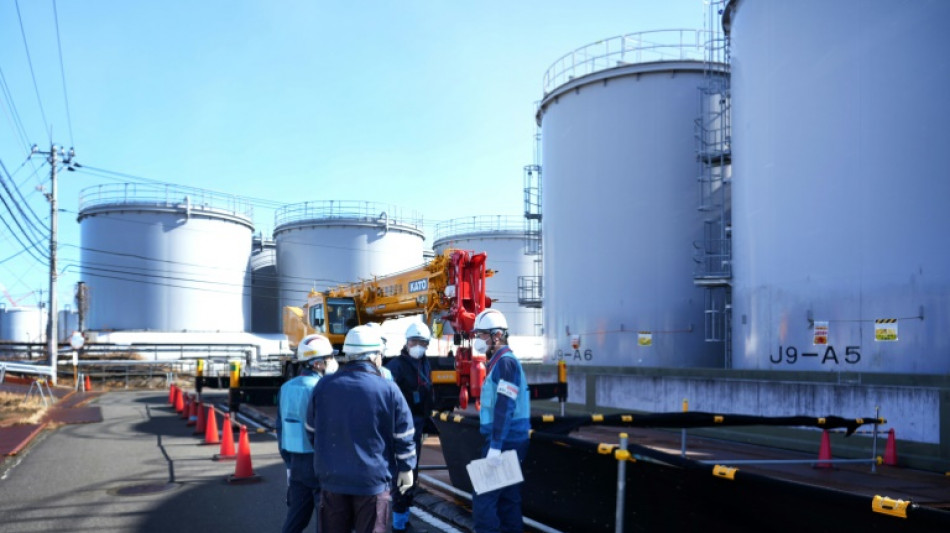
UN nuclear chief to view contaminated Fukushima soil / Photo: Atish PATEL - AFP/File

 Iran's economic ties to Dubai hard to break despite war
 iPhone 18預購後出現可疑扣款 四間銀行調查未授權交易
 《浪花男女》辦特別謝票場 馮志強談票房與導演客串拍攝

 Former captain De Villiers hails 'fantastic' Springboks

 Galaxy Tab S12系列效果圖曝光 Ultra擬配雙鏡頭及瀏海螢幕

 اليورو يستقر في البنوك المصرية وأعلى سعر للبيع 59.85 جنيه
 حمزة قورقماز يناقش العلاقة بين وضوح المبادئ واحترام الاختلاف

 Altman tells Fortune OpenAI will not go public in 2026
 China, Russia, India seek economic cooperation at BRICS
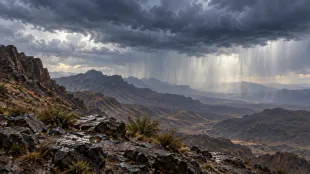 الأرصاد السعودية تتوقع سيولاً وأمطاراً رعدية في خمس مناطق
 ستاندرد آند بورز تثبت تصنيف السعودية عند A+
 One dead, 102 rescued from stricken ferry off Indonesia's Java
 Garcia keeps WBC welterweight title by stopping Benn
 Lights out in Laos as electricity exports surge

 'This is the test': All eyes on US Fed to tackle high inflation

 Scars of Marawi siege linger as Philippines poll nears

 Trump turns to golf, family business on Irish visit's second day

 Defiant Sabalenka motivated by US Open defeat

 Houthis say hit Saudi base after renewed fighting with Yemeni govt forces

 Queens residents seek renewed enforcement along Roosevelt Avenue

 Roadless Rule repeal proposal raises concerns over Midwest forests and fire risk

 KFF journalists discuss opioid funds, suicide prevention and gaps in care
 Utah hosts Arkansas as both programs begin seasons under new coaches

 United States beats Spain 76-66 to set up World Cup final against France

 Steven Strogatz weighs AI mathematics advances and their consequences for researchers

The UN nuclear watchdog chief will make his first visit this week to storage facilities for vast quantities of soil contaminated in the 2011 Fukushima disaster.
Japan's government must decide what to do with the soil -- enough to fill 10 baseball stadiums -- scraped from the wider Fukushima region as part of efforts to remove harmful radiation.
That is on top of the monster task of decommissioning the Fukushima Daiichi plant, which went into meltdown after being hit by a tsunami in the worst nuclear disaster since Chernobyl.
Rafael Grossi, head of the International Atomic Energy Agency (IAEA), will tour the plant on Wednesday. He will also be shown some of the 13 million cubic metres of soil and 300,000 cubic meters of ash from incinerated organic material.
For comparison, the capacity of the Tokyo Dome arena, where pop superstar Taylor Swift performed last year, is 1.24 million cubic metres.
Japan plans to recycle roughly 75 percent of the removed soil -- the portion found to have low radioactivity levels.
If this material is confirmed safe, authorities want to use it for building road and railway embankments among other projects.
The remaining soil will be disposed of outside the Fukushima region ahead of a 2045 deadline.
The central government has said it intends to confirm the disposal site this year, with Fukushima's regional governor reportedly urging it to come up with a plan quickly.
In September, the IAEA published its final report on the recycling and disposal of the soil, saying that Japan's approach was consistent with UN safety standards.
- Decades-long clean-up -
The Fukushima plant on Japan's northeast coast was hit by a huge earthquake-triggered tsunami in March 2011 that killed 18,000 people.
Although almost all areas of Fukushima region have gradually been declared safe for residents, many evacuees have been reluctant to return as they are worried about persistent radiation or fully resettled elsewhere.
Stripping topsoil from the land was "very effective" to decontaminate areas close to waterways, said Olivier Evrard, research director at France's Atomic Energy Commission (CEA).
"However, it also has many disadvantages. It had an enormous cost, it generated a massive amount of waste and still poses fertility issues" for agriculture, said Evrard, an expert on the Fukushima decommissioning process.
It stands in contrast to the decision to fence off a large area after the 1986 Chernobyl disaster and more or less "leave it to wildlife", he told AFP.
"You can imagine it's not very simple to find willing takers" for the soil, he cautioned, saying that another option would be to wait for radioactivity levels to decrease naturally.
The IAEA has been monitoring the decades-long clean-up process of the region and the plant itself.
But the most dangerous part -- removing around 880 tonnes of radioactive fuel and rubble from the reactors -- has only just begun, with one tiny sample removed by a robotic claw so far.
Plant operator TEPCO in August 2023 began discharging 1.3 million tonnes of collected groundwater, seawater and rainwater, along with water used for cooling the reactors, into the sea.
The water release has been endorsed by the IAEA, and TEPCO says all radioactive elements have been filtered out except for tritium, levels of which are within safe limits.
But countries including China and Russia have criticised the release and banned Japanese seafood imports over safety concerns.
During Grossi's visit -- his fifth to Japan in the role -- experts from the IAEA and countries including China and South Korea will take fresh seawater and fish samples.
This is "to further increase the transparency" of the water release process, an official from Japan's energy agency said.
China in September said it would "gradually resume" importing seafood from Japan but this has yet to begin.
H.Nasr--SF-PST