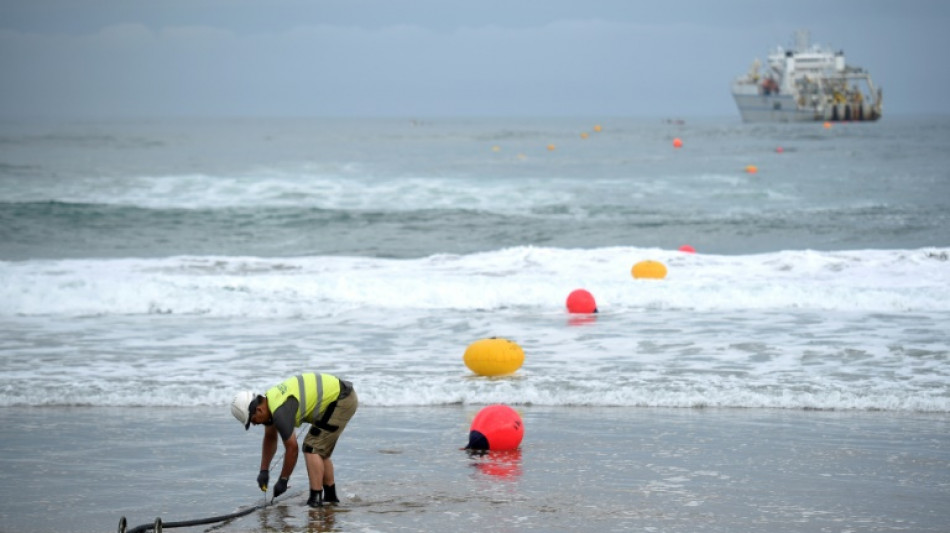
Fishing trawlers, not sabotage, behind most undersea cable damage: UN / Photo: ANDER GILLENEA - AFP/File

 Iran's economic ties to Dubai hard to break despite war
 iPhone 18預購後出現可疑扣款 四間銀行調查未授權交易

 《浪花男女》辦特別謝票場 馮志強談票房與導演客串拍攝

 Former captain De Villiers hails 'fantastic' Springboks

 Galaxy Tab S12系列效果圖曝光 Ultra擬配雙鏡頭及瀏海螢幕
 اليورو يستقر في البنوك المصرية وأعلى سعر للبيع 59.85 جنيه
 حمزة قورقماز يناقش العلاقة بين وضوح المبادئ واحترام الاختلاف

 Altman tells Fortune OpenAI will not go public in 2026
 China, Russia, India seek economic cooperation at BRICS
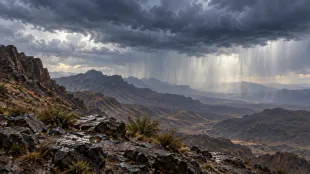 الأرصاد السعودية تتوقع سيولاً وأمطاراً رعدية في خمس مناطق
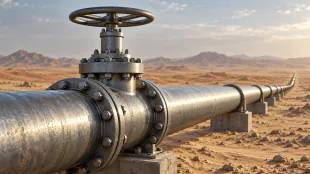
 ستاندرد آند بورز تثبت تصنيف السعودية عند A+
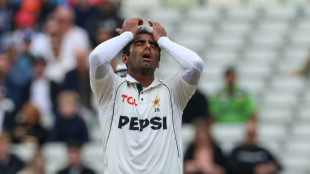
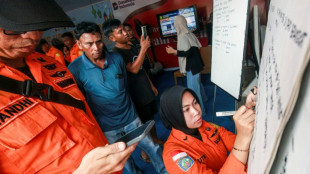 One dead, 102 rescued from stricken ferry off Indonesia's Java
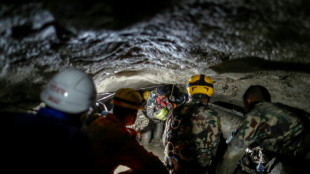
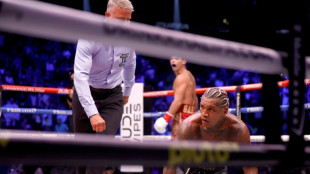 Garcia keeps WBC welterweight title by stopping Benn
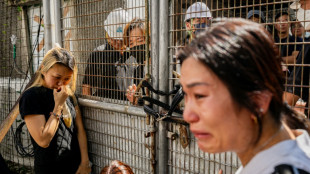
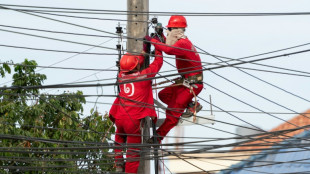 Lights out in Laos as electricity exports surge

 'This is the test': All eyes on US Fed to tackle high inflation

 Scars of Marawi siege linger as Philippines poll nears

 Trump turns to golf, family business on Irish visit's second day

 Defiant Sabalenka motivated by US Open defeat

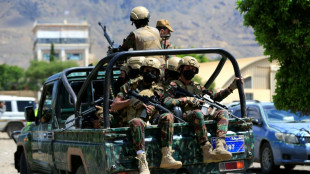 Houthis say hit Saudi base after renewed fighting with Yemeni govt forces

 Queens residents seek renewed enforcement along Roosevelt Avenue
 Roadless Rule repeal proposal raises concerns over Midwest forests and fire risk

 KFF journalists discuss opioid funds, suicide prevention and gaps in care

 Utah hosts Arkansas as both programs begin seasons under new coaches

 United States beats Spain 76-66 to set up World Cup final against France

 Steven Strogatz weighs AI mathematics advances and their consequences for researchers

Much has been written about suspected sabotage of undersea cables in the Baltic Sea, but the UN says fishing trawlers are causing the most damage by far, rather than spies.
Western officials have accused Russian vessels of sabotaging undersea communications and power cables in several high-profile incidents in the Baltic Sea in recent months.
European leaders and experts suspect acts of "hybrid warfare" against Western countries supporting Ukraine, and are calling for increased maritime security.
"The fact that interest in cable resiliency obviously has increased ... shows the importance of (this) infrastructure that we are so dependent on," Tomas Lamanauskas, the deputy head of the United Nations' International Telecommunications Union (ITU), told AFP in an interview.
The laying and operation of underwater cables was long the preserve of a consortium of large telecoms operators, but the internet giants have largely taken over in recent years, as they strive to keep up with ballooning flows of data.
Today, submarine cables form the backbone of global communications, carrying approximately 99 percent of the world's internet traffic, Lamanauskas said, pointing out that even when traffic goes through satellites, it is bounced to land stations and goes through underwater cables "to reach every corner of the Earth".
About 1.4 million kilometres (nearly 900,000 miles) of fiberoptic cables are laid on the ocean floor, enabling the provision of essential services such as trade, financial transactions, public services, digital health and education around the world.
- Frequent outages -
Damage to submarine cables is not uncommon.
According to the International Cable Protection Committee (ICPC), there are an average of 150 to 200 outages per year worldwide, or around three incidents a week.
But while suspected nefarious activities have been in the headlines, Lamanauskas stressed that fishing and anchoring is responsible for 80 percent of all recorded damage.
There are also natural hazards, ageing, abrasions and equipment failures, he added.
Given the growing importance of such cables, "every incident and every cut of the cable is much more noticeable", Lamanauskas said.
And while the undersea cable network is vast, there are actually only around 500 individual cables in the world, meaning that "even when a few of those are cut or ... damaged, the impact" is huge, Lamanauskas said.
That was certainly the case when three submarine cables carrying about a quarter of all internet traffic between Asia and Europe were cut last year in the Red Sea, or when a huge volcanic eruption severed the cable linking the Tonga archipelago to the rest of the world, he said.
Lamanauskas also highlighted last year's "important cable cut on the West African coast, (which) really impacted quite a bit of economies" in the region.
It was after that incident that Nigerian Communications Minister Bosun Tijani approached the UN's ITU telecoms agency to figure out "what can we do together on that", he said.
- 'Cohabitation rules' -
In a bid to increase cable resilience, the UN is pushing for the international community to increase cooperation in this highly sensitive sector.
The ITU and ICPC have set up a group of specialists tasked with developing solutions, who will meet for the first time from February 26 to 27 in Nigeria.
Lamanauskas said there were clearly a number of solutions for improving cable security and resilience.
There was a need for better protection of the cables, he said, but also for faster repairs of damaged cables.
More cables should also be laid in isolated areas, allowing data to be more easily redirected in the event of a cut.
Lamanauskas also insisted on the need for strict "cohabitation rules", to avoid cable cuts by fishing trawlers or other ships that drop anchors on the seabed.
Z.AbuSaud--SF-PST