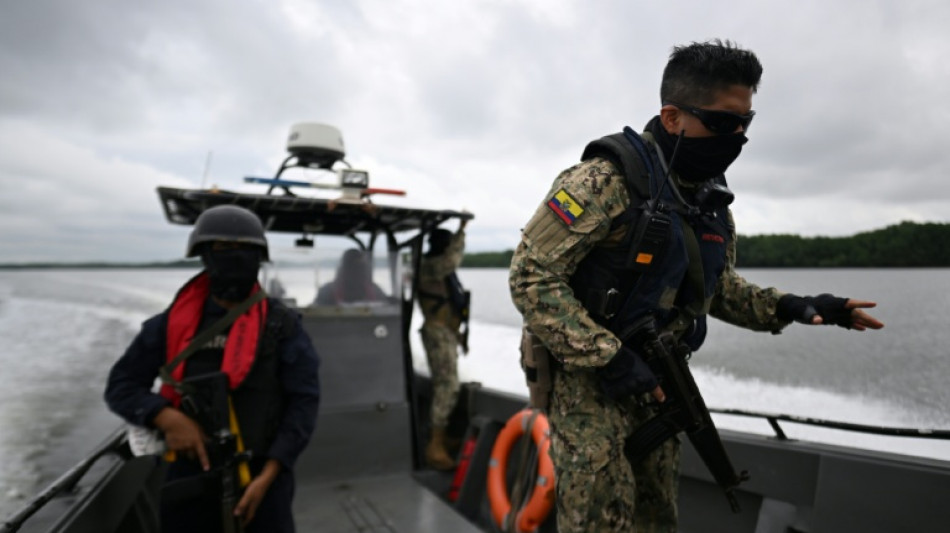
Ecuador's wild west shows limits of Noboa's 'iron fist' / Photo: Marvin RECINOS - AFP

 Brighton run rampant against 10-man Coventry

 Late Mbappe goal sends Lille top of Ligue 1

 Five-star Brighton crush 10-man Coventry

 Team Europe beat United States to reclaim Solheim Cup

 US House Speaker warns curbing AI too sharply could leave China ahead

 張國榮70歲誕辰音樂會西九舉行 唐鶴德錄音致意

 Iran's economic ties to Dubai hard to break despite war

 iPhone 18預購後出現可疑扣款 四間銀行調查未授權交易

 《浪花男女》辦特別謝票場 馮志強談票房與導演客串拍攝

 Former captain De Villiers hails 'fantastic' Springboks
 Galaxy Tab S12系列效果圖曝光 Ultra擬配雙鏡頭及瀏海螢幕
 اليورو يستقر في البنوك المصرية وأعلى سعر للبيع 59.85 جنيه

 حمزة قورقماز يناقش العلاقة بين وضوح المبادئ واحترام الاختلاف

 Altman tells Fortune OpenAI will not go public in 2026
 China, Russia, India seek economic cooperation at BRICS
 دول عربية ومنظمات تدين استهداف خط أنابيب في السعودية
 ستاندرد آند بورز تثبت تصنيف السعودية عند A+
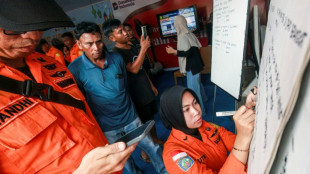 One dead, 102 rescued from stricken ferry off Indonesia's Java
 Garcia keeps WBC welterweight title by stopping Benn
 Lights out in Laos as electricity exports surge

 'This is the test': All eyes on US Fed to tackle high inflation

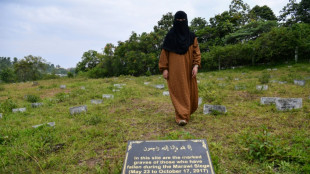 Scars of Marawi siege linger as Philippines poll nears

 Trump turns to golf, family business on Irish visit's second day

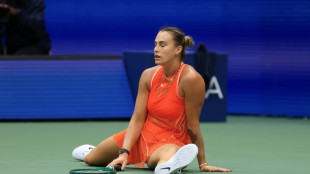 Defiant Sabalenka motivated by US Open defeat

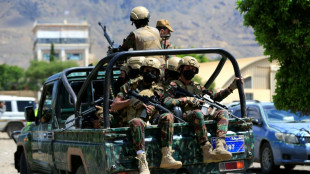 Houthis say hit Saudi base after renewed fighting with Yemeni govt forces

On Ecuador's lawless southwest coast, drug gangs operate with impunity and terrified residents ask if their president's "iron fist" security policies are just words.
In a darkened military command center near the Peruvian border, eight Ecuadoran marines armed with rusting M4 rifles prepare for a patrol.
For their safety, all are heavily masked. Name tags and rank insignia are removed.
They are about to enter cartel country, where the state has no monopoly on the use of force.
Like much of once-tranquil Ecuador, Puerto Bolivar has become a battleground for rival cartels fighting to bring record amounts of cocaine from Colombia and Peru to Europe, North America and Asia.
Last year, the marines found about 30 bodies in waters near the port, some decapitated, others otherwise mutilated.
A recent bomb targeting a local gang leader killed two people and levelled several homes.
"There is no security," said one resident who asked not to be named for fear of being killed. "The country has been completely abandoned."
The marines tear away from the quay in two boats, racing through a mud-brown maze of canals and estuaries flanked by mangroves, docks and fishing villages.
Most of their four-hour patrol is unremarkable. They search a few fishing boats and find nothing.
But when they enter Huayala -- an estuary stuffed with ramshackle docks and cinder block buildings -- the unit snaps into position, their rifles cocked and raised.
The marines nervously scan the jumble of boats and buildings, where hundreds of eyes peer back from the shadows.
"It's not a good idea to stay here long," confides one of the marines. "Someone could take a shot."
- Paying for 'vaccines' -
Puerto Bolivar is one of the world's most important banana-exporting ports and a key seafood trading post -- strategically vital for Ecuador's economy.
But today, the container cranes appear idle and the deepwater docks are mostly empty.
The boom businesses are extortion, kidnapping, assassination, illegal fishing, money laundering and cocaine trafficking.
Most locals are too scared to talk. "They might go as far as killing me or my family" said one old man, before his wife pulled him away.
But a handful of residents are angry enough to speak out and risk their lives.
One of them is a local fisherman who agreed to speak to AFP on condition of anonymity.
He arrives at a secure meeting point wearing a facemask and cap and determined to tell the world what is happening to his community, and to his country.
He admits paying a "vacuna" or vaccine, to the gangs -- a monthly fee, plus 20 percent of his catch in return for his safety.
"If we ignore them, they sink our boats or steal our engines. Some fishermen have simply disappeared," he said.
Others happily work for the cartels because they pay more.
The fisherman described the myriad ways the gangs make money, from gold mining to smuggling fuel into Peru.
Some schemes are simple -- banana shipments loaded with cocaine and sent to Europe. Others are complex, involving the purchase of non-existent fish to launder money.
The names of the gangs and their leaders are well known to everyone -- Los Lobos (The Wolves), Los Lobos Box and Los Choneros.
"Some of them I have known since they were kids running around without shoes," said the fisherman.
Criminal influence is out in the open.
One of the area's numerous brothels is called "Napoles," in homage to the notorious Colombian drug lord Pablo Escobar's opulent estate of the same name.
The military admits that ranking figures in Mexico's Jalisco New Generation Cartel are deeply engrained in the area. They visit and do business out in the open.
- 'The judges don't judge' -
President Daniel Noboa has responded to Ecuador's security crisis by declaring a state of emergency, making high-profile arrests and sending the military onto the streets and into gang-controlled prisons.
But in Puerto Bolivar locals see little impact.
Noboa lost the province by five points to his leftist rival in Sunday's election and may not fare any better in April's second-round runoff.
Evan Ellis, a Latin America security expert and former State Department advisor, said Noboa's deployments have "caused (gangs) to 'lay low' to some degree".
But they "did not address the fundamental problems of the flow of drugs through the country and the associated battles for control over routes."
The deployments may also have left the military shorthanded and in a difficult position.
Navy Captain Carlos Carrera admits "the Armed Forces are not designed to combat organized crime or to directly provide internal security. We can help the police."
But according to the fisherman from Puerto Bolivar, the police don't always police, "the prosecutors don't prosecute and the judges don't judge."
One official recalled a woman who approached the police for help escaping her gang member partner.
"There is no one in charge here," said one resident of Pitahaya, a nearby fishing village.
"We live in fear that we will lose everything over some little thing".
G.AbuOdeh--SF-PST