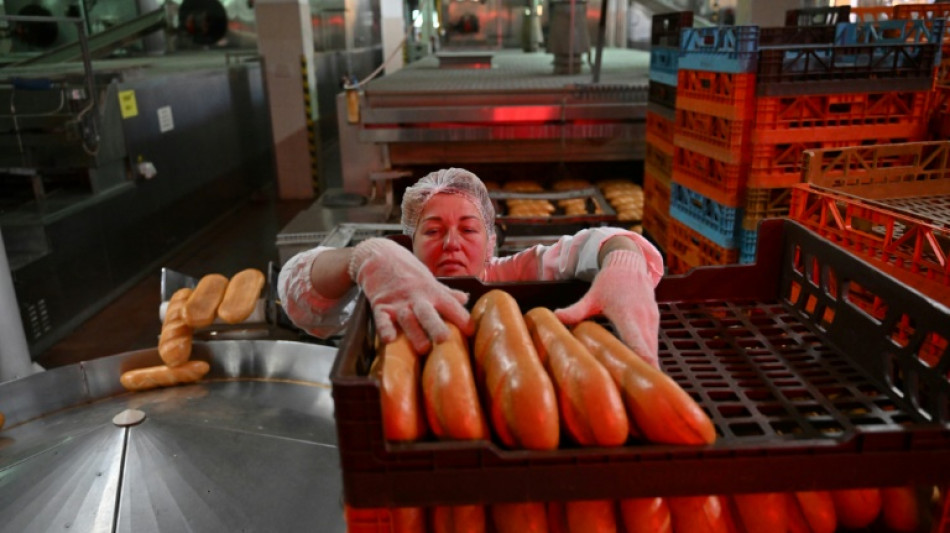
Bread factory holds tough as Ukraine hopes for recovery / Photo: Sergei SUPINSKY - AFP

 Four soldiers dead, dozens injured in fire at Canada military base

 Ton-up Agha helps Pakistan down Sri Lanka in tri-series opener

 Man Utd draw at Leeds keeps pressure on Carrick
 Barca defenders Garcia, Kounde injured before key games
 Lula, Bolsonaro to face off in first debate of bruising election
 Maza and Schick help Leverkusen clip Freiburg's wings

 Leeds hit back to deny Man Utd morale-boosting win

 Zelensky tells NBC 'thankful' US has unblocked intelligence sharing
 Pau see off Leicester in Champions Cup

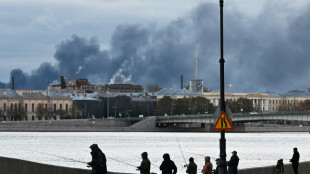
 Kremlin says Ukrainian attacks won't change war aims as Kyiv hits Saint Petersburg

 Martinez starts for Man Utd after outburst
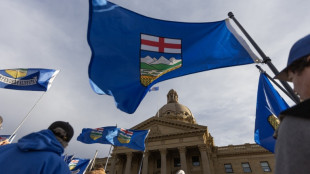 Alberta separatists rally ahead of independence vote
 Australia elect to bowl against South Africa in second Test
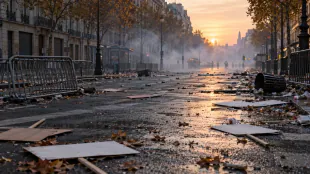 France assesses protest damage after 1,800 arrests

 Gord launches four AI tools for sustainability and emissions management
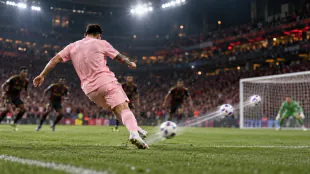
 Doha 2036 bid sets out sport-led social legacy

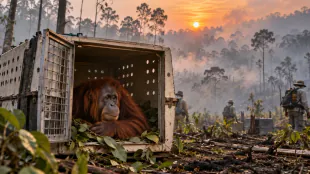 Conservation teams rescue orangutans from Indonesian wildfires

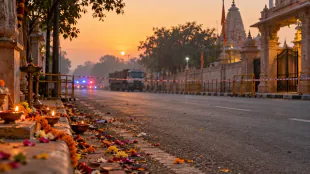 Truck ploughs into Hindu festival crowd in India, killing 13

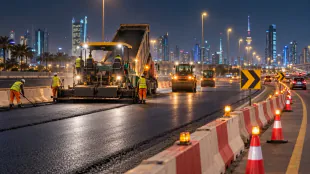 Kuwait announces maintenance closures in Nuzha, Surra and Rai

 Moody’s lifts OYO parent Prism outlook to positive before planned IPO

 Diesel shortage raises petroleum share of India’s exports to three-year high

 Premium products and financing drive Navratri appliance demand
 Andi King recounts late-life transition after decades behind an “alpha male” identity

 Sri Lanka choose to field against Pakistan in tri-series opener
 Emiliano Martinez expects Chelsea return within weeks after surgery

Balls of dough file past on the assembly line and a sweet scent fills the air at a bread factory that embodies Ukraine's determination and its tentative recovery 100 days on from Russia's invasion.
Located near the capital Kyiv, the Tsar-Khlib factory continued production even as Russian troops advanced, keeping city residents fed despite a missile attack on a neighbouring facility.
Tsar-Khlib had to contend with extreme challenges.
At one point, the factory was less than eight kilometres (five miles) from the front line, and many of the factory's workers were stranded in territory held by Russian forces. Most of its clients had fled to safety.
"But we quickly realised that we had to keep producing because some people were staying on," said Anton Paliy, the 43-year-old head of production.
In the end, the immediate crisis passed, as Russian troops withdrew from the area at the end of March.
Operating with just a fraction of its 800 employees, the factory continued producing 16 tons of fresh bread a day, compared to its normal level of 100 tons.
When the air raid sirens sounded, workers would run into the basement. When they returned, they would find messy piles of fresh bread outside the oven.
Paliy said the sound of the machinery drowned out the noises of war in the background, making the situation a little more bearable "psychologically".
- Kyiv residents returning -
The state-of-the-art Shanta factory, just a few hundred metres away, was not so lucky. Russian missiles destroyed the building on March 16.
Oleksandr Tarenenko, the director of Khlibni Investizii, which owns both facilities, said the attack was a war crime because Russian forces had targeted civilian infrastructure.
A missile shot down by Ukraine's air defence forces can still be seen outside the building.
Reconstruction could be lengthy and costly, and the facility's 140 workers are unemployed.
But at Tsar-Khlib, activity is picking up as Kyiv residents return to the city.
Demand "is increasing every week", said Tarenenko.
The International Monetary Fund expects Ukraine's economy to shrink by 35 percent this year, but parts of the country are slowly recovering despite the ongoing conflict in the south and east.
In Kyiv and the surrounding region, "consumer demand is increasing, connections are being restored", Finance Minister Sergiy Marchenko told AFP.
Even the return of foreign embassies was sending a signal to the public that the capital is open for business and residents were returning to "re-launch their economic activities", Marchenko said.
- 'We did our job' -
Even in Ukraine's second biggest city, Kharkiv, whose outskirts are still being shelled by Russian forces, there are some signs of recovery.
The popular Cafe Crystal, in a central park, re-opened its doors at the end of April after two months, although the menu is limited, and the staff are down to seven or eight from 30 or 40 before the war.
"We have to keep jobs. The city is gradually reviving. People want to come out and have a coffee," said Alyona Kostrova, the manager.
"After staying in bomb shelters, they want to live a little."
At Tsar-Khlib, production has gone up to 50 tons a day and Paliy said he felt at least some comfort in "feeling useful in these difficult times".
"It's not that I want a medal, but we did our job -- we helped people," he said.
"And we will continue to do it."
N.AbuHussein--SF-PST