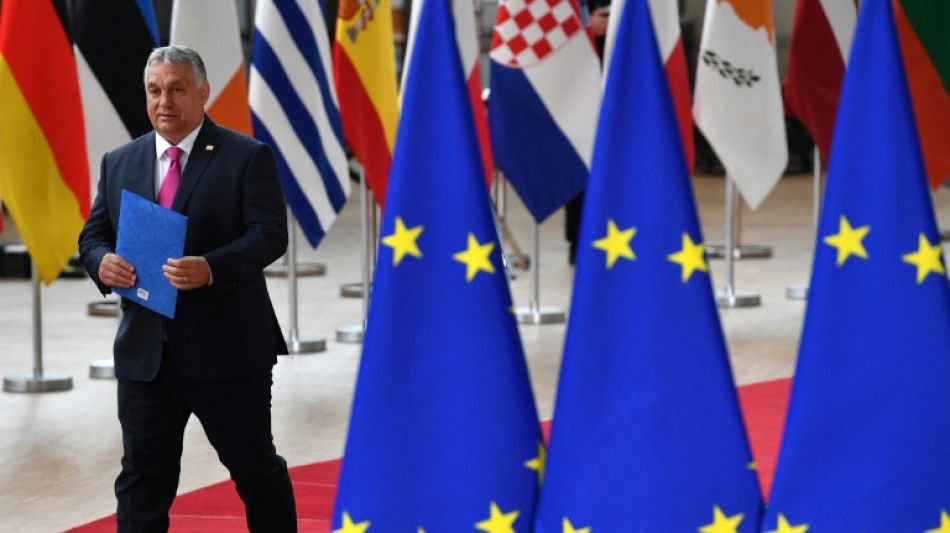
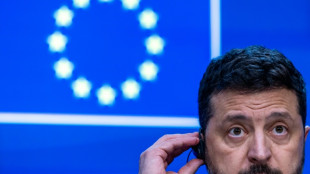
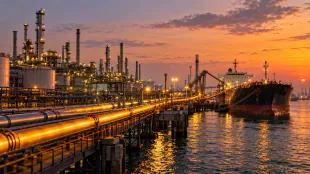
EU leaders agree ban on most Russian oil imports / Photo: JOHN THYS - AFP

 Macron denounces 'unbridled' violence as France hit by new clashes

 Hurzeler lauds 'hard worker' Gomez after Brighton goal from halfway line
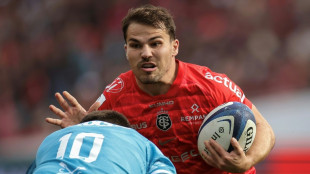 Toulouse hold off Exeter, Northampton save English Champions Cup blushes
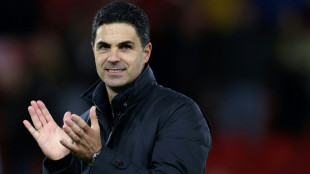
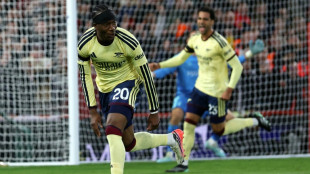 Arsenal snatch late win to keep pressure on Man City as Man Utd held
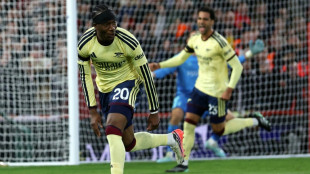 Arsenal strike late to keep pressure on Man City as Man Utd held
 Four soldiers dead, dozens injured in fire at Canada military base
 Ton-up Agha helps Pakistan down Sri Lanka in tri-series opener
 Man Utd draw at Leeds keeps pressure on Carrick
 Barca defenders Garcia, Kounde injured before key games
 Lula, Bolsonaro to face off in first debate of bruising election
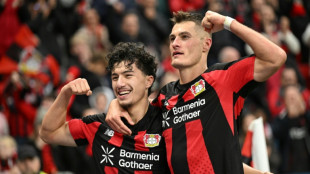 Maza and Schick help Leverkusen clip Freiburg's wings
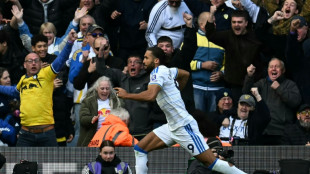 Leeds hit back to deny Man Utd morale-boosting win
 Zelensky tells NBC 'thankful' US has unblocked intelligence sharing
 Pau see off Leicester in Champions Cup
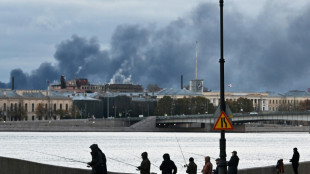 Kremlin says Ukrainian attacks won't change war aims as Kyiv hits Saint Petersburg
 Martinez starts for Man Utd after outburst
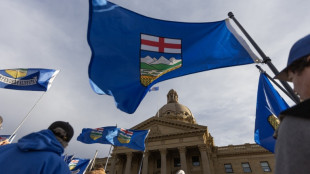 Alberta separatists rally ahead of independence vote
 Debt recovery lessons after derivatives losses and repeated borrowing

 Premium products and financing drive Navratri appliance demand
 Diesel shortage raises petroleum share of India’s exports to three-year high
 Moody’s lifts OYO parent Prism outlook to positive before planned IPO
 Kuwait announces maintenance closures in Nuzha, Surra and Rai
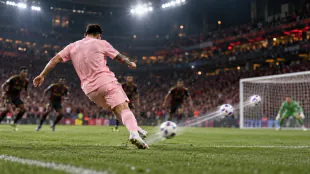 Messi scores twice as Inter Miami defeat Atlanta United 3-1
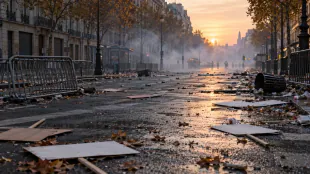 France assesses protest damage after 1,800 arrests
 Gord launches four AI tools for sustainability and emissions management

EU leaders on Monday backed a ban on most Russian oil imports, after a compromise deal with Hungary to punish Moscow for the war in Ukraine.
The 27-nation bloc has spent weeks haggling over a proposed total embargo on Russian oil but came up against stubborn resistance from Hungarian Prime Minister Viktor Orban.
EU leaders meeting in Brussels hatched a compromise deal to exempt deliveries arriving in Europe by pipeline from the ban, after Budapest warned halting supplies would wreck its economy.
"Agreement to ban export of Russian oil to the EU. This immediately covers more than two thirds of oil imports from Russia, cutting a huge source of financing for its war machine," European Council chief Charles Michel tweeted during the summit.
"Maximum pressure on Russia to end the war."
The head of the EU's executive, Ursula von der Leyen, said the move "will effectively cut around 90 percent of oil imports from Russia to the EU by the end of the year" as Germany and Poland had committed to renounce deliveries via a pipeline to their territory.
"Russia has chosen to continue its war in Ukraine. Tonight, as Europeans, united and in solidarity with the Ukrainian people, we are taking new decisive sanctions," French President Emmanuel Macron tweeted, echoing the figure of 90 percent by the end of 2022.
The wrangling over the sixth package of sanctions has rocked European unity in the face of the Kremlin's attack on Ukraine after five waves of unprecedented economic punishment on Russia.
The compromise excluded the Druzhba pipeline from the oil embargo and only imposed sanctions on crude shipped to the EU by tanker vessel.
Despite the gap in the embargo left by Hungary's opposition, the latest round of sanctions represents some of the most damaging measures taken by the EU so far.
The EU imports some 26 percent of its oil from Russia and has been criticised for keeping money flowing to Moscow's coffers at the same time as it seeks to halt the Kremlin's war.
Michel said the sanctions package also involved disconnecting Russia's biggest bank Sberbank from the global SWIFT system, banning three state broadcasters and blacklisting individuals blamed for war crimes.
He also said that the EU had agreed to to send Ukraine nine billion euros ($9.7 billion) to support Kyiv's "immediate liquidity needs" as it grapples with Russia's invasion.
- Stop 'quarrels' -
The negotiations over the oil ban had dogged the EU for weeks and the bloc's leaders got chivvied along Monday by Ukraine's President Volodymyr Zelensky.
Zelensky, in a video address, called on them to adopt "effective" sanctions against Russian oil to make the Kremlin pay the price for its war on Ukraine.
"All quarrels in Europe must end, internal disputes that only encourage Russia to put more and more pressure on you," Zelensky told the EU summit.
"It is time for you to be not separate, not fragments, but one whole."
Orban, often the odd man out in EU decision making, had called the proposal only to stop oil deliveries to the EU by ship a "good solution" before the talks began.
"It means that an atomic bomb won't be thrown on the Hungarian economy," he said.
But he warned that Budapest needed a "guarantee" it could keep on receiving Russian oil by sea if anything happened to the pipeline crossing Ukraine.
Michel said the EU had "decided to take the appropriate measures to react and to make sure that we will protect the security of supply".
- Return to Hungary issue? -
Landlocked Hungary imports 65 percent of its oil from Russia through the Druzhba pipeline and, along with Slovakia and the Czech Republic, had asked for an exception from the import ban.
Diplomats said a two-year delay to the embargo had been offered to the countries concerned, but that Budapest wanted at least four years and nearly 800 million euros ($860 million) in EU funding to adapt its refineries.
Von der Leyen said that the EU would return "as soon as possible in one way or the other" to the issue of trying to ban oil through the Druzhba pipeline to Hungary.
Budapest's intransigence came on the back of Orban's recent resounding re-election to a fourth term and some experts are sceptical about the official claims of alarm over a Russian oil ban.
Further complicating the stand-off had been Hungary's share of the EU's 800-billion-euro recovery fund, which Brussels has yet to approve due to disagreements over Budapest's respect for the rule of law.
burs-del/dc/mtp
G.AbuHamad--SF-PST