
For these 'Made in America' CEOs, Trump's tariffs won't change the game / Photo: Mandel NGAN - AFP

 Elijah Moore Scores Career-High 29 as McNeese Sets School Records in 135-87 Win

 ترمب يعلن عن رغبة قوية لإنهاء حرب أوكرانيا قبل محادثات أبوظبي
 Honolulu Voters Reject Ranked Choice Voting in Election

 Panthers expected to begin 2027 NRL season away from new stadium

 Sweet As app launches restaurant discovery platform

 MLA seeks inquiry into reported sectarian gestures on Ormeau Road

 Louise O’Reilly attacks Simon Harris over unemployment remarks

 Virginia overwhelms Arkansas 91-72 behind balanced scoring

 Second major storm brings destructive winds and outages to British Columbia

 Godzilla Minus Zero leads North American box office with $31.6m
 Advocate calls for coordinated support for children facing trafficking
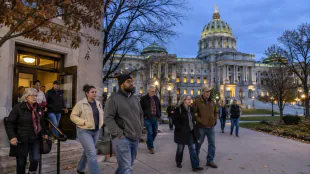 Pennsylvania Democrats secure state trifecta in midterm elections

 Godzilla Minus Zero sets foreign-language box-office opening record

 Villeneuve teases James Bond casting at Los Angeles museum gala

 Nottinghamshire launches specialist rural crime policing team

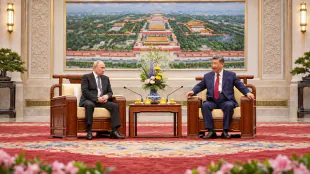 China confirms talks over possible Xi-Putin-Trump summit
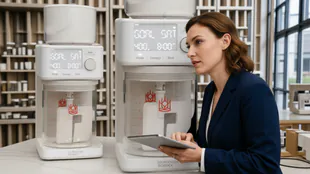 The Sourdough Sidekick Review: Can an Automated Feeder Save Your Starter?

 Energy bill plan could use HMRC income data to target support

 Business owner earning £6,000 a month tackles £70,000 debt

 Nvidia chief faces inquiry after disclosing affair with suspected Chinese agent

 Comet returns as online electrical marketplace 14 years after collapse
Entrepreneurs running small and medium-sized businesses that manufacture and source exclusively in the United States have learned to cope with globalization, and do not expect major changes from Donald Trump's tariffs threats.
The US president is threatening several key trade partners with potential tariffs, aiming to drive corporations to shift manufacturing to the United States to avoid them.
"I've heard it for 25 years, manufacturing coming back to the US," said Stephen Liquori, the chief executive of clothing maker Goodwear, likening the recent attempt at so-called "reshoring" of supply chains to "a little speck of sand."
"It's nowhere near the scale of what would turn things around," he told AFP.
Hundreds of thousands of textile jobs disappeared after China joined the World Trade Organization in 2001 and export quotas were lifted.
In 1999, "we used to have seven factories making goods for us," Liquori recalled.
"Every one of those factories is gone today," he said, adding that the closures had forced him to find new suppliers through the Americas Apparel Producers Network (AAPN).
Far from the world of "fast fashion," Goodwear has found its niche in offering quality products at "a reasonable price," Liquori said, noting that the company's T-shirts, which start at $36, can last for more than two decades.
"We've had some customers for 25 and 30 years, and so the loyalty, the level of trust, if you will, for deliveries and quality, all those things keep a relationship healthy," he said.
"As long as we're doing the right thing, we're going to get the business."
American consumers may have to pay more for their clothes if Trump follows through on his threats to impose additional tariffs.
Trump "is not going to solve inflationary pressures anytime soon," Liquori said. "In fact, he's going to add to it, unfortunately."
- Relocating production -
This concern is shared by Shuyler Mowe, head of Nicks Handmade Shoes, based in Spokane, Washington, which hand makes high-quality utility shoes from American leather for firefighters among others.
"I think maybe in the short term, it could be helpful," he said of Trump's tariff threats, adding that they could drive inflation in the long run and raise production costs.
As for Trump's stated ambition of bringing production back home, Mowe warned there is little to expect in the short term.
"It's not quite as simple as just starting a factory," he said. "If we are serious about having more domestic manufacturing capacity, it's going to take years."
"There's really only four or five tanneries left in the United States...that make what I would call really good footwear leather," he added, referring to facilities where leather is produced.
Liquori from Goodwear agreed: "We're kidding ourselves if we ever think we're going to make iPhones... We can't even make Nikes here."
- 'Made in the USA' -
Jim Barber, of toy maker Luke's Toy Factory, said that he is contacted "every couple of months" by businesses wanting to move their manufacturing back to the United States.
"There are plenty of people that can do these things," said Barber, whose company is named after his son Luke. "But you're going to pay more money."
This could be something of a paradigm shift for large companies used to squeezing costs by offshoring their production to satisfy their shareholders.
But Barber doesn't expect consumers to be willing to pay more.
"There's a point of view among people that if you make something in the US, you can charge more for it," he said. "That's not true. Anyone who tells you that is not studying the market."
"It's these companies own fault, because they have trained people to think this toy costs this much," added the Connecticut-based executive.
"There's definitely a subset of the customer base that's very passionate about making sure things are 'made in the USA,'" said Shuyler Mowe. "I get the sense of that as maybe not as important as it was even like 10 or 15 years ago."
N.AbuHussein--SF-PST