
World marks 80th anniversary of Auschwitz liberation / Photo: Wojtek RADWANSKI - AFP

 Elijah Moore Scores Career-High 29 as McNeese Sets School Records in 135-87 Win
 ترمب يعلن عن رغبة قوية لإنهاء حرب أوكرانيا قبل محادثات أبوظبي
 Honolulu Voters Reject Ranked Choice Voting in Election

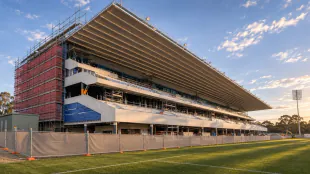 Panthers expected to begin 2027 NRL season away from new stadium

 Sweet As app launches restaurant discovery platform
 MLA seeks inquiry into reported sectarian gestures on Ormeau Road
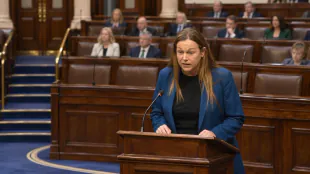 Louise O’Reilly attacks Simon Harris over unemployment remarks

 Virginia overwhelms Arkansas 91-72 behind balanced scoring
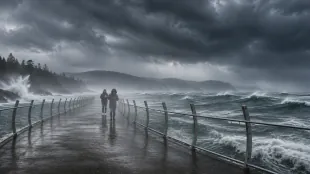 Second major storm brings destructive winds and outages to British Columbia
 Godzilla Minus Zero leads North American box office with $31.6m
 Advocate calls for coordinated support for children facing trafficking
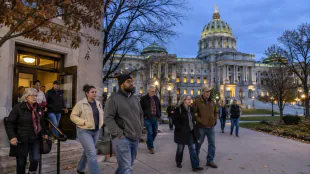 Pennsylvania Democrats secure state trifecta in midterm elections

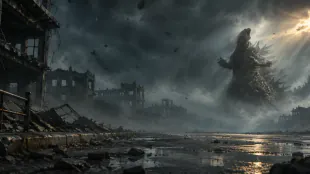 Godzilla Minus Zero sets foreign-language box-office opening record

 Villeneuve teases James Bond casting at Los Angeles museum gala

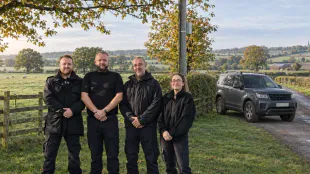 Nottinghamshire launches specialist rural crime policing team

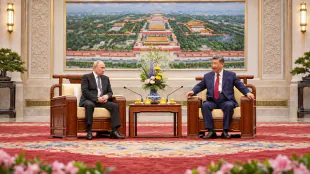 China confirms talks over possible Xi-Putin-Trump summit
 The Sourdough Sidekick Review: Can an Automated Feeder Save Your Starter?
 Energy bill plan could use HMRC income data to target support

 Business owner earning £6,000 a month tackles £70,000 debt
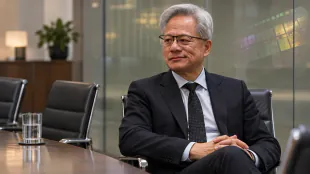 Nvidia chief faces inquiry after disclosing affair with suspected Chinese agent

 Comet returns as online electrical marketplace 14 years after collapse
The world marks the 80th anniversary of the liberation of Auschwitz on Monday, with some of the few remaining survivors set to attend ceremonies at the site of the notorious Nazi death camp.
Auschwitz was the largest of the extermination camps and has become a symbol of Nazi Germany's genocide of six million European Jews, one million of whom died at the site between 1940 and 1945, along with more than 100,000 non-Jews.
On Monday former inmates, along with Polish President Andrzej Duda, are expected to lay flowers at the sprawling camp's Wall of Death in the morning.
Around 50 survivors are then expected at a commemoration from 1500 GMT outside the gates of Auschwitz II-Birkenau alongside dozens of leaders, including Britain's King Charles III and French President Emmanuel Macron.
German President Frank-Walter Steinmeier and Chancellor Olaf Scholz are both expected, as well as Israeli Education Minister Yoav Kisch.
"This year we will focus on the survivors and their message," Auschwitz Museum spokesman Pawel Sawicki told AFP. "There will not be any speeches by politicians."
Speaking to AFP ahead of the anniversary, survivors around the world spoke about the need to preserve the memory of what happened when there will no longer be living witnesses.
They also warned about rising hatred and anti-Semitism around the world and spoke of their fears about history repeating itself.
Organisers said it could be the last major anniversary with such a large group of survivors.
"We all know that in 10 years it will not be possible to have a large group for the 90th anniversary," Sawicki said.
- 7,000 survivors -
Auschwitz was created in 1940 using barracks in Oswiecim, southern Poland. Its name was Germanised into Auschwitz by the Nazis.
The first 728 Polish political prisoners arrived on June 14 of that year.
On January 17, 1945, as Soviet troops advanced, the SS forced 60,000 emaciated prisoners to walk west in what became known as the "Death March".
From January 21-26, the Germans blew up the Birkenau gas chambers and crematoria and withdrew as Soviet troops approached.
On January 27, Soviet troops arrived, finding 7,000 survivors.
The day of its liberation has been designated by the United Nations as Holocaust Remembrance Day.
Until its invasion of Ukraine in 2022, a Russian delegation had always attended the annual liberation ceremony but Moscow will be barred again this year.
There has also been controversy following rumours about the possibility that Israeli Prime Minister Benjamin Netanyahu could attend the ceremony.
The International Criminal Court last year issued an arrest warrant for Netanyahu on suspicion of crimes against humanity and war crimes over the war in Gaza.
After a request from Duda, the Polish government confirmed last month that it would not arrest Netanyahu if he were to visit, even though the Israeli leader has not expressed any intentions to attend.
- 'Never forget' -
Some 40 survivors of the Nazi camps agreed to talk to AFP in the run up to the anniversary.
In 15 countries, from Israel to Poland, Russia to Argentina, Canada to South Africa they sat in front of our cameras to tell their stories, alone or surrounded by their children, grandchildren and great grandchildren -- proof of their victory over absolute evil.
"How did the world allow Auschwitz?" asked 95-year-old Marta Neuwirth from Santiago, Chile.
She was 15 when she was sent from Hungary to Auschwitz.
Julia Wallach, who is nearly 100, has difficulty talking about what happened without crying.
"It is too difficult to talk about, too hard," she said. The Parisian was dragged off a lorry destined for the gas chamber in Birkenau at the last minute.
But hard as it is to relive the horrors, she insisted she would continue to give witness.
"As long as I can do it, I will do it." Beside her, her granddaughter Frankie asked: "Will they believe us when we talk about this when she is not there?"
That is why Esther Senot, 97, braved the Polish winter last month to go back to Birkenau with French high school students.
She was keeping a promise she made in 1944 to her dying sister Fanny, who -- laid out on the straw coughing up blood -- asked her with her last breath to "tell what happened to us so that we are not forgotten by history".
K.Hassan--SF-PST