
Trump casts chill over US wind energy sector / Photo: JUSTIN SULLIVAN - GETTY IMAGES NORTH AMERICA/AFP

 5 Wardrobe Design Trends Making Sydney Bedrooms Work Harder in 2026

 Judy Schavrien’s New Book ‘There’ll Be No Dying Here’ Collects Decades of Intimate Portraits
 مليبانד: الوضع الإنساني في غزة مفجع والحكومة البريطانية لن تقف مكتوفة الأيدي

 First-time boat buyers advised to assess full ownership costs
 Planning and preparation can reduce stress of interstate relocation

 Two more arrested in Carrie Mullane suspected murder investigation
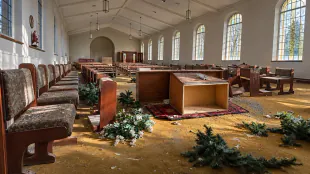 Mayo school appeals for information after convent and chapel vandalism
 GLP-1 Users Show Higher Rates of Nail Detachment in New Studies

 Canadian soldier Aidan Goulding remembered at Vancouver funeral
 Tayyab Arif hits 57 on Pakistan Test debut against Sri Lanka
 Robert Trujillo discusses literacy and social justice children’s books

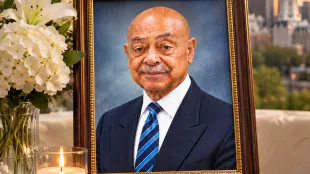 Civil rights advocate William Bill Tucker dies aged 98
 US Treasury order targets bank transfers linked to crypto exchange MEXC
 Eagles record six sacks as rushing attack struggles against Giants

 Thames Water seeks to delay £12bn in debt repayments
 Newark boxing gym expands alternative education programme
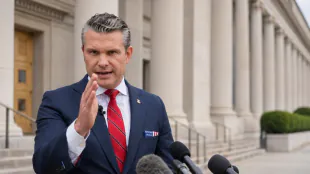 Democrats consider impeachment drive against Defence Secretary Hegseth

 Rail journey offers a slower route to a Berlin city break

 Arsenal control title race as Manchester United fall into bottom three

 Suspected Krakow gunman dies after attack that killed six

 Carrick backs Dalot after hostile reception from Manchester United fans

Donald Trump has long ranted against wind energy -- claiming turbines are unsightly, dangerous to wildlife and too expensive -- with him threatening to upend decades of industry progress just a few hours after resuming power.
"We're not going to do the wind thing," Trump said Monday as he returned to the Oval Office for the first time in four years as commander-in-chief.
"Big, ugly windmills," he said as he signed a series of executive orders that has brought the sector into crisis, adding that "they kill your birds, and they ruin your beautiful landscape."
Among the measures were a temporary freeze on federal permitting and loans for all offshore and onshore wind projects.
Jason Grumet, president of the American Clean Power Association (ACP), quickly slammed the move, saying it "increases bureaucratic barriers, undermining domestic energy development and harming American businesses and workers."
After the announcements, wind-related stocks fell into the red.
"It's had a real cooling effect on the sector," Elizabeth Wilson, an offshore wind specialist at Dartmouth University, told AFP.
Conflict-weary developers are already "backing away from some of these projects," she said.
Coming at the same time as he has declared a "national energy emergency," some observers have noted a contradiction in Trump's assault on wind energy.
Though not as robust as in Europe, wind energy in 2023 accounted for some 10 percent of US electricity production -- more than twice as much as solar.
Onshore wind power is also relatively inexpensive, according to experts, with the price per megawatt-hour ranging from $27 to $73 in 2024, far less than nuclear or coal -- though rates could fluctuate in the future.
Ember, an energy think tank, warned on Thursday that the United States "risks being left behind in the clean industrial revolution" as major economies such as China are increasingly "embracing wind as a source of cheap, clean electricity."
It remains to be seen what the longterm effects of Trump's actions will have on the sector, which has already faced struggles in the United States in recent years due to rising costs from inflation and interest rates, along with mounting local opposition to projects.
The offshore wind industry, still in its infancy in the United States, is likely to be the hardest hit, according to Wilson, as the majority of exploitable marine areas are in federal waters subject to Trump's measures.
However, "most of the onshore development happens on private lands where the federal government doesn't really have any control," she added.
- 'I don't want even one built' -
Days before taking office, Trump wrote on his Truth Social media platform: "I don't want even one (windmill) built during my Administration."
That pledge has seriously spooked the sector, which is worried he could permanently block subsidies or the environmental approvals needed for certain projects.
Such moves would likely be challenged in court and prompt political backlash.
"Ninety-nine percent of onshore wind power projects are on private lands, and the private landowners generally like these wind farms, and they get a lot of economic benefit from them," said Michigan Technological University professor emeritus Barry Solomon.
He noted that the projects are also largely in Republican-led states such as Texas, Oklahoma, Iowa, Kansas and the Dakotas.
The ACP also warned that restricting wind development would "increase consumer energy bills."
Despite the headwinds, some experts remain optimistic.
"Ultimately... the economics is driving the desire for wind and solar," said University of Delaware professor Jeremy Firestone.
With artificial intelligence, he added, energy needs "are increasing a great deal. So there's going to be a lot of pressure to continue to build out wind turbines."
Z.Ramadan--SF-PST