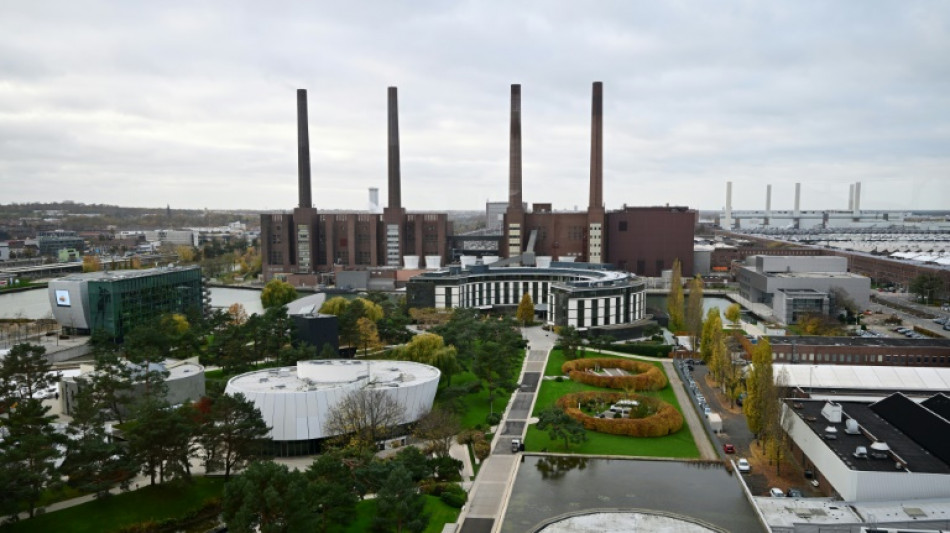
German economy shrinks again amid political crisis / Photo: Tobias SCHWARZ - AFP

 WHO eyes 'encouraging' signs in DRCongo fight against Ebola

 Liga boss criticises Real Madrid trio for Ceuta shirt incident
 WTA Finals moved to Charlotte from 2027

 Almost 8,000 excess deaths in France's scorched summer: statistics

 Ex-president's lengthy war crimes sentence shocks Kosovo
 US House faces test on sweeping Russia sanctions bill

 British PM says to make 'difficult decisions' as inflation rises

 TotalEnergies pumps up controversy in France with cut-price gas
 Global fuel price demos: a round-up

 Leverate Launches MCP for Traders to Connect AI Assistants With Trading Platforms

 MEXC Launches $1M "Discover Your Wall Street DNA" Campaign to Help Traders Find Their Market Fit

 Emporio Armani names Dario Vitale new creative director

 Maresca defends VAR officials after Man City benefit from error

 Courts jails LGBTQ activists as Turkey crackdown widens

 French court to hear Depardieu's appeal against rape trial order: sources

 The German state premier hoping to halt far-right surge

 Lebanon wants Israel security deal as prelude to peace: president to AFP

 England's Brook keen to learn from 'hero' Pietersen after stunning ton
 Saudi says Houthis target Mecca, warns of 'red line'

 Phillippines ex-leader Duterte makes first appearance at ICC
 Lebanon wants Israel security deal, Hezbollah disarmament without confrontation: president to AFP
 BASIS.pro Expands On-Chain Infrastructure with XDC Network Partnership and Zypher DAO as Auto Earn Goes Live

 Samson relishing battle with teen star Sooryavanshi for India spot

 Pickle-flavoured tart? AI inspires Japan's convenience stores
 Macau holds first closed-door national security trial
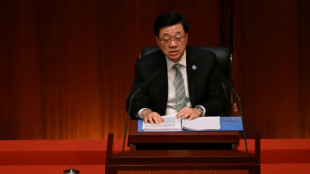
Germany's economy shrank for a second straight year in 2024, official figures showed Wednesday, with little hope of a speedy recovery as Europe's traditional powerhouse is also mired in political crisis.
Gross domestic product in Europe's largest economy fell 0.2 percent last year, according to preliminary figures from federal statistics agency Destatis, after a 0.3 percent contraction in 2023.
Germany has faced a perfect storm, with high energy costs battering its manufacturing sector, demand weak in China and other key export markets, and the economy facing deep-rooted structural problems including a shortage of skilled labour.
Destatis president Ruth Brand said the economy suffered under both "cyclical and structural pressures" last year.
"These include increasing competition for the German export industry on key sales markets, high energy costs, an interest rate level that remains high, and an uncertain economic outlook," she said.
Preliminary data also showed that the economy had contracted 0.1 percent in the final quarter of last year compared to the previous quarter.
Fears are growing that the economy will struggle to get back on its feet this year, due in part to the political crisis at home.
Following the collapse of Chancellor Olaf Scholz's coalition, Germany is heading for early polls on February 23, which is expected to be followed by a period of paralysis before a new coalition emerges.
- Trump tariffs threat -
The data released Wednesday -- in line with most forecasts, including from the government -- will be further bad news for Scholz, who has been criticised for failing to reboot the economy and already faces an uphill battle to win re-election.
US President-elect Donald Trump's threat to hit imports into the world's top economy with tariffs is adding to jitters for German exporters.
In December, the German central bank slashed its growth projection for 2025 to a meagre 0.2 percent from a previous estimate of 1.1 percent.
The Destatis data showed that the manufacturing sector declined markedly in 2024, highlighting the challenges for a traditional pillar of the economy, which has struggled since Russia's full-scale invasion of Ukraine in 2022 sent energy costs soaring.
Brand noted that the country's exports fell in 2024, even as global trade increased overall, adding that "the international competitiveness of the manufacturing industry faced further pressure".
- 'Sick man' again? -
The last time Germany recorded two straight years in the red was 2002-2003, when the country was still seen as the "sick man" of Europe.
Relative success in the years that followed earned it a reputation as the powerhouse of the eurozone but Germany's economic motor has stalled since the coronavirus pandemic and outbreak of the Ukraine war.
Germany finds itself in the unusual position of having to bring up the rear in Europe in terms of growth -- the European Commission has predicted the overall eurozone economy to have grown by 0.8 percent in 2024, well above Germany's result.
The country's economic woes have been reflected in a string of job cuts and poor results at leading companies throughout the year.
Volkswagen, Europe's biggest carmaker, has come to symbolise the problems facing German industrial titans. Last month, it announced plans to cut 35,000 jobs at home in the coming years as it battles high costs, and fierce competition in key market China.
Clashes between Scholz and his coalition partners over how to get the economy back on its feet were at the heart of the government's collapse in November.
Some hope a stronger government will emerge after February's election -- where centre-right opposition leader Friedrich Merz is seen as favourite to take over -- and be better able to turn the economy around.
Klaus Borger, an economist from public lender KfW, said bold actions were urgently needed.
"Besides containing the numerous global crises and uncertainties, what is needed above all are convincing answers from policymakers and companies to the huge transformative challenges, especially in industry," he said.
M.AbuKhalil--SF-PST