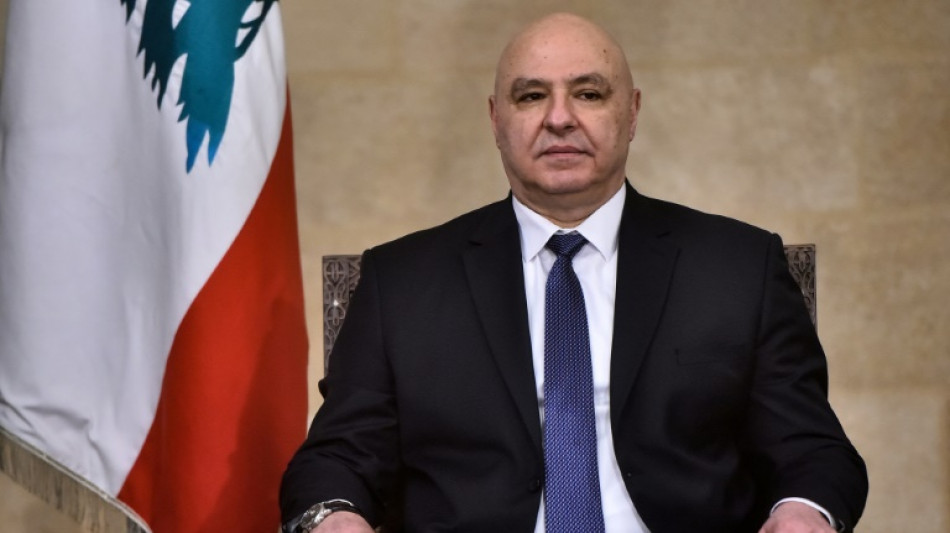
Weakening of Hezbollah allowed Lebanon to fill vacant presidency / Photo: Fadel ITANI - AFP

 Improving Atletico cruise to comfortable win over Osasuna
 Candidate for UN chief calls for AI regulation akin to nuclear weapons
 O'Neill expects Celtic recovery after Old Firm misery
 Man City midfield trio backed to emulate Rodri and Silva
 'We're losing control,' AI pioneer Yoshua Bengio tells AFP
 WHO eyes 'encouraging' signs in DRCongo fight against Ebola
 Liga boss criticises Real Madrid trio for Ceuta shirt incident
 WTA Finals moved to Charlotte from 2027
 Almost 8,000 excess deaths in France's scorched summer: statistics

 Ex-president's lengthy war crimes sentence shocks Kosovo
 US House faces test on sweeping Russia sanctions bill

 British PM says to make 'difficult decisions' as inflation rises

 TotalEnergies pumps up controversy in France with cut-price gas
 Global fuel price demos: a round-up

 Leverate Launches MCP for Traders to Connect AI Assistants With Trading Platforms

 MEXC Launches $1M "Discover Your Wall Street DNA" Campaign to Help Traders Find Their Market Fit
 Emporio Armani names Dario Vitale new creative director
 Maresca defends VAR officials after Man City benefit from error
 Courts jails LGBTQ activists as Turkey crackdown widens
 French court to hear Depardieu's appeal against rape trial order: sources
 The German state premier hoping to halt far-right surge
 Lebanon wants Israel security deal as prelude to peace: president to AFP
 England's Brook keen to learn from 'hero' Pietersen after stunning ton
 Saudi says Houthis target Mecca, warns of 'red line'
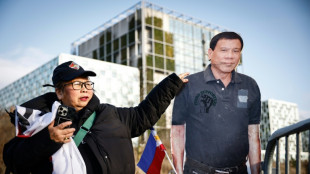
 Phillippines ex-leader Duterte makes first appearance at ICC
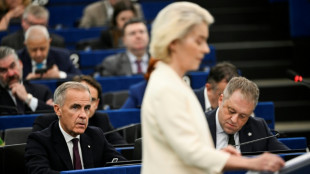
The weakening of Hezbollah in last year's war with Israel allowed Lebanon's long deadlocked parliament to reach consensus around a president who has the confidence of the international community.
Army chief Joseph Aoun, who was elected on Thursday ending a more than two-year vacancy, signalled a readjustment of Lebanon's foreign policy as the country works with international creditors to forge a way out of six years of deepening financial crisis.
Deadlock in parliament between pro- and anti-Hezbollah blocs had stalemated a dozen previous attempts to elect a president, leaving the country largely rudderless in its efforts to secure an emergency bailout.
But two months of full-fledged war with Israel last autumn dealt heavy blows to the Shiite Muslim militant group, with its longtime leader Hassan Nasrallah killed in a September air strike.
Hezbollah also lost a strategic ally last month when Islamist-led rebels ousted longtime Syrian ruler Bashar al-Assad.
Hezbollah's "political defeat follows its devastating military defeat", said Hilal Khashan, professor of political science at the American University of Beirut.
Lina Khatib, of Britain's Chatham House think tank, said it was "the first time since the end of the Lebanese civil war (in 1990) that a Lebanese president is elected without prior approval by Iran and by the ousted Syrian regime".
"Hezbollah's acceptance of Aoun's election underlines that it no longer dictates the political agenda," she told AFP.
"The significant shift in the political status quo... is the direct result of the larger geopolitical changes in the Middle East in which Iran's influence in the region is ending."
- Foreign backing -
The United States, France, Qatar, Saudi Arabia and Egypt, had all lobbied heavily for the election of Aoun to fill the presidential vacancy.
"The role of the quintet was decisive, particularly the last-minute support of Saudi Arabia," a French diplomatic source told AFP on condition of anonymity.
The kingdom had appeared to lose interest in Lebanon in recent years as the influence of Hezbollah and its Iranian sponsor grew.
Aoun committed to "a policy of positive neutrality" and better relations with Arab countries in his inaugural speech.
He also pledged a state monopoly on bearing arms, signalling difficult discussions on disarming Hezbollah, which kept its weapons after the civil war ended in 1990 to fight Israel's occupation of the south, which largely ended with a 2000 withdrawal.
A source close to Hezbollah and its ally the Amal movement of parliament speaker Nabih Berri told AFP that the two parties only voted for Aoun after obtaining reassurances on the reinforcement of the ceasefire with Israel "and the name of the next army chief".
- 'Right leader for this time' -
In the first round of voting on Thursday, Aoun failed to secure the required two-thirds majority, but after meeting with representatives of Hezbollah and Amal, he achieved that in the second round with 99 of the 128 votes cast.
Analysts say the army's central role in implementing the November 27 ceasefire was a key factor in Aoun's rise to the presidency.
US President Joe Biden said on Thursday that Aoun was "the right leader for this time" and would provide "critical leadership" in overseeing the truce.
Under the terms of the ceasefire, the army is deploying in the south as Israeli troops withdraw.
Hezbollah is required to dismantle its remaining military infrastructure in the area and pull its forces back north of the Litani River, around 30 kilometres (20 miles) from the border.
Khashan said it was now down to Aoun with his military background to persuade Hezbollah to lay down its remaining weapons.
"Only a president hailing from the army can disarm Hezbollah, especially after Israel destroyed more than 80 percent of its military hardware," he said.
At this stage, "Hezbollah has no option but to transform itself into a political party without a military component."
X.AbuJaber--SF-PST