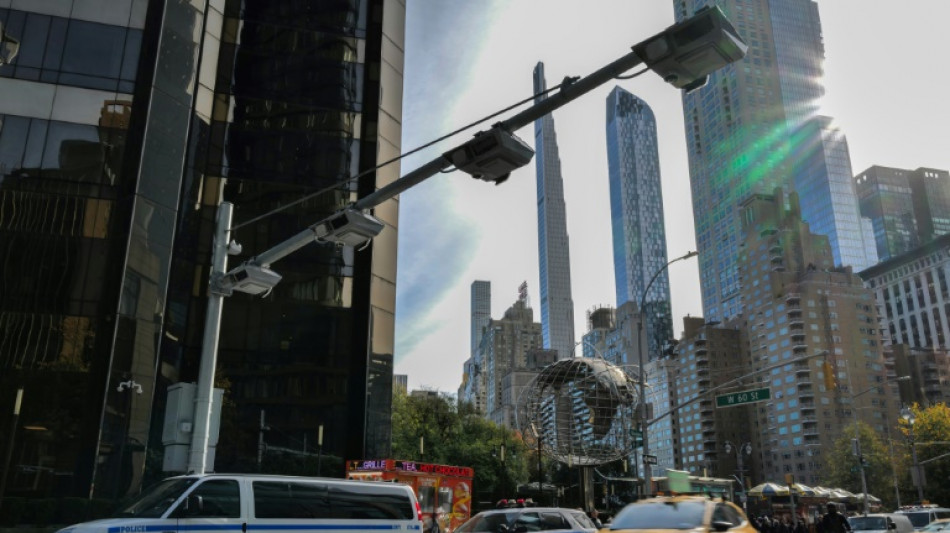
NYC starts driver congestion charging despite opposition / Photo: Charly TRIBALLEAU - AFP/File

 Bahrain MPs Approve Five-Year Wait for Repeat Hajj Pilgrims

 David Walliams Identified as Celebrity in Sexual Misconduct Allegations After Legal Bid

 Texas Gov.-elect Hinojosa Plans Rate Freeze Amid Legal Concerns

 Elijah Moore Scores Career-High 29 as McNeese Sets School Records in 135-87 Win

 ترمب يعلن عن رغبة قوية لإنهاء حرب أوكرانيا قبل محادثات أبوظبي
 Honolulu Voters Reject Ranked Choice Voting in Election

 Panthers expected to begin 2027 NRL season away from new stadium

New York launched a controversial scheme Sunday to charge drivers entering parts of the city, a first in the United States, putting local authorities on a collision course with President-elect Donald Trump.
State governor Kathy Hochul announced in November that drivers entering areas of Manhattan south of Central Park would pay a daytime toll of $9 from midnight January 4.
That plan revives one, originally with a $15 base fee, that she paused in June, saying there were "too many unintended consequences for New Yorkers."
Republican lawmakers have called on Trump, a native New Yorker who has vowed to kill the scheme if elected, to intervene now to terminate it.
Areas neighboring New York City have argued that a charge would hurt their businesses and impair their residents' ability to commute into Manhattan.
A judge denied an 11th-hour effort Friday by neighboring New Jersey state officials to block the scheme on grounds of its environmental impact on adjoining areas.
That denial cleared the road for the scheme, which had faced other legal challenges, highlighting the difficulty of charging drivers in a country where the car is king.
The plan is intended both to reduce congestion and to help fund the New York subway system. Hochul said it was revived after an assessment showed that it would work at a lower fee.
Some elected New York City borough officials as well as a powerful trade group representing haulers fought the project.
Taxi drivers' associations also opposed the plan. Their members -- both pre-booked ride-hail drivers and drivers of the city's iconic yellow cabs -- will not pay the fee themselves, but affected customers will be hit by a surcharge.
The scheme will charge drivers for venturing below 60th Street in Manhattan, an area that encompasses the business districts of Midtown and Wall Street.
Some 700,000 vehicles enter the area every day, and gridlock means cars can travel just seven miles per hour (11 kilometers per hour) on average, and even slower in some areas, officials say.
There are numerous exemptions to the base fee, as well as a low-income discount plan. In addition, there are discounts for drivers entering the tolling zone more than 10 times per month.
Similar driver-tolling schemes have been operated for years in other megacities including London and Stockholm, but US cities will be watching closely to see what impact the New York scheme has on both traffic and revenues.
Q.Jaber--SF-PST