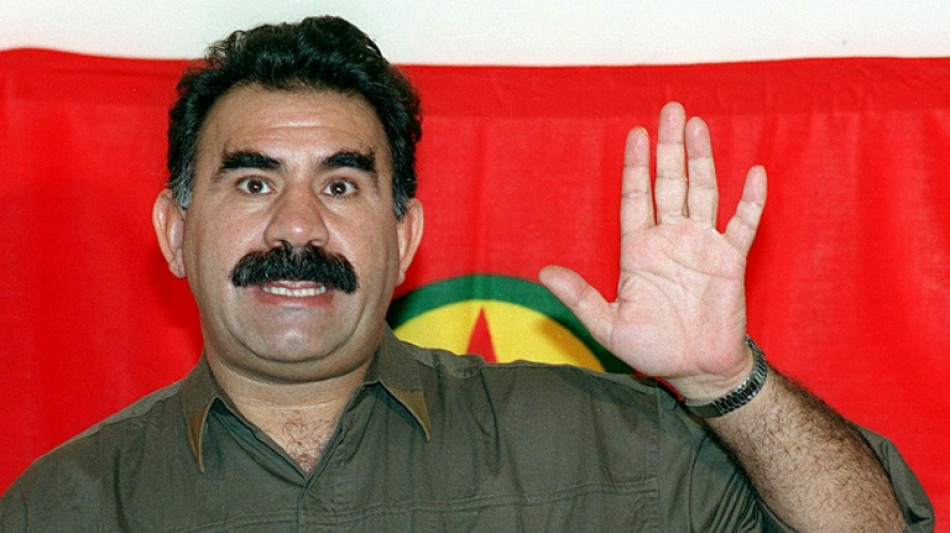
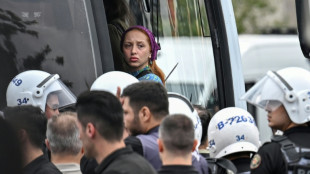
Ocalan: PKK chief held in solitary on Turkish prison island / Photo: JOSEPH BARRAK - AFP/File

 NFL Chiefs' Kelce among investors bilked in Ponzi scheme
 Trump threatens EU over 'hostile' Canada association plan
 Argentine judge orders suspension of Falklands oil project
 Carrick takes the blame as troubled Man Utd suffer League Cup misery
 Barcelona hit seven in Racing Santander rout
 Amorim's Milan beaten by Benfica, Sunderland make dream European return

 US stocks fall, dollar gains after Fed lifts interest rates
 Seahawks rule out Darnold for Sunday game at Arizona
 Mbappe explains Ceuta shirt stance after criticism
 Improving Atletico cruise to comfortable win over Osasuna
 Candidate for UN chief calls for AI regulation akin to nuclear weapons
 O'Neill expects Celtic recovery after Old Firm misery
 Man City midfield trio backed to emulate Rodri and Silva
 'We're losing control,' AI pioneer Yoshua Bengio tells AFP
 WHO eyes 'encouraging' signs in DRCongo fight against Ebola
 Liga boss criticises Real Madrid trio for Ceuta shirt incident
 WTA Finals moved to Charlotte from 2027
 Almost 8,000 excess deaths in France's scorched summer: statistics
 Ex-president's lengthy war crimes sentence shocks Kosovo
 US House faces test on sweeping Russia sanctions bill

 British PM says to make 'difficult decisions' as inflation rises
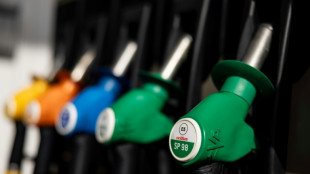 TotalEnergies pumps up controversy in France with cut-price gas
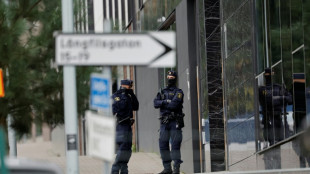
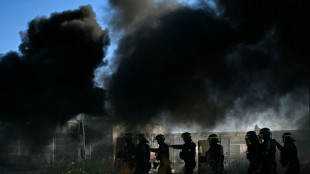 Global fuel price demos: a round-up

 Leverate Launches MCP for Traders to Connect AI Assistants With Trading Platforms

 MEXC Launches $1M "Discover Your Wall Street DNA" Campaign to Help Traders Find Their Market Fit
Abdullah Ocalan, the jailed founder of Kurdish militant group the PKK is hailed by many Kurds as an icon, but within wider Turkish society many see him as a terrorist who deserves to die.
On Saturday, Ocalan, who has been held in solitary confinement in Turkey since 1999, received his first political visit in nearly a decade amid signs of a tentative thaw in relations with the Turkish government.
The move came two months after the leader of the far-right MHP, a close ally of President Recep Tayyip Erdogan, offered Ocalan an unprecedented olive branch if he would publicly renounce terror.
In a message sent back with his visitors, two lawmakers from the pro-Kurd opposition DEM party, Ocalan -- the man who embodies the decades-long Kurdish rebellion against the Turkish government -- said he was "ready" to embrace efforts to end the conflict.
"I am ready to take the necessary positive steps and make the call," said the 75-year-old former guerrilla, who also received his first family visit in four years on October 23.
During that visit, Ocalan said he had the necessary clout to shift the Kurdish question "from an arena of conflict and violence to one of law and politics".
Ankara's tentative bid to reopen dialogue nearly a decade after peace efforts collapsed comes amid a major regional adjustment following the ouster of Syria's Bashar al-Assad.
- PKK: a Marxist-inspired group -
Ocalan founded the PKK -- the Kurdistan Workers' Party -- in 1978. It spearheaded a brutal insurgency that has killed tens of thousands in its fight for independence and, more recently, broader autonomy in Turkey's mostly Kurdish southeast.
A Marxist-inspired group, the PKK is considered a terror organisation by Turkey, the United States, the European Union and most of Turkey's Western allies.
After years on the run, Ocalan was arrested on February 15, 1999 in Kenya following a Hollywood-style operation by Turkish security forces.
He was sentenced to death, but escaped the gallows when Turkey abolished capital punishment in 2004. He has since been held in an isolation cell on Imrali island in the Sea of Marmara.
For many Kurds, he is hero they call "Apo" (uncle). But Turks often call him "bebek katili" (baby killer) for his ruthless tactics, including the bombing of civilian targets.
- Involvement in peace talks -
Tentative moves to resolve Turkey's "Kurdish problem" began in 2008. Several years later, Ocalan got involved in the first unofficial peace talks, approved when Erdogan was premier.
Seen as the world's largest stateless people, Kurds were left without a country when the Ottoman Empire collapsed after World War I.
Although most live in Turkey, where they make up around a fifth of the population, the Kurds are also spread across Syria, Iraq and Iran.
For hardline nationalists who support the post-Ottoman idea of "Turkishness", the Kurds simply do not exist.
And not all Kurds back the ideas, let alone the methods, of the PKK.
Led by Hakan Fidan, Erdogan's spy chief turned foreign minister, the talks raised hopes of ending the insurgency in favour of an equitable solution for Kurdish rights within Turkey's borders.
But they collapsed in July 2015, reigniting one of the deadliest chapters in the conflict.
After a suicide attack on pro-Kurdish demonstrators attributed to Islamic State (IS) group jihadists in October 2015, the PKK accused Ankara of collaborating with IS and resumed its violence with a vengeance.
Turkey's widescale use of combat drones has pushed most Kurdish fighters into Iraq and Syria, where Ankara has continued raids.
The government has defended its de facto silencing of Ocalan by saying he failed to convince the PKK of the need for peace, raising doubts about how much sway he has over the group.
- Captured in exile -
Ocalan was born on April 4, 1948, one of six siblings in a mixed Turkish-Kurdish peasant family in Omerli village, in Turkey's southeast. His mother tongue is Turkish.
He became a left-wing activist while studying politics at university in Ankara, and did his first stint in prison in 1972.
He set up the PKK six years later, then spent years on the run, launching the movement's armed struggle in 1984.
Taking refuge in Syria, he led the fight from there, causing friction between Damascus and Ankara.
Forced out in 1998 and with the net closing in, Ocalan raced from Russia to Italy to Greece in search of a haven, ending up at the Greek consulate in Kenya, where US agents got wind of his presence and tipped off ally Ankara.
Lured into a vehicle and told he would be flown to the Netherlands, Ocalan was instead handed over to Turkish military commandos and flown home on a private plane to face trial.
B.AbuZeid--SF-PST