-
 Mbappe hits two as Real Madrid rout Sevilla
-
China growth expected to miss official target in third quarter

-
 Browns edge Ravens for division lead, Texans beat Jags
-
Lazio crush Juventus to move level with Serie A leaders Inter

-
 Lyon go top of Ligue 1 as Monaco fall to first defeat of the season
-
Leeds draw feels like 'fresh start' for Man Utd's Carrick

-
 Venezuela opposition alliance reaffirms Nobel laureate Machado as leader
-
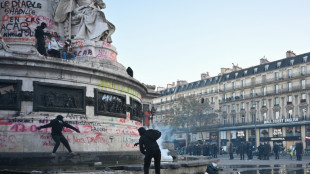
Macron denounces 'unbridled' violence as France hit by new clashes
-
 'Street Fighter' wins N. America box office, buzzy doc stuns in 2nd
-
Hurzeler lauds 'hard worker' Gomez after Brighton goal from halfway line

-
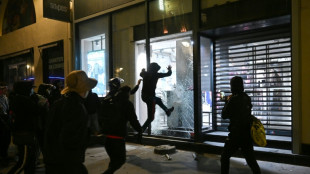 NFL: Paris game to go ahead despite protests in France
-
Toulouse hold off Exeter, Northampton save English Champions Cup blushes

-
 Arteta hails Arsenal 'finishers' after Madueke fells Forest
-
Arsenal snatch late win to keep pressure on Man City as Man Utd held

-
 Trump backs ally Netanyahu ahead of Israel's tight election
-
Arsenal strike late to keep pressure on Man City as Man Utd held

-
 Madueke strikes late as below-par Arsenal sink Forest
-
Four soldiers dead, dozens injured in fire at Canada military base
-
 Second day of street clashes in Milan
-
Ton-up Agha helps Pakistan down Sri Lanka in tri-series opener

-
 Dupont's Toulouse hold off Exeter as English Champions Cup woes continue
-
Man Utd draw at Leeds keeps pressure on Carrick

-
 Zelensky speaks to US envoys amid Trump spat
-
Barca defenders Garcia, Kounde injured before key games

-
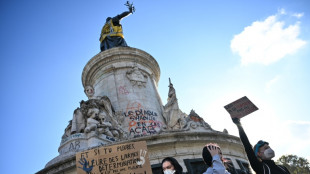 Paris police in new battles with protesters and looters
-
Lula, Bolsonaro to face off in first debate of bruising election

-
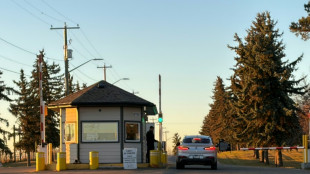 Multiple deaths, injuries at western Canada military base: minister
-
Maza and Schick help Leverkusen clip Freiburg's wings

-
 Boland strikes twice for Australia in rain-hit South Africa Test
-
Leeds hit back to deny Man Utd morale-boosting win

-
 Marseille put Angers to the sword in Ligue 1
-
Zelensky tells NBC 'thankful' US has unblocked intelligence sharing

-
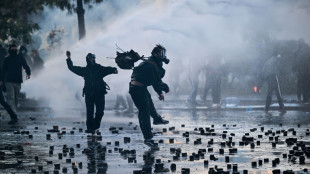 Albanian PM refuses to quit as violent protests enter sixth day
-
Pau see off Leicester in Champions Cup

-
 Chwalinska fights back to win Wuhan Open in title breakthrough
-
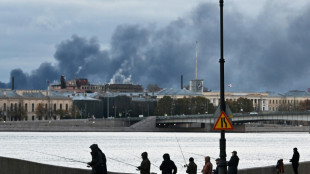
Kremlin says Ukrainian attacks won't change war aims as Kyiv hits Saint Petersburg
-
 Kulusevski on brink of return for Spurs after 17-month absence
-
Martinez starts for Man Utd after outburst

-
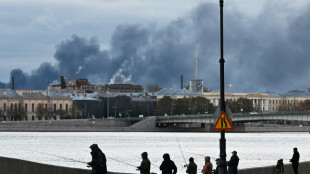 Ukraine sets Saint Petersburg refinery ablaze in large-scale drone attack
-
Alberta separatists rally ahead of independence vote

-
 Spain's in-form Chacarra wins DP World India Championship
-
Katie Alexander reportedly leaves flat shared with Eamonn Holmes

-
 Robertson and Selby chase rare Home Nations sweep in Belfast
-
Body found in search for missing Glasgow teenager

-
 Arteta backs Kai Havertz to become a 30-goal Arsenal forward
-
Andi King recounts late-life transition after decades behind an “alpha male” identity

-
 Emiliano Martinez expects Chelsea return within weeks after surgery
-
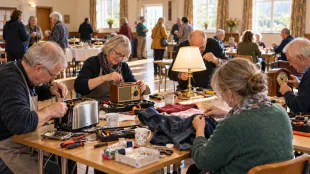
Bromsgrove Repair Cafe reports nearly 80% repair success rate
-
 Sri Lanka choose to field against Pakistan in tri-series opener
-
B.C. Lions focus on playoff momentum after Calgary defeat

In a village near Kharkiv, life under constant shelling
"This is how we live, running to our cellars. Maybe we should leave," cries retired nurse Larysa Kosynets, heading for safety before Russian shells start slamming into her village near the eastern Ukraine city of Kharkiv.
As the 57-year-old rushes off to hide, a Ukrainian commander orders visiting journalists to leave the area as quickly as possible.
The reporters have been escorted by the Ukrainian army on condition they do not identify the village.
Before the Russian shelling started, the Ukrainians were firing on Russian positions in an artillery battle that has lasted days on the outskirts of Kharkiv, Ukraine's second city.
Although the Russians pulled back from Kharkiv to redirect troops to Ukraine's eastern Donbas region and the south, they have kept their positions to the east, maintaining a constant barrage of fire towards the city and nearby villages to hold back the Ukrainian counteroffensive.
In this rural village, evidence of the fighting is everywhere with many houses destroyed, others missing walls or with the roof caved in. The ground is pockmarked with craters.
The village, largely dedicated to livestock farming, had around 1,000 residents before the war. Today only around 100 remain.
"The people who stayed have animals. They can't leave them. They'll die if nobody gives them food or water. Those who only had chickens left," Kosynets explains.
"The village is our land, our home. How can we just leave? We have our roots here," she adds.
Kosynets and the other residents who have stayed spent two months under Russian occupation before Ukrainian troops took back control of the village about two weeks ago.
- 'We're not Nazis' -
When the Russians were there, life was very difficult, she says.
"It was forbidden to go to Kharkiv. There was a shortage of everything, there were only potatoes and some tinned food. After a while, the Russians let us go to Volchansk," a town northeast of Kharkiv.
With no water or electricity and no working phone network, the villagers were only allowed to go up a nearby hill once a day to get a mobile signal so they could contact their relatives.
Kosynets says it was troops from Donetsk, a city which since 2014 has been run by pro-Russian separatists, who allowed them that one liberty, saying they were more flexible with the villagers than the Russians.
But going up the hill quickly became dangerous because other soldiers would "shoot over their heads to scare them".
Russia's rationale of a "special military operation" to demilitarise and de-Nazify Ukraine draws a snort of derision.
"Show me one Nazi in the village! We have our nation, we are nationalists but not Nazis nor fascists," she says, demanding that Russian President Vladimir Putin "withdraw his troops".
Living alongside Ukrainian soldiers has really helped, she says.
"They share everything. Cigarettes, food... We have become a family."
Nearby her husband Vitaliy Kuzmenko, 42, is raking up freshly cut grass to feed to their cow and goats.
"We're surviving -- what else can we do?" he shrugs, totally fed up with the ongoing artillery fire.
He says he has learned to distinguish between the sound of "an incoming shell from an outgoing one".
"When the strikes are nearby, we hide. I reinforced my basement with concrete and iron and I equipped it well, I built a stove," Kuzmenko says.
"We sleep in the house with our clothes on and if there is shelling we go to the basement."
"It's my land, I don't want to leave,"he says, despite the doors and windows of his home having been blown out by shelling, and his fields damaged.
"We were lucky, thank God."
G.AbuOdeh--SF-PST