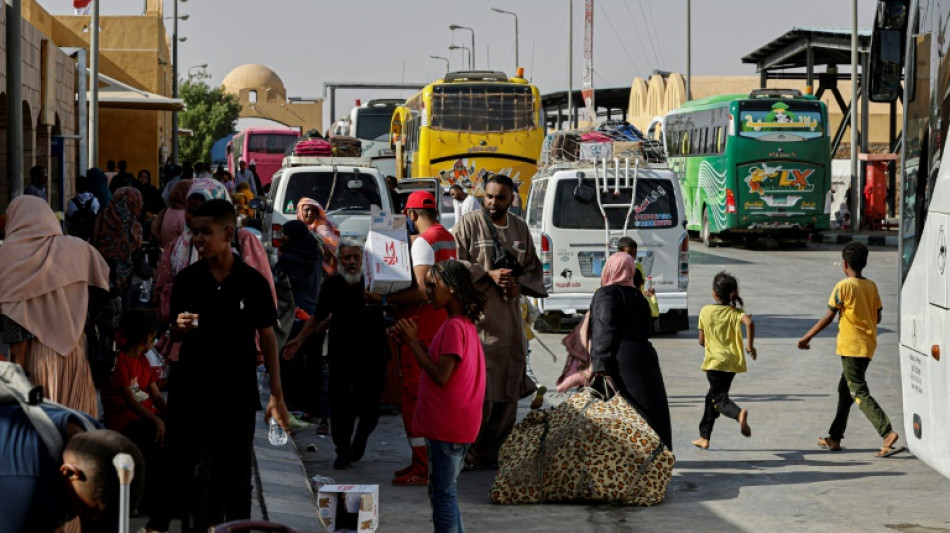
Egypt's first-ever asylum law fuels concerns over refugee rights / Photo: Khaled DESOUKI - AFP/File

 Fiji declares national HIV crisis
 Australia to cut migration to fix housing crisis: minister
 NASA scan discovers new, 'once in a century' Moon crater

 Most stocks rise as Fed hikes and indicates drive to curb inflation

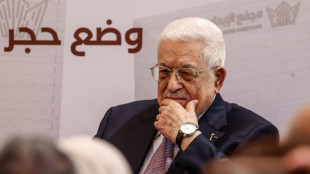 US again denies Palestinian leader Abbas visa to attend UN assembly

 Lula says he will go to UN to tell Trump to 'stay out' of Brazil's elections

 Messi heads Inter Miami to Campeones Cup triumph

 AI looms large ahead of Xi, Trump summit

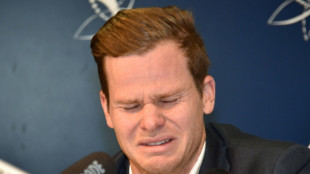 Smith still haunted by 'Sandpapergate' as he prepares for South Africa Tests

 UK-Sudanese author pens book to give children 'African history of Africa'

 Boehly and Walter sell Chelsea stake to Clearlake Capital

 US House backs data center power cost bill amid midterm backlash

 US Congress passes sweeping Russia sanctions bill

 Barca hit Racing for seven as Atletico crush Osasuna

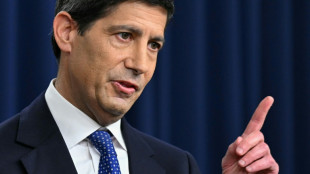 US Fed raises rates to tackle 'too high' inflation, irking Trump

 Man Utd misery mounts after League Cup collapse against Brighton

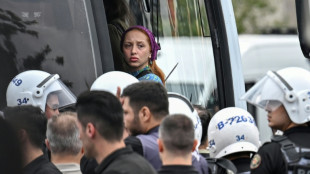 Turkey releases 106 protesters, jails more LGBTQ activists

 US Fed raises rates to tackle 'too high' inflation in move sure to rile Trump

 England were 'waiting for death' in World Cup semi-final defeat: Tuchel

 NFL star fined for displaying name of slain Palestinian girl
 Witsel retires from internationals after 18-year Belgium career

 US Fed raises rates to battle inflation in move likely to rile Trump

 Fitzpatrick 'not comfortable' over Dubai golf finale

 Gaza apartment block collapse kills 21, including 12 children

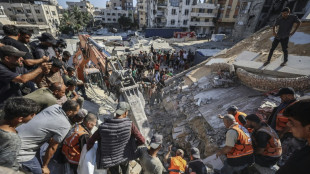 Gaza apartment block collapse leaves 21 dead

Egypt adopted its first-ever asylum law this week, but it has sparked concerns among human rights groups who warn it takes a "security-focused approach" that could undermine refugee protections.
Signed into law by President Abdel Fattah El-Sisi on Tuesday, the legislation comes as Egypt faces a severe economic crisis and fallout from regional conflicts, including Sudan and Gaza.
The UN refugee agency (UNHCR) says Egypt is receiving hundreds of Sudanese refugees daily, with more than 845,000 refugees and asylum seekers registered as of November.
Official estimates suggest Egypt now hosts more than nine million "guests" -- the government term for refugees and migrants.
The International Organization for Migration (IOM) said the nine million includes all who entered Egypt, regardless of legal status or migration reason.
For decades, the UNHCR managed refugee registration under a 1954 agreement, but the new law shifts these responsibilities to Egyptian authorities.
The law creates a permanent refugee committee under the prime minister to oversee asylum applications and services.
Activists argue the law was rushed without consultation with civil society organisations or the UNHCR.
"The law was passed through with a great deal of urgency and secrecy," Karim Ennarah, director of the research unit at the Egyptian Initiative for Personal Rights (EIPR), told AFP.
UNHCR declined an AFP request for comment.
- 'Security-focused approach' -
Parliamentarians defended the law.
"The urgency in enacting the legislation arises from the necessity of having a framework," Tarek Radwan, head of the parliament's human rights committee, said, citing the country's geopolitical challenges and the growing refugee population.
"No country can manage a steady rise in refugee numbers without regulations to govern their presence," he told AFP.
The government says the law aligns with international treaties and aims to streamline refugee data by integrating its databases with those of the UNHCR.
However, critics say the law adopts "a security-focused approach".
A major concern is a clause granting authorities the power to take "necessary measures" against refugees during wartime, counter-terrorism operations or national security crises.
Another controversial provision criminalises housing refugees without notifying the police, punishable by imprisonment.
The law also requires refugees who enter Egypt illegally to apply for asylum within 45 days of arrival.
"These law gaps and vague language further weaken the already fragile protections for refugees," Ennarah said. "It also creates a climate of fear around refugees."
- Strained system -
Egypt has hosted large numbers of displaced people, including Syrians, Palestinians and Sudanese.
More than 1.2 million Sudanese refugees have arrived since April 2023, joining more than 150,000 Syrians and over 100,000 Palestinians.
Amid the country’s financial crisis, anti-refugee sentiment has been rising, with concerns about strains on healthcare, housing and education.
Refugees, however, receive little to no assistance from either the United Nations or the government.
Egyptian officials have repeatedly urged more international funding to manage the crisis, with Prime Minister Mostafa Madbouly saying in April that the support given to Egypt falls short of the burden of hosting millions of refugees.
In October, the European Union granted Egypt 12.2 million euros to provide health and education services to refugees, migrants and asylum seekers in Egypt.
However, Egypt's refugee policies have faced scrutiny.
In June, Amnesty International reported that 800 Sudanese detainees were forcibly returned without being allowed to seek asylum.
Human Rights Watch warned that the law could increase the risk of authorities arbitrarily denying asylum and undermining refugee rights.
"It would fail to protect asylum seekers’ rights, allow authorities to use emergency powers to detract from rights, force refugees to comply with vaguely worded rules, and criminalise irregular entry," HRW said.
J.Saleh--SF-PST