Countries agree to overhaul WHO funding model / Photo: Fabrice COFFRINI - AFP/File

 Kings' Ben Simmons tears Achilles in training
 Lula, Bolsonaro set for first debate showdown in bitter election race

 Mbappe hits two as Real Madrid rout Sevilla
 Browns edge Ravens for division lead, Texans beat Jags

 Lyon go top of Ligue 1 as Monaco fall to first defeat of the season
 Venezuela opposition alliance reaffirms Nobel laureate Machado as leader
 'Street Fighter' wins N. America box office, buzzy doc stuns in 2nd

 NFL: Paris game to go ahead despite protests in France
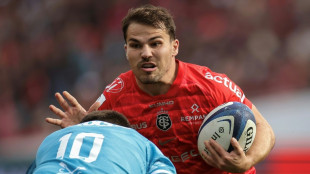
 Arteta hails Arsenal 'finishers' after Madueke fells Forest

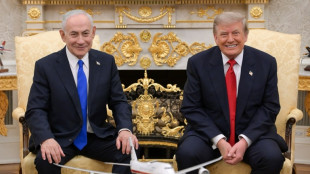 Trump backs ally Netanyahu ahead of Israel's tight election

 Madueke strikes late as below-par Arsenal sink Forest
 Second day of street clashes in Milan

 Dupont's Toulouse hold off Exeter as English Champions Cup woes continue

 Zelensky speaks to US envoys amid Trump spat

 Paris police in new battles with protesters and looters
 Multiple deaths, injuries at western Canada military base: minister

 Boland strikes twice for Australia in rain-hit South Africa Test

 Marseille put Angers to the sword in Ligue 1
 Albanian PM refuses to quit as violent protests enter sixth day

 Chwalinska fights back to win Wuhan Open in title breakthrough
 Kulusevski on brink of return for Spurs after 17-month absence

 Ukraine sets Saint Petersburg refinery ablaze in large-scale drone attack
 Spain's in-form Chacarra wins DP World India Championship

 Robertson and Selby chase rare Home Nations sweep in Belfast

 Arteta backs Kai Havertz to become a 30-goal Arsenal forward

The World Health Organization's member states agreed Tuesday to overhaul how they fund the UN health agency, giving it much more money to spend on its own priorities.
The budget revamp will give the WHO a more stable income stream and control over a much bigger portion of the funding flowing through its Geneva headquarters.
The change is aimed at strengthening the organisation and making it more agile when responding to global health crises like the coronavirus pandemic.
Countries currently channel most of their cash into health projects of their own choosing.
But member states will now transition towards giving half of their WHO contributions as straightforward membership fees instead, giving the organisation more flexibility.
WHO chief Tedros Adhanom Ghebreyesus, re-elected Tuesday, has made transforming the agency's finances a key plank of his leadership.
"This will be a game-changer for WHO," he told the World Health Assembly, the annual gathering of the organisation's member states, in his victory speech.
Before Tuesday's decision, he had warned countries that it was "now or never", after the Covid-19 crisis exposed the shortcomings of the current set-up.
"The pandemic has demonstrated why the world needs WHO, but also why the world needs a stronger, empowered and sustainably financed WHO," Tedros told the assembly, which serves as the agency's decision-making body.
- Room for manoeuvre -
The WHO gets its money from its 194 member states and non-governmental organisations.
Nations' membership fees -- "assessed contributions" calculated according to wealth and population -- account for less than one-fifth of the WHO's funding.
Most of it currently comes via "voluntary contributions" from member states and donors, which go towards outcomes specified by them.
The organisation therefore has limited leeway to respond to crises like Covid-19, the war in Ukraine and other health emergencies.
The membership fee portion will rise to 50 percent by the 2030-2031 budget cycle at the latest.
In return, the WHO will be expected to implement reforms, including towards more transparency on its financing and hiring.
Changing the funding model will help the WHO implement its priorities "more effectively and efficiently", Tedros said Tuesday.
Rather than spending time scrambling to find money, "You're telling us to focus on the programmes, and the funding will be taken care of."
"You are ensuring the stability of our organisation."
The approved two-year programme budget for 2022-2023 is $6.12 billion. The total is up five percent from the $5.84 billion of the 2020-2021 budget.
According to the latest figures, assessed contributions account for only $957 million, while specified voluntary contributions make up $3.7 billion, highlighting the imbalance Tedros wants to correct.
The biggest assessed contribution membership fees are from the United States ($219 million), China ($115 million), Japan ($82 million), Germany ($58 million) and Britain ($44 million).
- Huge discrepancy -
The new proposals were put forward by a working group tasked with finding a long-term solution for the WHO's finances.
Chairman Bjoern Kuemmel said the group found a "huge discrepancy" between what member states expected the WHO to do and how they funded the organisation.
He told an assembly session that the group's recommendations were "truly groundbreaking because they will enable to WHO to be the leading and coordinating authority in global health: well-positioned and well-financed".
The German health official said assessed contributions would go up by 20 percent in the next budget alone, to roughly $1.2 billion.
New Zealand's Health Minister Andrew Little said the changes would maintain the "momentum and clear-sightedness" triggered by the pandemic.
"A strengthened, coherent global system for health emergencies requires more investment in health -- but more cannot be achieved unless the WHO is positioned and appropriately financed to deliver," he said.
Y.Shaath--SF-PST