
-
 Russians vote as Ukraine war drags on for fifth year
-
Anthropic says AI systems moving towards building themselves

-
 Backpackers fret over Australian visa crackdown
-
Asian stocks boosted by falling oil, yen weakens after BoJ rate hike
-
 Most Asian stocks track Wall St rally, yen drops after BoJ rate hike
-
Pakistan court blocks expulsion of Afghan medical college students
-
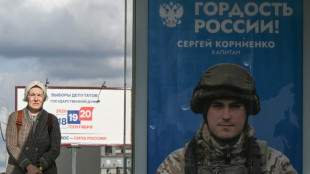
 Russians begin voting in controlled election as war drags on
-
Athletes 'can't take it any more' as Asian Games issues mount
-
 Trump 'clearly' wants dialogue with Pyongyang: South Korean President
-
Allen lights up Bills' new stadium with 41-31 win over Lions

-
 Bank of Japan hikes rates to 31-year high to battle inflation
-
Afghan medical students in Pakistan hope court stops college expulsions
-
 Thailand's Muslim separatists vow to fight to the end
-
AI doomsday warnings unlikely to slow IPOs but questions linger

-
 Mideast turmoil, AI set to dominate UN gathering of world leaders
-
ICC eyes China in bid to expand cricket
-
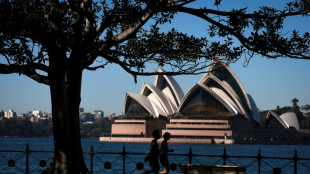 Australia to detain tourists who overstay visa, minister says
-
Nkunku craving freedom and fun on RB Leipzig return

-
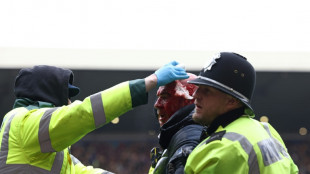 Championship rivals brace for renewal of bitter feuds
-
Bhutan's traditional archers lose ground to development

-
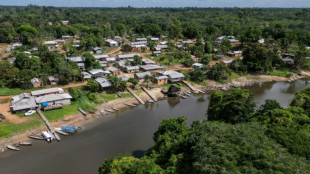 In Brazil's Amazon, the hunt for oil fuels hopes and fears
-
Asian stocks track Wall St rally as oil prices drop
-
 Australian athlete who soiled herself apologises for continuing Hyrox race
-
South Korea makes Asian Games complaint over Japan warlord ceremony

-
 Baby orangutans in India expose 'frightening' scale of trafficking
-
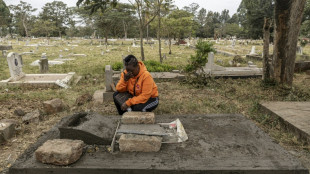
US aid cuts are killing Kenyan sex workers
-
 Doom Loop? Ed Sheeran struggles against Gaza tide
-
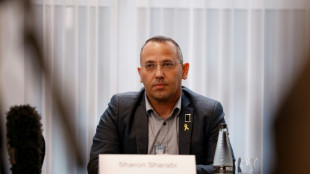
October 7 survivors, families take centre stage in Israel vote
-
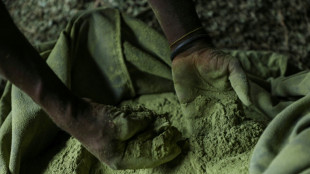 Sudanese women hold fast to threatened henna body art
-
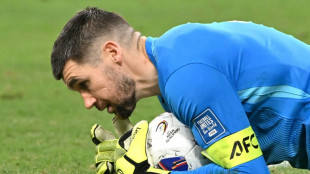
Captain Mat Ryan axed from Socceroos squad for Brazil games
-
 Man Utd misery puts Carrick under pressure, Spurs feeling the heat
-
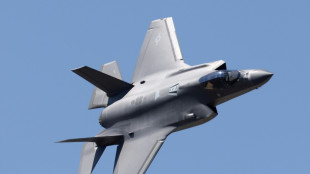
US approves sale of 48 F-35 jets to Saudi Arabia
-
 Prized Mexican relic returns on loan, two centuries on
-
Juventus, Palace cruise to Europa League wins, Bournemouth beat Sociedad

-
 Venezuela unblocks some censored news sites
-
Stocks climb as oil retreats, Fed calms inflation fears
-
 Samba stars on debut in Man City rout of Norwich
-
Russians begin voting in controlled election as war drags
-
 Oversight Board blasts 'inadequate' Meta safeguards for AI deepfakes
-
Hispanics feel 'betrayed' on immigration, Republican warns Trump

-
 The Easter Island origins of buzzy Malkovich drama 'Wild Horse Nine'
-
High-scoring Bears face Vikings in battle of NFL unbeatens

-
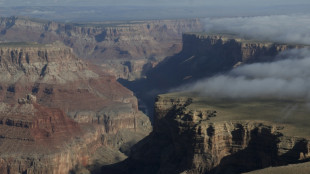 Third body recovered after Grand Canyon flash flood
-
'In our lane': Fed's Warsh defies Trump but still fighting for credibility
-
 Harry makes first public appearance since return to UK
-
Trump admin makes major cut to endangered species protections

-
 Abhishek hits record T20 ton as India sweep series 3-0
-
Princess Diana's brother makes new explosive claims against Charles

-
 Abhishek hits record T20 ton as India sweep T20 series 3-0
-
Ovechkin on Russian political video: 'I support my country'

Foreign countries intensify contact efforts with new Syria rulers
Foreign countries stepped up efforts Sunday to establish contacts with Syria's interim rulers, a week after Islamist-led rebels sent president Bashar al-Assad fleeing to Moscow, ending decades of brutal rule.
The United Nations special envoy for Syria was among those arriving in the Syrian capital.
"We need to see of course justice and accountability for crimes," Geir Pedersen said in Damascus. "And we need to make sure that that goes through a credible justice system, and that we don't see any revenge."
Pedersen called for "increased, immediate" aid to war-ravaged Syria, saying it had been through "an enormous... humanitarian crisis".
He later met rebel leader Abu Mohammed al-Jolani, the rebels' Telegram channel said.
A Qatari delegation also landed in Syria to meet transitional government officials.
They reaffirmed the Gulf emirate's "full commitment to supporting the Syrian people... following the success of their revolution," Qatar's foreign ministry spokesman told the emirate's official news agency.
The ministry later announced that Qatar's embassy would resume operations on Tuesday, 13 years after it closed in the early stages of the anti-government uprising that turned into years of civil war.
Unlike other Arab countries, Qatar never restored ties with Assad's Syria.
- Aid and diplomacy -
Already on Saturday Turkey, a major player in Syria's conflict, holding considerable sway in the northwest, had reopened its Damascus embassy after 12 years.
And Britain's foreign minister said London had established diplomatic contact with the Hayat Tahrir al-Sham (HTS) rebel group that led the offensive that ousted Assad.
They remain "a proscribed terrorist organisation, but we can have diplomatic contact and so we do have diplomatic contact," said David Lammy.
London also announced it would release 50 million pounds ($63 million) of humanitarian aid for "the most vulnerable" Syrians in Syria and in neighbouring Lebanon and Jordan.
"We're committed to supporting the Syrian people as they chart a new course," said Lammy.
On Saturday Washington's top diplomat, Secretary of State Antony Blinken, said his country has made "direct contact" with HTS, despite having designated the group as terrorists in 2018.
France said a four-strong diplomatic team would arrive in Damascus on Tuesday to "retake possession of our real estate" as well as "establishing initial contact" with the new authorities, said acting Foreign Minister Jean-Noel Barrot.
They would also be "evaluating the urgent needs of the population", he added.
- Torture, death threats -
Assad fled Syria on December 8 following an 11-day rebel offensive led by HTS, after years of civil war sparked by his violent crackdown on anti-government protests in 2011.
Since the rebels took Damascus, ex-prisoners such as Ghazi Mohammed al-Mohammed have shed light on the abuse he and others like him suffered.
"Towards the end I just wanted to die, waiting for when they would execute us," said Mohammed, who was among those freed by the rebels from the prison system Assad used to quash any hint of dissent.
Mohammed said he doesn't know why he was arrested and spent more than five months in prison, where he says he was tortured and threatened with death.
- 'Massive destruction' -
Calm is slowly returning to the streets of Damascus, with dozens of children streaming back to school Sunday for the first time since Assad fled.
An official at one school said "no more than 30 percent" had returned Sunday, but that the numbers would "rise gradually".
Damascus's interim governor said major challenges lay ahead.
"The challenges we are facing right now are the massive destruction of the institutional structure in terms of human resources, local economy, and the social structure," said Maher Marwan.
"This is a reality that requires great effort and awareness, in addition to solidarity by everyone at this phase."
Turkey was ready to provide military support to the new Islamist-led government set up by the rebels, if requested, Defence Minister Yasar Guler said Sunday, Turkish media reported.
The new leadership should be given "a chance", he added. Ankara was "ready to provide the necessary support" if needed.
Sunni Muslim HTS is rooted in Syria's branch of Al-Qaeda and is designated a "terrorist" organisation by many Western governments.
While it has sought to moderate its rhetoric in recent years, its seizure of power has sparked widespread concern over the protection of religious and ethnic minorities.
The interim government insists the rights of all Syrians will be protected, as will the rule of law.
On Sunday, Syrian Christians attended their first church service since Assad's fall.
- Russian evacuation -
Assad was propped up by Russia, Iran and Lebanon's Hezbollah militant group.
Russia's foreign ministry said it had evacuated some of its diplomatic staff from Syria Sunday, "by a special flight of the Russian Air Force from the Hmeimim airbase" in Syria.
The rebel advance began on November 27, the day a ceasefire took effect in the Israel-Hezbollah war in Lebanon, in which Assad's ally suffered staggering losses.
Both Israel and Turkey have carried out military strikes inside Syria since Assad's fall.
The Syrian Observatory for Human Rights on Sunday reported fresh Israeli strikes near Damascus, after 60 strikes across Syria a day earlier.
Israel has also ordered troops into a UN-patrolled buffer zone separating Israeli and Syrian forces on the Golan Heights, a move denounced by Saudi Arabia and Qatar, and which the UN said violated a 1974 armistice.
"We have no interest in confronting Syria," Israeli Prime Minster Benjamin Netanyahu said in a video statement.
"Israel's policy toward Syria will be determined by the evolving reality on the ground."
burs-srm/it/jj
W.AbuLaban--SF-PST