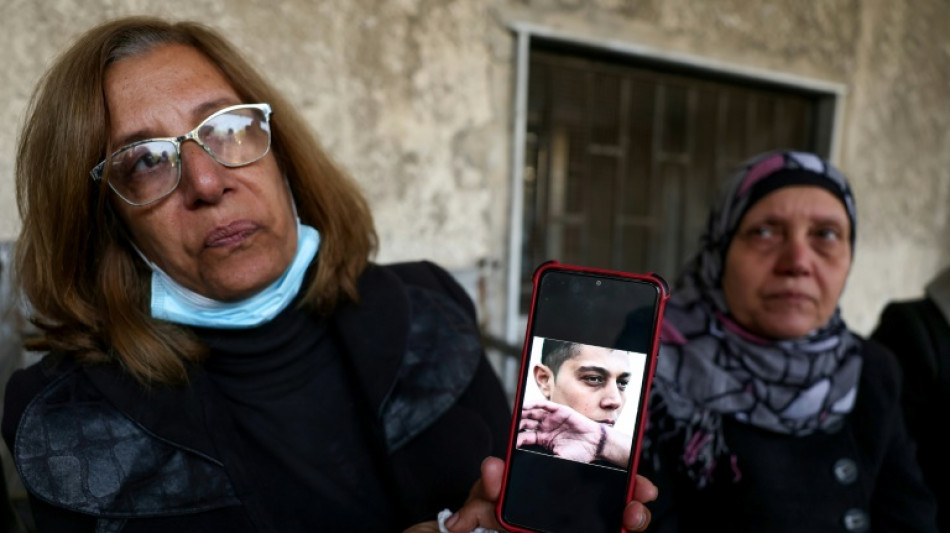
Relatives of Syria's disappeared seek closure in Damascus morgues / Photo: OMAR HAJ KADOUR - AFP

 'A disaster' if Man City do not win says Maresca after flawless start
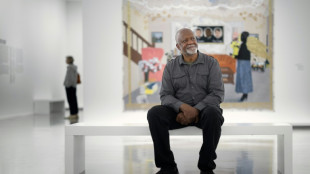 Kerry James Marshall: American 'blackness' painter celebrated in Europe

 Spain coach De la Fuente offers 'full support' to people of Ceuta

 Russia seizes assets of Nestle, French firms over West's Ukraine support
 England can build on World Cup 'spirit', says Tuchel

 UNESCO can be 'moderator' in AI debate: chief to AFP

 Infantino 'must go', says German FA vice-president

 Russia seizes assets of Nestle, French firms

 Japan's busiest rail station tests robot bins
 Anthropic says AI systems moving towards building themselves
 Asian stocks boosted by falling oil, yen weakens after BoJ rate hike
 Pakistan court blocks expulsion of Afghan medical college students
 Athletes 'can't take it any more' as Asian Games issues mount

 Allen lights up Bills' new stadium with 41-31 win over Lions

 Afghan medical students in Pakistan hope court stops college expulsions
 AI doomsday warnings unlikely to slow IPOs but questions linger
 ICC eyes China in bid to expand cricket
 Nkunku craving freedom and fun on RB Leipzig return
 Bhutan's traditional archers lose ground to development
 Asian stocks track Wall St rally as oil prices drop

 South Korea makes Asian Games complaint over Japan warlord ceremony

 US aid cuts are killing Kenyan sex workers

 October 7 survivors, families take centre stage in Israel vote
 Captain Mat Ryan axed from Socceroos squad for Brazil games

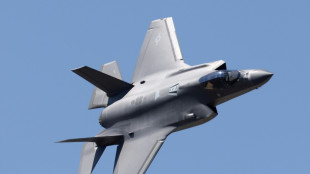 US approves sale of 48 F-35 jets to Saudi Arabia
In the corridors of Damascus's main hospitals, thousands of families have gathered for the foreboding mission of trying to find the bodies of loved ones captured years ago by the Syrian authorities.
"Where are our children?" women cried out as they grasped at the walls, desperate for closure after their years-long ordeal.
But no such closure was within reach for Yasmine Shabib, 37, who still could not locate her brother or father, both arrested in 2013.
Having travelled for more than four hours from the northwestern city of Idlib, the victorious rebels' wartime base, she had little hope of finding them alive.
But at very least, she hoped she would not leave without their bodies.
"Just open the prison vaults for us, we will search ourselves among the corpses," she said in tears.
"They buried the people everywhere, not just in Saydnaya. There are Saydnayas everywhere under our feet in Syria," she added, referring to Syria's most notoriously brutal prison, dubbed a "slaughterhouse" by human rights groups.
Outside the hospital, voices echo.
"Does anyone recognise body number nine?" a doctor calls out to a group of families as a phone is passed around between them, the picture of a corpse lighting up the screen.
Every once in a while, someone recognises a loved one, and the body is summarily brought out of the morgue to be taken to another mortuary freezer, where the family can finally confirm whether it is one of their own.
Having failed to locate her son, a mother comes out, her hand bloodstained from the bodies she inspected.
"Their blood is still fresh," she said trying to catch her breath.
- 'Drowning' -
Pathologist Yasser al-Qassem confirms: "We still don't know the dates or causes of death for the bodies arriving from Harasta," a suburb of Damascus where another morgue is located.
"But one thing is certain, these deaths are recent."
As soon as he heard that Bashar al-Assad had fled, Nabil Hariri rushed to Damascus from his southern hometown Daraa to search for his brother.
Arrested in 2014 when he was just 13, Hariri had had no news of his brother since.
"When you're drowning, you cling to anything," Hariri, 39, told AFP.
"So we search everywhere".
He was among the thousands of desperate relatives who gathered outside Saydnaya on Tuesday, hoping that his brother was among the thousands of prisoners freed after Assad's fall.
"I didn't find my brother there," he said.
At dawn on Wednesday, there was a brief resurgence of hope when he heard that 35 bodies were arriving from Harasta. The hospital morgue there was used as a staging post for the bodies of prisoners who died of maltreatment, hunger or illness before they were buried in mass graves.
But that hope was swiftly dashed.
"In all the photos, the bodies were old," he said. "My brother is young."
- 'Alive or dead?' -
Syria's new rebel authorities announced that they had found bodies in the Harasta morgue.
After opening the white body bags, rebel official Mohammed al-Hajj took video that he later showed to AFP.
The footage showed bodies bearing signs of torture -- one without an eye, another without any teeth, a third covered in dried blood.
Another body bag simply contained bones, while yet another held the remains of a flayed corpse, its ribcage poking out from the flesh.
Harasta "is one of the main centres where bodies from Saydnaya or Tishrin", another notorious prison, "were gathered before being buried in mass graves", said Diab Seria, a member of the Association of Detainees and Missing Persons of Sednaya Prison.
Khaled Hamza found no traces of his son at Harasta, Saydnaya or the Damascus hospital.
But he has no intention of giving up, having stumbled across documents at the prison containing information about the detainees, which he then gathered and handed over to the new police authorities.
"We are millions searching for our children," the taxi driver said. "We ask just one thing: are they alive or dead?"
Y.Zaher--SF-PST