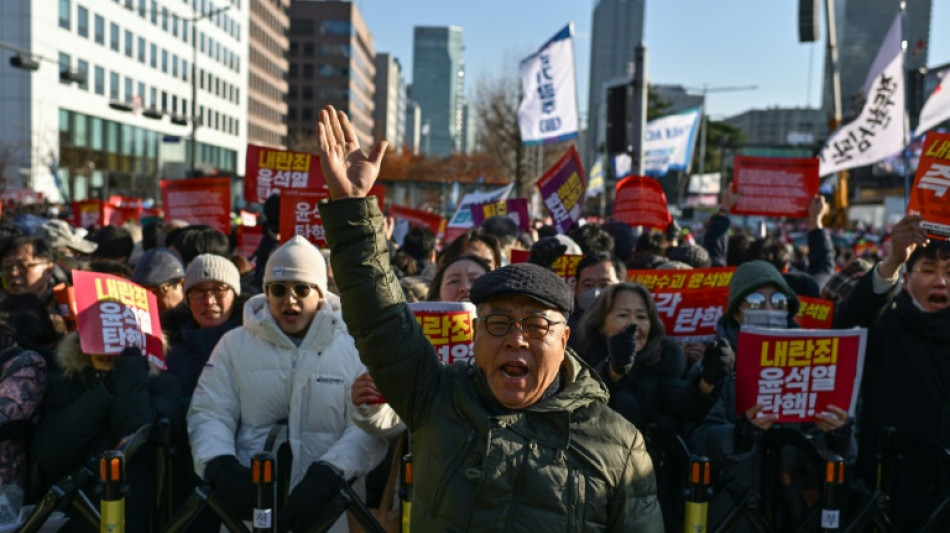
'How dare you': South Korean activist horrified by martial law / Photo: ANTHONY WALLACE - AFP

 Crisis-wracked Volkswagen warns of 10-bn-euro hit to profits

 Costa Rica's Grynspan tops third informal poll for UN chief: diplomat

 Stock markets retreat after central bank rate hikes
 Russia labels director of Cannes Grand Prix winner a 'foreign agent'

 Macron warns of Russian 'hybrid' threat after meeting presidential hopefuls

 UN holds third informal poll for new chief
 Kulusevski return can spark Spurs: De Zerbi

 Shakira to cap off world tour with Madrid 12-gig run

 Isolated Syrian-Druze city blames Damascus for shortages

 Isolated Syrian-Druze city shortages
 Dutch drop Depay for Germany match in Xavi's first pick

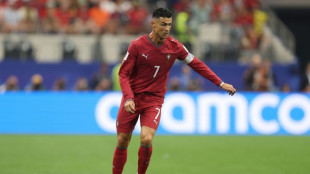 Ronaldo named in Portugal squad for Nations League

 Stock markets diverge after central bank rate hikes

 Anti-Assad music star makes triumphant return to Syria
 In-form Fernandez included in Spain Nations League squad

 Arteta buries hatchet with Hurzeler ahead of Brighton clash

 Alexander-Arnold and Palmer return to England squad for Nations League
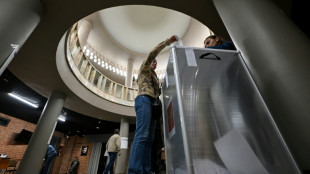 Russians vote as Ukraine war drags on for fifth year

 Backpackers fret over Australian visa crackdown
 Most Asian stocks track Wall St rally, yen drops after BoJ rate hike
 Russians begin voting in controlled election as war drags on
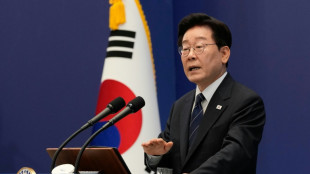 Trump 'clearly' wants dialogue with Pyongyang: South Korean President

 Bank of Japan hikes rates to 31-year high to battle inflation
 Thailand's Muslim separatists vow to fight to the end

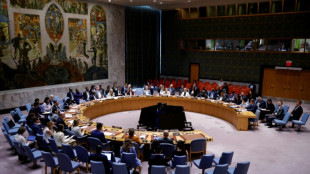 Mideast turmoil, AI set to dominate UN gathering of world leaders
In 1973, when Shin Jae-hyung was a teenager, he was out in the streets being teargassed, fighting against South Korea's then-military dictator Park Chung-hee. He never thought he would have to do it again in 2024.
But when he heard the country's current president, Yoon Suk Yeol, had declared martial law this week -- the first time democratic South Korea had experienced it in 40 years -- he raced to the National Assembly thinking: "We must stop this."
"I thought we must define this as an act of insurrection," the 66-year-old told AFP at his home in northern Seoul.
Shin was convinced that Yoon, who made the stunning announcement on Tuesday night, "must be punished" for his attempt to drag South Korea back to the dark days.
For years, Shin has fought for democracy and against the successive military-led regimes of the 1970s and 1980s, having endured arrest and torture at the hands of authorities.
After South Korea became a democracy in 1987, with voters directly electing the president, Shin assumed the country's days of martial law were over.
So this week, as soon as he got to the National Assembly -- by that point surrounded by soldiers and police -- he stood on a fence to shout to fellow protesters, determined to help his country.
"I started shouting, 'Arrest Yoon for insurrection!' and kept going for nearly 30 minutes. People around me began chanting after me," he said.
And he made sure the soldiers understood what they had been ordered to do by Yoon.
"I looked each of them in the eye and said: 'Do not join this insurrection' They all avoided my gaze," he told AFP.
- 'Out of your mind' -
This week's events have evoked memories of Shin's younger years, marked by his struggle for democracy and the brutal repression he endured, including being tortured by water board -- a technique where water is poured over a cloth covering the mouth to induce a sensation of drowning.
Still, he takes pride in his past sacrifices, believing that he and countless others helped create democratic South Korea.
But the country he cherishes now seems poised to regress into what he once fought against.
As he drove towards the parliament late Tuesday, he kept thinking that Yoon "must be out of your mind".
"How dare you do this to our country?" he thought.
"You madman, who do you think you are to ruin this country? I'm going to parliament, no matter what."
- Gwangju massacre -
Born and raised in the southwestern city of Gwangju, Shin's first experience with dictatorship came in 1972, when then-president Park amended the constitution to allow himself to rule indefinitely without universal suffrage.
Protests against Park's government defined Shin's high school years and were fuelled by hope for a democratic future.
"We believed we could achieve democracy -- until Chun Doo-hwan came along," he said, referring to Park's successor, who continued authoritarian rule after a coup in 1979.
While serving in the military in 1980 -- it was and remains mandatory -- Shin witnessed the Chun military junta extend martial law nationwide and brutally crush pro-democracy protests in Gwangju, leaving hundreds dead and wounded.
The May 18 Gwangju uprising became a key symbol in South Korea's democratic struggle, and an indelible episode of history -- the subject of Nobel-prize-winning author Han Kang's novel "Human Acts".
But for Shin, it left a deep personal scar. Even 44 years later, recalling the events brings him to tears.
"I lost friends, who were killed, and others who were arrested and later died in prison."
A lingering sense of indebtedness to those who perished for democracy has stayed with him ever since.
"This question of why I was spared, simply because I was in the army at the time... it's weighed heavily on me all these years," Shin said, his voice shaking and tears filling his eyes.
- 'A good death' -
In 1983, Shin was arrested for his pro-democracy activities and interrogated for 10 days at a notorious government site -- which is now a museum on the slopes of Namsan mountain in central Seoul.
"They waterboarded me, demanding I confess to being a communist," he said.
He was released after 10 days and his captors surprised him with an offer.
"They asked me to work for them because I could read and translate several languages, including Spanish and German. They needed someone to translate books on Karl Marx."
Decades after his release and South Korea's transition to democracy, Shin remains determined to prevent the country from reverting to its authoritarian past.
Driving to the National Assembly on Tuesday night, he was ready for the worst-case scenario, he told AFP.
"I thought there wouldn't be killings by martial law troops. But even if there were, and I die from it, I thought it would be a good death."
"This is a country we've spent our entire lives building, a country no random bastard can destroy," he said.
"It will never happen," Shin added, as he prepared to join another mass rally on Sunday, calling for Yoon's impeachment.
N.Shalabi--SF-PST