
-
 Kings' Ben Simmons tears Achilles in training
-
Zelensky speaks to US envoys as Trump lashes out

-
 Lula, Bolsonaro set for first debate showdown in bitter election race
-
'Surprise package' Lazio crush Juve to keep pace with Serie A leaders Inter

-
 Mbappe hits two as Real Madrid rout Sevilla
-
China growth expected to miss official target in third quarter
-
 Browns edge Ravens for division lead, Texans beat Jags
-
Lazio crush Juventus to move level with Serie A leaders Inter

-
 Lyon go top of Ligue 1 as Monaco fall to first defeat of the season
-
Leeds draw feels like 'fresh start' for Man Utd's Carrick
-
 Venezuela opposition alliance reaffirms Nobel laureate Machado as leader
-
Macron denounces 'unbridled' violence as France hit by new clashes

-
 'Street Fighter' wins N. America box office, buzzy doc stuns in 2nd
-
Hurzeler lauds 'hard worker' Gomez after Brighton goal from halfway line

-
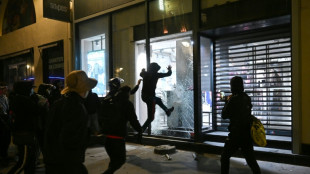 NFL: Paris game to go ahead despite protests in France
-
Toulouse hold off Exeter, Northampton save English Champions Cup blushes

-
 Arteta hails Arsenal 'finishers' after Madueke fells Forest
-
Arsenal snatch late win to keep pressure on Man City as Man Utd held

-
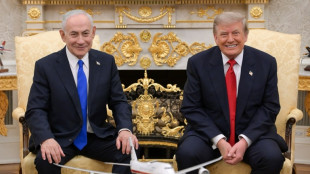 Trump backs ally Netanyahu ahead of Israel's tight election
-
Arsenal strike late to keep pressure on Man City as Man Utd held

-
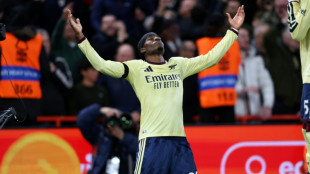 Madueke strikes late as below-par Arsenal sink Forest
-
Four soldiers dead, dozens injured in fire at Canada military base
-
 Second day of street clashes in Milan
-
Ton-up Agha helps Pakistan down Sri Lanka in tri-series opener

-
 Dupont's Toulouse hold off Exeter as English Champions Cup woes continue
-
Man Utd draw at Leeds keeps pressure on Carrick

-
 Zelensky speaks to US envoys amid Trump spat
-
Barca defenders Garcia, Kounde injured before key games

-
 Paris police in new battles with protesters and looters
-
Lula, Bolsonaro to face off in first debate of bruising election
-
 Multiple deaths, injuries at western Canada military base: minister
-
Maza and Schick help Leverkusen clip Freiburg's wings

-
 Boland strikes twice for Australia in rain-hit South Africa Test
-
Leeds hit back to deny Man Utd morale-boosting win

-
 Marseille put Angers to the sword in Ligue 1
-
Zelensky tells NBC 'thankful' US has unblocked intelligence sharing
-
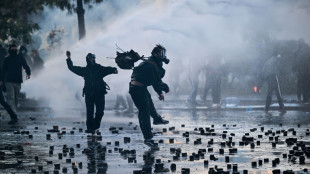 Albanian PM refuses to quit as violent protests enter sixth day
-
Pau see off Leicester in Champions Cup

-
 Chwalinska fights back to win Wuhan Open in title breakthrough
-
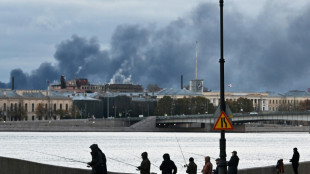
Kremlin says Ukrainian attacks won't change war aims as Kyiv hits Saint Petersburg
-
 Kulusevski on brink of return for Spurs after 17-month absence
-
Martinez starts for Man Utd after outburst

-
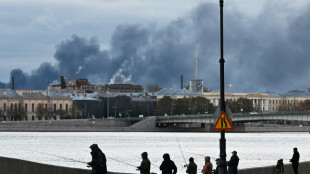 Ukraine sets Saint Petersburg refinery ablaze in large-scale drone attack
-
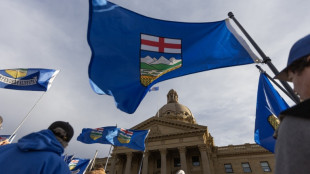
Alberta separatists rally ahead of independence vote
-
 Spain's in-form Chacarra wins DP World India Championship
-
Katie Alexander reportedly leaves flat shared with Eamonn Holmes

-
 Robertson and Selby chase rare Home Nations sweep in Belfast
-
Body found in search for missing Glasgow teenager

-
 Arteta backs Kai Havertz to become a 30-goal Arsenal forward
-
Andi King recounts late-life transition after decades behind an “alpha male” identity

US unveils Asia-Pacific trade framework, but questions remain
President Joe Biden launched a new Asia-Pacific trade initiative Monday in Tokyo, with 13 countries including India and Japan signing up, although questions about the pact's effectiveness remain.
Biden formally unveiled the Indo-Pacific Economic Framework for Prosperity, or IPEF, on his second day in Japan, where he is also holding talks with Prime Minister Fumio Kishida before joining a regional Quad summit on Tuesday.
"This framework is a commitment to working with our close friends and partners in the region on challenges that matter most to ensuring economic competitiveness in the 21st century," he said.
Unlike traditional trade blocs, there is no plan for IPEF members to negotiate tariffs and ease market access -- a tool that has become increasingly unpalatable to US voters fearful of seeing homegrown manufacturing undermined.
Instead, the programme foresees integrating partners through agreed standards in four main areas: the digital economy, supply chains, clean energy infrastructure and anti-corruption measures.
The starting list of members in addition to the United States is Australia, Brunei, India, Indonesia, Japan, Malaysia, New Zealand, the Philippines, Singapore, South Korea, Thailand and Vietnam.
The countries touted IPEF as a framework for what will ultimately become a tight-knit group of trading nations.
"We share a commitment to a free, open, fair, inclusive, interconnected, resilient, secure, and prosperous Indo-Pacific region," they said in a joint statement.
"Deepening economic engagement among partners is crucial for continued growth, peace, and prosperity."
- Rebuilding alliances -
Together, the participants account for about 40 percent of global GDP and "there are other countries that could conceivably join us," Biden's national security adviser, Jake Sullivan, told reporters.
Biden has pushed to rapidly rebuild strategic military and trade alliances weakened under his predecessor Donald Trump since taking office in 2021.
IPEF is intended to offer US allies an alternative to China's growing commercial presence across the Asia-Pacific.
However, there is no political will in Washington for returning to a tariffs-based Asia trade deal following Trump's 2017 withdrawal from the Trans-Pacific Partnership -- a huge trading bloc that was revived under a new name in 2018, without US membership.
While the TPP reduces trade barriers for members, US Secretary of Commerce Gina Raimondo emphasised to reporters that IPEF was not designed to go down the same route.
The "framework is intentionally designed not to be a same old, same old traditional trade agreement," she said.
Even so, Japan's Kishida said there is still an appetite for US involvement in the larger pact abandoned by Trump.
The country welcomes the new framework and will "participate and cooperate", he said, but "from a strategic standpoint, Japan hopes that the United States will return to the TPP".
- No Taiwan -
China has criticised IPEF as an attempt to create a closed club. Sullivan rejected this, saying "it is by design and definition an open platform."
Taiwan, the self-governing democracy that China claims sovereignty over, has pointedly not been brought into the initial line-up -- despite being an important link in supply chains for microchips.
Sullivan said nevertheless that the United States is "looking to deepen our economic partnership with Taiwan, including on high-technology issues, including on semiconductors and supply chains".
This will happen, however, only "on a bilateral basis".
The United States faces skepticism, given the lack of incentives to go along with IPEF's plan for smoother integration.
Without offering increased access to the huge US market, it is unclear what enforcement mechanisms could be applied.
But Raimondo said that if IPEF had been in place before the Covid-19 pandemic triggered mass economic shutdowns, the United States would have "experienced much less disruption".
And more broadly, the US trade-boosting initiative is welcomed by businesses that "increasingly look for alternatives to China", she said.
G.AbuOdeh--SF-PST