-
 Death toll from attack at police HQ in Pakistan rises to 31
-
Drone owners rush to offload devices ahead of Beijing ban

-
 Trump says Denmark to give US 'permanent control' over Greenland security
-
Trump's beef policies irk Texas ranchers, testing their loyalty
-
 Kennedy Center: future unclear for iconic Washington arts hub
-
Nvidia, OpenAI CEOs to attend Xi dinner at White House

-
 Trump claims 'infinite' Greenland security deal with Denmark
-
Anthropic picks Accenture for in-house AI safety evaluation

-
 Helicopters battle wildfire threatening Ecuador's capital
-
Balogun returns as Monaco beat Lens to continue strong Ligue 1 start

-
 Brentford batter Chelsea to undo Alonso's promising start
-
'Pause' on overt repression in Venezuela, but reforms still needed: HRW
-
 Kane hits Bundesliga century as Bayern rout Union
-
Global stocks mixed as yen falls despite Bank of Japan rate hike
-
 Trump says CNN, MS NOW, Politico banned from White House
-
Cuba hit with seventh major blackout of the year
-
 Hushing and hedging: US companies retreat on climate
-
Murray out with concussion so Wentz will start for Vikings

-
 Springboks to face Fiji before 2027 Rugby World Cup
-
UN chief 'deeply regrets' US visa refusal to Abbas for annual meeting
-
 Nigeria miners struggled to breathe in cell before 37 died: survivors
-
England quick Carse to face no charges over alleged nightclub assault

-
 McIlroy on the charge at PGA Championship as Reed withdraws
-
Mancini brings nine newcomers into the first squad of his Italy comeback
-
 McIlroy on the charge at PGA Championship
-
Czechs level Davis Cup tie against USA as South Korea eye Finals

-
 Crisis-wracked Volkswagen warns of 10-bn-euro hit to profits
-
New France boss Zidane confirms Mbappe as captain after naming first squad
-
 Costa Rica's Grynspan tops third informal poll for UN chief: diplomat
-
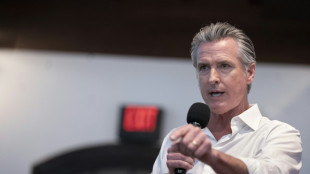
California governor signs order to explore AI 'kill switch'
-
 Stock markets retreat after central bank rate hikes
-
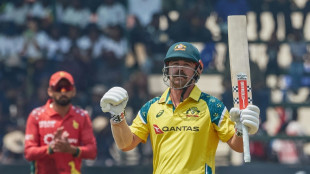
Head leads run spree as Australia win Zimbabwe ODI series
-
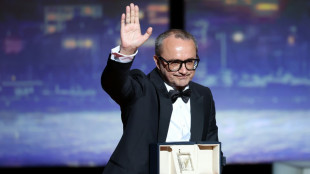 Russia labels director of Cannes Grand Prix winner a 'foreign agent'
-
In-form Raphinha wants to finish career at Barcelona

-
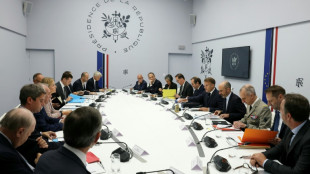 Macron warns of Russian 'hybrid' threat after meeting presidential hopefuls
-
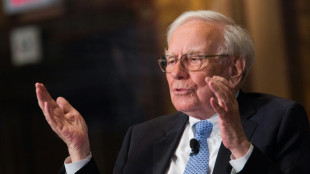
Warren Buffett steps down as Berkshire Hathaway chairman
-
 UN holds third informal poll for new chief
-
Carrick confident Man Utd can 'work through' tough time
-
 Kulusevski return can spark Spurs: De Zerbi
-
Mbappe ends Nike partnership to join Swiss brand On

-
 Shakira to cap off world tour with Madrid 12-gig run
-
Liverpool boss Iraola puts Bournemouth love affair on hold

-
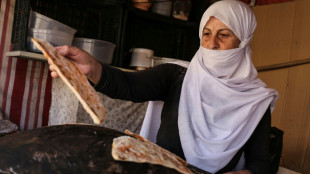 Isolated Syrian-Druze city blames Damascus for shortages
-
'A disaster' if Man City do not win says Maresca after flawless start
-
 Isolated Syrian-Druze city shortages
-
Kerry James Marshall: American 'blackness' painter celebrated in Europe

-
 Dutch drop Depay for Germany match in Xavi's first pick
-
Spain coach De la Fuente offers 'full support' to people of Ceuta

-
 Ronaldo named in Portugal squad for Nations League
-
Russia seizes assets of Nestle, French firms over West's Ukraine support
Wealthy nations offer $250 bn on climate but pressed for more
Wealthy nations on Friday offered $250 billion a year to help poorer nations hit hardest by global warming but faced immediate calls led by Africa to give more as UN climate negotiations extended into overtime.
At the COP29 talks in Azerbaijan, developing nations are demanding a bigger commitment from historic polluters most responsible for warming, but rich countries insist that massive financial pledges are not politically realistic.
In a draft text revealed hours before two weeks of fraught bargaining were set to end, Azerbaijan said wealthy nations had committed to providing $250 billion a year by 2035.
The text also sets an ambitious overall target to raise at least $1.3 trillion per year by 2035 from not only developed countries but the private sector.
But a red line for many climate-imperilled nations at COP29 had been securing a new commitment from developed nations well above their existing pledge of $100 billion a year.
The new target "is totally unacceptable and inadequate", said Ali Mohamed, chair of the African Group of Negotiators.
"$250 billion will lead to unacceptable loss of life in Africa and around the world, and imperils the future of our world," he said.
The Alliance of Small Island Developing States, for which climate change is an existential threat, said the target showed "contempt for our vulnerable people".
But the United States signalled it was not looking to negotiate a higher figure. President-elect Donald Trump takes office in two months and is expected to pull the world's largest economy again out of climate diplomacy.
"It has been a significant lift over the past decade to meet the prior, smaller goal. $250 billion will require even more ambition and extraordinary reach," said a senior US official, whose team in Baku comes from outgoing President Joe Biden's administration.
Germany, a longtime leader on climate where elections are due next year, said any final deal was inevitable to include debt restructuring and other financial tools to raise the money, not just government money.
Europe wants to "live up to its responsibilities, but also in a way that it doesn't make promises it can't live up to", German Foreign Minister Annalena Baerbock told reporters.
COP29 lead negotiator Yalchin Rafiyev said negotiations would press on and that $250 billion "doesn't correspond to our fair and ambitious goal".
- Less than needed -
Activists point to studies that show that far more is needed for poor countries, which bear little responsibility but are disproportionately affected by record-high temperatures and rising disasters.
Jasper Inventor from Greenpeace called the $250 billion offer "inadequate, divorced from the reality of climate impacts and outrageously below the needs of developing countries".
But Avinash Persaud, special advisor on climate change to the president of the Inter-American Development Bank, said that the offer showed the talks were "within sight of a landing zone" for the first time.
"There is no deal to come out of Baku that will not leave a bad taste in everyone's mouth," said the former advisor to Barbados Prime Minister Mia Mottley.
The United States and European Union have wanted newly wealthy emerging economies like China -- the world's largest emitter -- to chip into the pot.
China, which remains classified as a developing nation under the UN framework, provides climate assistance but wants to keep doing so on its own voluntary terms.
Apart from splits over money, many nations fear the climate deal in negotiation does not reflect the urgency on phasing out coal, oil and gas -- the main drivers of global warming.
Last year's COP28 summit in Dubai made a landmark call on the world to transition away from fossil fuels after long negotiations in Dubai.
But a Saudi official speaking on behalf of the Arab Group said the bloc would "not accept any text that targets any specific sectors, including fossil fuel" in Baku.
Top German diplomat Baerbock singled out Saudi Arabia and warned that its goal was "turning back the clock".
- Criticism of Azerbaijan -
Azerbaijan, an authoritarian state that relies on oil and gas exports, has been accused of lacking the experience and bandwidth to steer such large and complex negotiations.
"This is the worst COP in recent memory," said Mohamed Adow of the Climate Action Network.
The EU had also called for stronger leadership from Azerbaijan, whose leader, Ilham Aliyev, opened the conference by railing against Western nations and hailing fossil fuels as a "gift of God".
The annual UN-led climate talks come on what is already poised to be the hottest year in history and as disasters rise around the world.
Just since the start of COP29 on November 11, deadly storms have battered the Philippines and Honduras, while Ecuador has declared a national emergency due to drought and forest fires and Spain has been reeling after historic floods.
bur-np-lth-sct/giv
G.AbuHamad--SF-PST