Crunch time: What still needs to be hammered out at COP29? / Photo: Lise KIENNEMANN, Valentina BRESCHI, Sabrina BLANCHARD - AFP

 Death toll from attack at police HQ in Pakistan rises to 31

 Trump says Denmark to give US 'permanent control' over Greenland security
 Kennedy Center: future unclear for iconic Washington arts hub

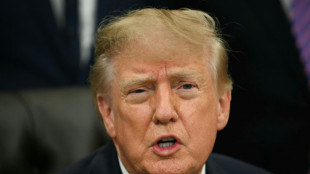 Trump claims 'infinite' Greenland security deal with Denmark

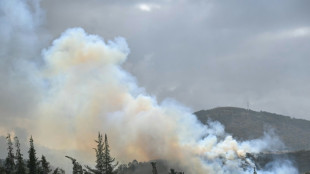 Helicopters battle wildfire threatening Ecuador's capital

 Brentford batter Chelsea to undo Alonso's promising start
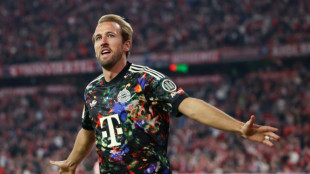 Kane hits Bundesliga century as Bayern rout Union
 Trump says CNN, MS NOW, Politico banned from White House
 Hushing and hedging: US companies retreat on climate

 Springboks to face Fiji before 2027 Rugby World Cup
 Nigeria miners struggled to breathe in cell before 37 died: survivors

 McIlroy on the charge at PGA Championship as Reed withdraws
 McIlroy on the charge at PGA Championship

 Crisis-wracked Volkswagen warns of 10-bn-euro hit to profits
 Costa Rica's Grynspan tops third informal poll for UN chief: diplomat
 Stock markets retreat after central bank rate hikes
 Russia labels director of Cannes Grand Prix winner a 'foreign agent'

 Macron warns of Russian 'hybrid' threat after meeting presidential hopefuls
 UN holds third informal poll for new chief
 Kulusevski return can spark Spurs: De Zerbi

 Shakira to cap off world tour with Madrid 12-gig run

 Isolated Syrian-Druze city blames Damascus for shortages
 Isolated Syrian-Druze city shortages

 Dutch drop Depay for Germany match in Xavi's first pick
 Ronaldo named in Portugal squad for Nations League
The UN climate summit in Azerbaijan is scheduled to wrap up on Friday, yet it remains unclear how much money will be provided to developed countries to fight global warming -- and who will pay for it.
Here are the big questions and key figures about what is still expected from the COP29 talks.
- How much money? -
Developing countries need $1 trillion a year in external aid by the end of the decade and $1.3 trillion by 2035, according to estimates from two expert economists commissioned by the United Nations, Amar Bhattacharya and Nicholas Stern.
The figure that has sparked the most intense debate at COP29 has been how much of this total will be provided by wealthy countries.
In 2009, developed nations pledged $100 billion a year in climate aid for 2020-2025. COP29 is tasked with laying out their new commitment until 2030 -- or even 2035.
- Which countries should pay? -
Under a framework established by the UN back in 1992, 23 developed countries -- and the European Union -- historically responsible for most planet-heating emissions are obliged to contribute to climate finance.
These include the United States, 18 European countries as well as Japan, Canada, New Zealand and Australia.
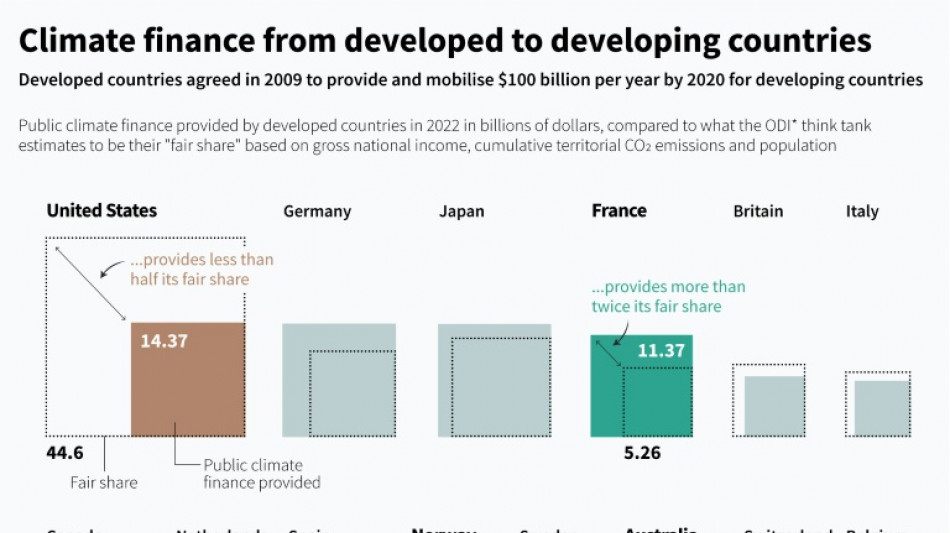
These countries coughed up $116 billion in 2022, according to the OECD, through a variety of channels including financing private projects.
The EU paid for around a third of the total.
The three biggest contributors were Germany, Japan and the United States with $14 billion followed by France with $11 billion, according to calculations by the ODI think tank.
But if wealth and the weight of historical emissions are taken into consideration, the United States is well behind, it added.
- Who does not have to pay? -
Qatar, Kuwait, Singapore, the United Arab Emirates, South Korea and other relatively well-off countries were not included in the 1992 list because they were not as rich at the time.
But the current global economy is very different from 1992, Germany's climate envoy Jennifer Morgan has emphasised. The traditionally wealthy nations are calling for the number of contributors to climate finance to be expanded.
China, the biggest current emitter of greenhouse gases, is also not on the list.
China's historical emissions have now surpassed the EU's -- and it has a bigger economy, the Europeans have repeatedly noted.
Beijing has defended itself by pointing to the financial aid it already provides to the global south.
- Key points to be decided at COP29 -
A major decision to be made at COP29 is the new target amount -- beyond the current $100 billion -- that the developed countries will provide to developing nations.
The demands from developing countries have ranged from $500 billion to $1.3 trillion a year. The EU is among the parties which have not yet named a specific figure.
Another outstanding question is whether any commitment will run to 2030 or 2035.
Other key points to be decided at the talks include:
- How should the climate finance provided by recently wealthy countries be counted? Should these countries also face mandatory funding targets? And should it all be thrown in a single pot or counted separately?
- Should there be specific rules for how climate is distributed to different groups of countries? The 45 least developed nations -- most of which are in Africa -- are asking for at least $220 billion a year, while the small island states want $39 billion.
- Should the money provided by wealthy countries include relief for nations suffering from climate disasters -- which is called "loss and damage" in UN climate-speak -- or should it be limited to efforts to reduce greenhouse gas emissions and adapt to climate change?
- How much of the money should be grants, rather than loans? Nearly 70 percent of climate finance is currently loaned, which means it is piled onto the debt of developing countries, according to the OECD.
G.AbuHamad--SF-PST