Trouble brews in India's Manipur state / Photo: - - AFP

 Denmark hails 'binding' Greenland deal with Trump

 We don't want Games host Japan losing money, says Asian Olympic official
 Ed Sheeran returns to stage after Palestinian controversy

 Asian Games to open in Japan after troubled build-up
 Drone owners rush to offload devices ahead of Beijing ban
 Trump's beef policies irk Texas ranchers, testing their loyalty
 Nvidia, OpenAI CEOs to attend Xi dinner at White House
 Anthropic picks Accenture for in-house AI safety evaluation
 Balogun returns as Monaco beat Lens to continue strong Ligue 1 start

 'Pause' on overt repression in Venezuela, but reforms still needed: HRW

 Global stocks mixed as yen falls despite Bank of Japan rate hike
 Cuba hit with seventh major blackout of the year

 Murray out with concussion so Wentz will start for Vikings

 UN chief 'deeply regrets' US visa refusal to Abbas for annual meeting
 England quick Carse to face no charges over alleged nightclub assault

 Mancini brings nine newcomers into the first squad of his Italy comeback

 Czechs level Davis Cup tie against USA as South Korea eye Finals

 New France boss Zidane confirms Mbappe as captain after naming first squad

 California governor signs order to explore AI 'kill switch'
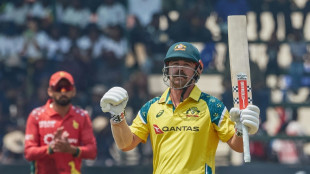 Head leads run spree as Australia win Zimbabwe ODI series

 In-form Raphinha wants to finish career at Barcelona

 Warren Buffett steps down as Berkshire Hathaway chairman

 Carrick confident Man Utd can 'work through' tough time

 Mbappe ends Nike partnership to join Swiss brand On

 Liverpool boss Iraola puts Bournemouth love affair on hold
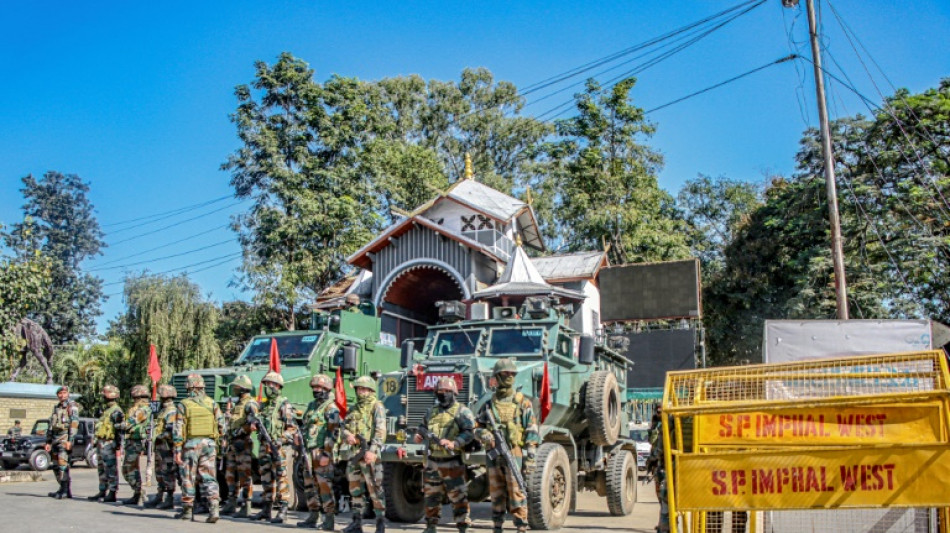
Violence in India's northeastern state of Manipur surged this month, the latest clashes in a bitter 18-month-long conflict between ethnic forces that has killed at least 200 people.
Fighting since May 2023 has fractured the state of nearly three million people between the predominantly Hindu Meitei majority and the mainly Christian Kuki community.
Conflict in the state ruled by Prime Minister Narendra Modi's Hindu-nationalist Bharatiya Janata Party (BJP) erupted from a complex mix of causes including competition for land and public jobs.
Manipur's capital Imphal, the only city in the largely rural state, lies more than 1,700 kilometres (1,050 miles) east of New Delhi, bordering war-torn Myanmar.
- Why did fighting begin? -
The Kuki, also known as the Kuki-Zo, make up around 16 percent of Manipur's people, according to India's last census in 2011.
Living largely in rural areas, they are listed under India's constitution as a "Scheduled Tribe", one of several disadvantaged groups who benefit from affirmative action.
In May 2023, Kuki activists protested a high court order supporting Meitei demands that they should also receive reserved public job quotas and college admissions.
Kuki protesters feared the Meitei would also acquire reserved land, triggering violent demonstrations.
The order was later scrapped, but the spark had been lit.
The Meitei form more than half of the population, and mainly live in town.
They dominate the state legislature, with a government led by Hindu-nationalist BJP member Biren Singh rejecting Kuki demands to split Manipur in two.
Human Rights Watch has accused the government of facilitating the conflict with "divisive policies that promote Hindu majoritarianism".
The Kuki also share many cultural ties with people across the porous border in Myanmar.
But they reject accusations they are linked to insurgents from Myanmar, and deny any role in poppy cultivation or drug smuggling.
- How bad is the violence? -
Divisions have hardened into bitter cycles of revenge attacks that have included the burning of homes, Christian churches and Hindu temples. Tens of thousands of people have been forced to flee their homes.
At the start, mobs looted police stations, seizing thousands of rifles.
But with communities since dividing into ethnic enclaves, the unrest has morphed into scattered insurgent attacks.
Both Kuki and Meitei groups have multiple militia forces.
Some are organised as village defence units manning barricades armed with assault rifles and rocket-propelled grenades. Others operate as guerillas.
Many Kuki view state police as being close to Meitei forces.
Thousands of extra federal forces have been sent to Manipur, with a further 5,000 paramilitary troops being deployed this week.
They face a tough task acting as a "buffer" between deeply divided rivals, The Times of India warned in an editorial, saying they are placed in an "impossible situation".
- What sparked the latest clashes? -
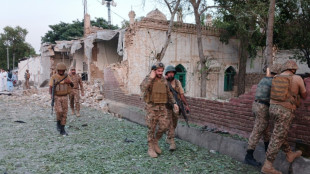
In early November, the burned corpse of a woman from the Hmar community -- a smaller group close to the Kuki -- was found in Jiribam district, sparking fury.
Jiribam was one of the few areas where there had been little conflict between the Kuki and Meitei communities.
On November 11, at least 10 Hmar men were killed by police, who said they had tried to storm their station.
Days later, the bodies of six people believed to be from the Meitei community were discovered, triggering protests.
Protesters tried to storm the homes of politicians in Imphal, and the government on Saturday ordered an internet shutdown and curfew, the latest to be imposed.
- What are politicians doing? -
Critics say government efforts to stem the violence have failed.
The Hindu newspaper argued that peace can only be achieved through a "political arrangement of accommodation", but that there has been little sign of that so far.
"The vicious insider-outsider rhetoric continues, internet bans are back and the army and police still do not see eye-to-eye," the Indian Express wrote in an editorial on Tuesday.
Seven state lawmakers have withdrawn from the BJP-led coalition, a step that political analyst Samrat Choudhury argued was potentially positive as a "first indication of the crisis moving to resolution stage".
Opposition lawmakers have demanded federal powers take over power from the BJP state government.
G.AbuOdeh--SF-PST